Iran's Oil Crisis Deepens: Storage Limits Threaten Production Amid Geopolitical Tensions
Iran faces an imminent oil storage crisis, with reports indicating it could run out of space within weeks. This critical situation, exacerbated by a persistent US naval blockade near the Strait of Hormuz, threatens to force a shutdown of oil production. The escalating fuel crisis has profound implications for Iran's economy and global energy markets, highlighting the severe impact of geopolitical pressures on vital resources. Experts warn of potential regional instability if the impasse continues.
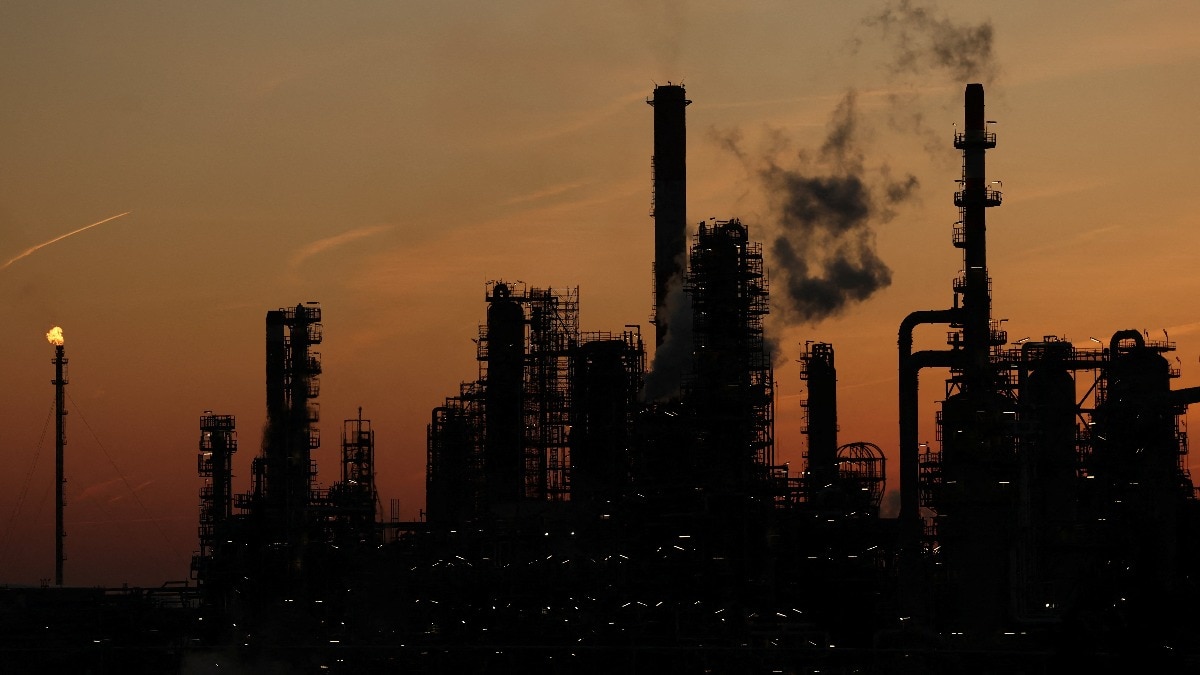
The Persian Gulf, a crucible of global energy politics, is once again at the epicenter of a looming crisis. Iran, a nation long defined by its vast hydrocarbon reserves, is reportedly on the brink of an unprecedented predicament: running out of space to store its unsold crude oil. This isn't merely an logistical challenge; it's a stark manifestation of intensified geopolitical pressures, primarily the enduring US naval blockade near the Strait of Hormuz, which has effectively choked off its vital oil exports.
For weeks, whispers have grown into urgent warnings from energy analysts. Research firm Kpler, a respected voice in commodity intelligence, recently sounded the alarm, suggesting that Iran's oil storage capacity could reach its absolute limit within a matter of weeks. The implications are dire: if Iran cannot export its oil, and its storage tanks overflow, the nation will have no choice but to drastically curtail, or even entirely shut down, its oil production operations. Such a move would send shockwaves through an already fragile Iranian economy, further destabilize regional dynamics, and potentially ripple across international energy markets.
The Unfolding Storage Crisis: A Deeper Dive
Iran's oil industry, the lifeblood of its economy, has been under immense strain for years. Sanctions, particularly those reimposed by the United States after its withdrawal from the Joint Comprehensive Plan of Action (JCPOA) in 2018, have severely hampered Tehran's ability to sell its crude on the international market. While Iran has developed sophisticated methods to circumvent these restrictions, including using 'dark fleets' and transferring oil between vessels at sea, the sheer volume of production coupled with dwindling export opportunities has created an unsustainable imbalance.
According to Kpler's data, Iran's floating storage — oil stored on tankers at sea, often for months — has been steadily increasing, indicating the difficulty in finding buyers. This floating storage, while offering a temporary reprieve, is finite. Once both onshore and offshore storage capacities are exhausted, the only recourse is to stop the flow from the wells. This would be an unprecedented event for a major oil producer like Iran, whose economic survival is intrinsically linked to its oil revenues. The country's budget is heavily reliant on oil exports, and a forced production halt would mean a catastrophic loss of income, exacerbating inflation, unemployment, and social unrest.
Geopolitical Chessboard: The Strait of Hormuz and US Blockade
The Strait of Hormuz, a narrow chokepoint between the Persian Gulf and the open ocean, is arguably the most strategically important oil transit waterway in the world. Approximately 20% of the world's total petroleum liquids consumption, or about 21 million barrels per day, passes through this strait. For Iran, it's its primary gateway to global markets. The US naval presence in the region, particularly the Fifth Fleet stationed in Bahrain, has maintained a de facto blockade, meticulously monitoring and interdicting Iranian oil shipments suspected of violating sanctions.
This blockade is not a declared act of war but rather a sustained pressure campaign aimed at crippling Iran's economy and forcing it to renegotiate its nuclear program and regional policies. The effectiveness of this strategy is now evident in the impending storage crisis. While Iran has repeatedly threatened to close the Strait of Hormuz in retaliation for sanctions, such a move would be a high-stakes gamble, risking direct military confrontation with the US and its allies, and potentially disrupting global oil supplies to an extent that would harm its own interests.
Historical Context and Economic Resilience (or Lack Thereof)
Iran has a long history of confronting external pressures, from the 1953 coup orchestrated by the US and UK over oil nationalization to the devastating Iran-Iraq War. Its economy has often demonstrated a surprising degree of resilience, adapting to sanctions through import substitution, developing domestic industries, and fostering trade relationships with non-Western partners like China. However, the current confluence of factors—sanctions, a global economic slowdown, and now the physical constraint of oil storage—presents a unique and perhaps insurmountable challenge.
Past crises saw Iran able to divert oil to other markets or rely on strategic reserves. Today, with global demand fluctuating and an increasingly sophisticated sanctions enforcement regime, those avenues are severely limited. The country's oil infrastructure, while robust, is not designed for indefinite storage without export. The continuous flow of oil from fields, a natural consequence of extraction, cannot simply be turned off and on without significant technical challenges and potential damage to reservoirs, leading to long-term production capacity degradation.
Regional Implications and the Path Forward
The deepening oil crisis in Iran carries significant regional and international implications. A severely weakened Iranian economy could lead to increased internal instability, potentially empowering hardliners or sparking widespread protests. Regionally, a desperate Iran might resort to more aggressive actions, either directly or through proxies, to challenge the US blockade or disrupt shipping in the Gulf, escalating tensions with Saudi Arabia, the UAE, and Israel.
For global energy markets, a forced shutdown of Iranian production, while initially removing a significant volume of crude, might be offset by other OPEC+ producers. However, the political instability it could trigger might lead to a risk premium on oil prices. The international community, particularly European nations and China, who have a vested interest in regional stability and the flow of oil, are closely watching the situation.
There is no easy solution. For Iran, the path forward likely involves a renewed push for sanctions relief, perhaps through negotiations with the US. For the US, the challenge is to maintain pressure without triggering an uncontrolled collapse that could have unintended and dangerous consequences. The current trajectory suggests a dangerous escalation, where economic strangulation risks pushing a major oil producer to the brink, with unpredictable outcomes for global energy security and regional peace. The world watches as Iran grapples with a crisis of its own making, yet one profoundly shaped by external forces, where the very act of extracting oil becomes a liability rather than an asset.
Key Terms: Iran oil crisis, US naval blockade, Strait of Hormuz, oil storage, sanctions, oil production shutdown, geopolitical tensions, Kpler report, energy security.
Stay Informed
Get the world's most important stories delivered to your inbox.
No spam, unsubscribe anytime.
Comments
No comments yet. Be the first to share your thoughts!