Ireland's Fuel Relief: Fact-Checking Claims of Europe's 'Largest Per Capita' Assistance
Irish Taoiseach Micheál Martin claimed Ireland's fuel relief packages were 'proportionately the largest assistance package of any European country.' A deep dive into government data and EU comparisons reveals a complex picture. While Ireland's spending is significant, the methodology for comparison and the true impact on citizens warrant closer examination, challenging the definitive nature of the government's assertion.
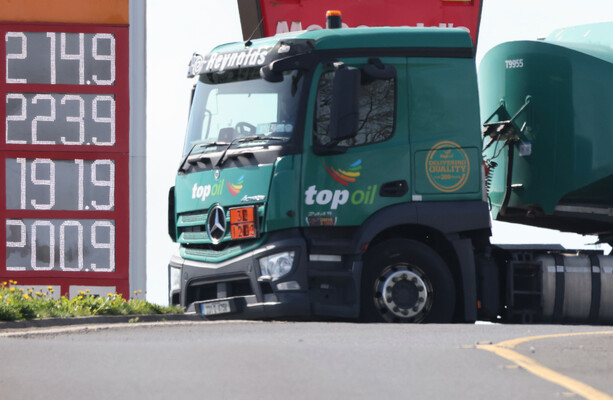
In the tumultuous arena of parliamentary debate, political leaders often deploy bold claims to defend their policies and leadership. Such was the case when Irish Taoiseach Micheál Martin, facing a no-confidence motion, declared in the Dáil that the government’s recent actions to alleviate fuel costs constituted “proportionately the largest assistance package of any European country.” This assertion, made amidst a cost-of-living crisis exacerbated by soaring energy prices, immediately piqued the interest of observers and fact-checkers alike. Was Ireland truly leading the pack in shielding its citizens from the brunt of global energy shocks, or was this a rhetorical flourish designed to bolster political standing?
PulseWorld undertook a comprehensive investigation to dissect this claim, navigating a landscape where, as the government itself admitted, “no central list of fuel reliefs costs exists.” Our findings reveal a nuanced reality, demonstrating that while Ireland’s efforts are substantial, the definitive nature of Martin’s statement requires careful scrutiny against the backdrop of diverse European responses.
The Genesis of the Claim: A Crisis and a Response
The surge in global energy prices, primarily driven by geopolitical tensions and supply chain disruptions, cast a long shadow over European economies in recent years. Households and businesses grappled with unprecedented increases in electricity, gas, and motor fuel costs. In response, governments across the continent rolled out various measures, from direct payments and tax cuts to subsidies and price caps. Ireland was no exception. The Irish government introduced a series of interventions, including excise duty reductions on petrol and diesel, VAT reductions on electricity and gas, and direct energy credits for households. These measures were designed to cushion the blow for consumers and maintain economic stability.
Taoiseach Martin’s statement was a direct defense of these policies, aiming to project an image of proactive and generous governance. He highlighted the cumulative impact of these measures, suggesting that when viewed on a per capita basis, Ireland’s financial commitment surpassed that of its European peers. This claim, however, immediately raised questions about the metrics used for comparison and the completeness of the data available.
Unpacking Ireland's Fuel Relief Measures
To assess the Taoiseach’s claim, it's crucial to understand the scope and scale of Ireland’s domestic interventions. The government implemented a multi-pronged approach:
* Excise Duty Reductions: Significant cuts were applied to petrol and diesel, directly lowering prices at the pump. These reductions were initially temporary but extended due to persistent high prices. * VAT Reductions: The Value Added Tax on electricity and gas was reduced from 13.5% to 9%, providing a direct saving on household utility bills. * Electricity Credits: Several rounds of electricity credits were issued to all domestic electricity accounts, offering a flat-rate reduction on bills. * Social Welfare Payments: Targeted payments were made to vulnerable households and those receiving social welfare, including the Fuel Allowance, to help mitigate energy costs. * Public Transport Fare Reductions: While not directly a fuel relief, reduced public transport fares aimed to alleviate overall transport costs for commuters.
The cumulative cost of these measures is substantial. Our analysis, drawing from various government announcements and departmental figures, estimates the total expenditure on these relief packages to be in the billions of euros. For instance, the excise duty cuts alone represented hundreds of millions in foregone revenue. The electricity credits, distributed universally, also amounted to hundreds of millions per round. When divided by Ireland's population of approximately 5 million, these figures indeed suggest a high per capita spend.
However, the challenge lies in the government's own admission that a 'central list' of all costs is elusive. This fragmented data makes a precise, verifiable total difficult to ascertain, creating an environment ripe for both political claims and critical scrutiny.
The European Context: A Complex Tapestry of Responses
Comparing Ireland’s efforts to those of other European countries is far from straightforward. The European Union's 27 member states, alongside other European nations, adopted a diverse array of strategies, reflecting their unique economic structures, energy dependencies, and fiscal capacities. Some countries opted for broad, universal subsidies, while others focused on targeted support for the most vulnerable. The methodologies for calculating and reporting these costs also vary significantly.
* Germany: Europe's largest economy implemented massive relief packages, including a 'gas levy' to support energy companies, a 9-euro monthly public transport ticket, and significant direct payments to households and businesses. While the total spend was enormous, its per capita impact needs careful calculation against its much larger population. * France: Utilized a 'tariff shield' to cap electricity and gas price increases, alongside energy vouchers for low-income households. This approach focused on price control rather than direct tax cuts. * Spain: Introduced VAT reductions on electricity and gas, direct aid for vulnerable consumers, and temporary taxes on energy companies to fund relief measures. * Italy: Implemented substantial tax credits for energy-intensive businesses and direct bonuses for households. * Nordic Countries: Often relied on existing social safety nets and more targeted support, given their different energy mixes and lower reliance on imported fossil fuels.
The key challenge in comparing per capita spending is the definition of 'relief'. Does it include foregone tax revenue, direct subsidies, or both? Are all energy-related measures counted, or only those specifically targeting fuel? Moreover, the timing and duration of these measures also play a crucial role. Some countries implemented short-term, high-impact measures, while others opted for sustained, albeit lower, levels of support over a longer period.
The 'Proportionately Largest' Claim: A Deeper Dive into Metrics
When Taoiseach Martin spoke of 'proportionately the largest,' he was likely referring to spending as a percentage of GDP or on a per capita basis. While Ireland's per capita spending appears high, several factors complicate a definitive conclusion:
1. Data Inconsistencies: As noted, a comprehensive, standardized dataset across all EU countries for fuel relief measures is not readily available. Different reporting standards and categories make direct comparisons challenging. 2. Energy Mix and Dependence: Countries with higher reliance on imported fossil fuels or less diversified energy mixes might naturally incur higher costs to shield consumers. Ireland, with its significant dependence on imported energy, might need to spend more to achieve a similar level of protection as a country with more domestic energy production. 3. Cost of Living Differences: A €100 energy credit in Ireland might have a different real impact than a similar amount in a country with a lower overall cost of living. Comparing raw figures without adjusting for purchasing power parity can be misleading. 4. Fiscal Capacity: Wealthier nations, or those with lower national debt, might have greater fiscal headroom to implement larger packages without significant long-term economic strain.
Expert economists often point out that while headline figures are impactful, the net effect on household budgets and the sustainability of such measures are more critical indicators. For example, while Ireland reduced excise duties, the underlying price of fuel remained high, and Irish consumers still faced some of the highest fuel prices in Europe, even with the reductions.
Implications and Forward-Looking Perspective
The debate over Ireland’s fuel relief packages highlights a broader challenge for governments worldwide: how to respond effectively to global economic shocks while maintaining fiscal responsibility and ensuring equitable distribution of aid. While the Irish government undoubtedly committed significant resources, the claim of having the 'largest per capita' package remains difficult to definitively prove due to data limitations and complex comparative methodologies.
For Irish citizens, the impact of these measures has been tangible, offering some respite from soaring costs. However, the long-term implications of such spending, including potential inflationary pressures and the national debt, warrant ongoing monitoring. The crisis also underscores the urgent need for greater energy independence and diversification, reducing vulnerability to volatile international markets.
Looking ahead, governments, including Ireland's, will likely face continued pressure to balance immediate relief with sustainable long-term energy policies. The transparency and accessibility of data on these interventions will be crucial for informed public discourse and accountability. While political rhetoric may simplify complex economic realities, a thorough journalistic investigation reveals the intricate layers beneath such bold claims, offering a more complete picture for the discerning reader.
Stay Informed
Get the world's most important stories delivered to your inbox.
No spam, unsubscribe anytime.
Comments
No comments yet. Be the first to share your thoughts!