King Charles III's Washington Visit: A Subtle Warning and a Call to Action for US Democracy
King Charles III's recent visit to Washington transcended mere diplomatic pleasantries, delivering a profound, albeit subtle, message to the United States. His historical allusions and emphasis on democratic values served as a 'tough love' lesson, urging America to safeguard its own foundational principles amidst rising global challenges. This article explores the nuanced implications of his address and its potential impact on US political discourse.
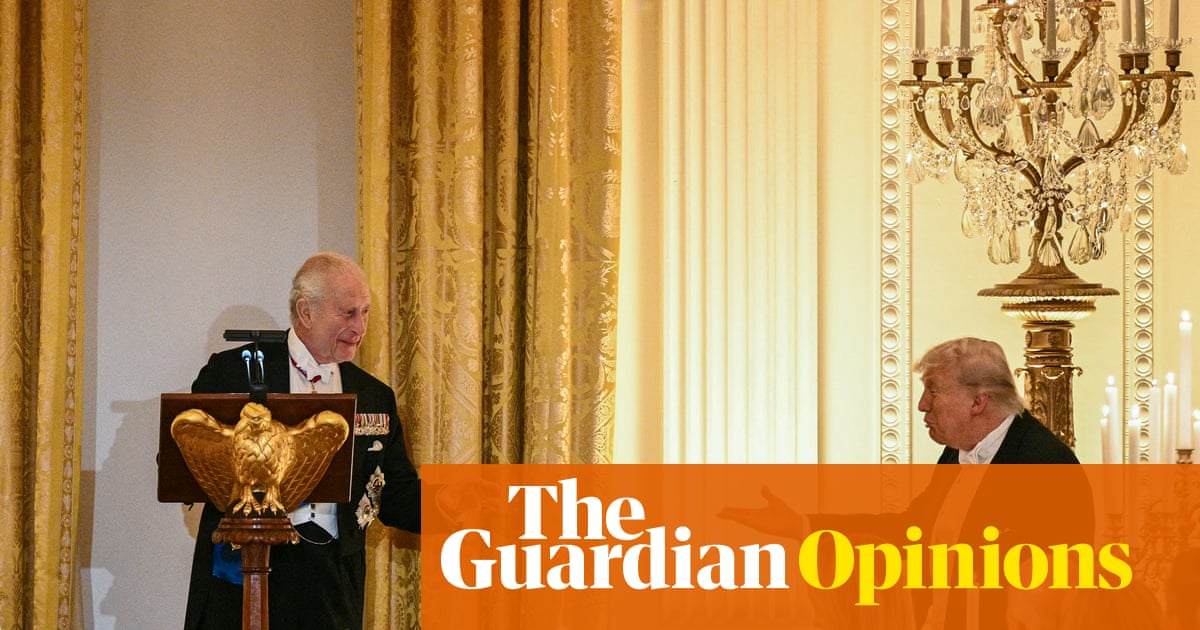
In a world increasingly fractured by geopolitical tensions and internal strife, the recent state visit of King Charles III to Washington D.C. was far more than a ceremonial exchange of pleasantries. It was, as many observers noted, a masterclass in diplomatic subtlety, a carefully orchestrated intervention disguised as a royal tour. The monarch, often perceived as a symbol of tradition, delivered a powerful, albeit veiled, message to the United States, urging it to confront its own democratic vulnerabilities and reaffirm its global leadership.
His address at the White House state banquet, particularly his evocative reference to the 18th-century Anglo-French contest for dominion over the New World, was no mere historical anecdote. It was a pointed reminder of the enduring struggles for freedom and governance, a subtle yet potent call for the U.S. to reflect on its own democratic health. This wasn't just about 'saving Britain’s bacon' in a post-Brexit world; it was a profound, much-needed history lesson for a nation grappling with its identity and future.
The Royal Intervention: A 'Tough Love' History Lesson
King Charles III, a monarch steeped in history and tradition, leveraged his unique position to offer a form of 'tough love' to his American hosts. His allusions to historical conflicts and the hard-won battles for democratic ideals were not accidental. They were meticulously chosen to resonate with America's founding narrative, reminding a nation often caught in present-day political turbulence of the enduring principles that underpin its existence. By invoking the past, Charles gently nudged the U.S. to look inward, to remember the fragility of democracy, and the constant vigilance required to maintain it.
This historical framing served multiple purposes. Firstly, it established a shared heritage, reinforcing the 'special relationship' between the two nations beyond mere contemporary politics. Secondly, and more critically, it provided a non-confrontational platform from which to highlight the dangers of democratic backsliding. The King did not explicitly mention the January 6th Capitol attack, the rise of political polarization, or the erosion of trust in institutions, but his message implicitly addressed these very concerns. He spoke of the 'sacred trust' placed in leaders and citizens alike to uphold democratic values, a trust that, when broken, can lead to profound instability.
Beyond Diplomacy: A Call for Global Leadership
While the immediate context of the visit involved strengthening Anglo-American ties, particularly in trade and security post-Brexit, the King's message extended far beyond bilateral relations. His words were a subtle plea for the United States to re-embrace its role as a beacon of democracy and a leader on the global stage. In an era where authoritarianism is on the rise and democratic norms are being challenged worldwide, the stability and example of the U.S. are more crucial than ever.
The King's emphasis on shared values – freedom, democracy, rule of law – was a deliberate attempt to underscore the ideological battle lines being drawn across the globe. He implicitly warned against isolationism and the dangers of internal division, suggesting that a strong, unified America is essential not just for its own prosperity, but for the stability of the international order. This perspective is particularly salient given the ongoing conflicts in Ukraine and the Middle East, where American leadership and resolve are constantly tested. The message was clear: a strong America, internally cohesive and externally engaged, is vital for global peace and security.
The 'Trump Factor' and the Future of US Democracy
One of the most intriguing aspects of the King's visit, as noted by commentators like Simon Tisdall, was the unspoken question of whether his message would resonate with figures like Donald Trump. The former president's 'America First' rhetoric, his challenges to democratic institutions, and his often-strained relationships with traditional allies represent a significant departure from the norms Charles was subtly advocating. The King's emphasis on consensus, compromise, and institutional respect stands in stark contrast to the populist, often divisive, political style that has characterized recent American politics.
Whether Trump, or indeed any political leader, 'gets the message' is an open question. However, the King's intervention serves as a powerful reminder to the American public and its political class about the foundational principles at stake. It prompts introspection: Is the U.S. living up to its democratic ideals? Is it fulfilling its historical role? The visit, therefore, was not just about statecraft; it was about the very soul of American democracy, subtly challenged and gently guided by a monarch who understands the long arc of history.
Conclusion: A Royal Legacy of Responsibility
King Charles III's visit to Washington may be remembered not just for its pomp and circumstance, but for its profound intellectual and moral weight. He used the soft power of the monarchy to deliver a message that few politicians could articulate with such gravitas and historical depth. By reminding America of its past struggles and its enduring democratic mission, he offered a mirror for self-reflection at a critical juncture.
The challenge now lies with the United States. Will it heed the subtle warning? Will it reaffirm its commitment to the democratic principles that have defined it for centuries? The King's visit serves as a powerful testament to the enduring importance of transatlantic alliances and the shared responsibility of democratic nations to safeguard their values. His legacy from this trip may well be a renewed global conversation about the fragility and resilience of democracy itself, a conversation sparked by a king who understands that sometimes, the most impactful messages are delivered with the quiet wisdom of history.
Stay Informed
Get the world's most important stories delivered to your inbox.
No spam, unsubscribe anytime.
Comments
No comments yet. Be the first to share your thoughts!