Kremlin Confronts Dissent: Influencer Warns Putin of 'Coiled Spring' Russia
A prominent social media influencer's stark warning to President Vladimir Putin about growing public discontent has forced the Kremlin to acknowledge sharp criticism. This unprecedented public admission highlights increasing internal pressures within Russia, fueled by economic hardship and the ongoing conflict in Ukraine. The incident sparks debate over the true state of Russian public opinion and the potential for social unrest.
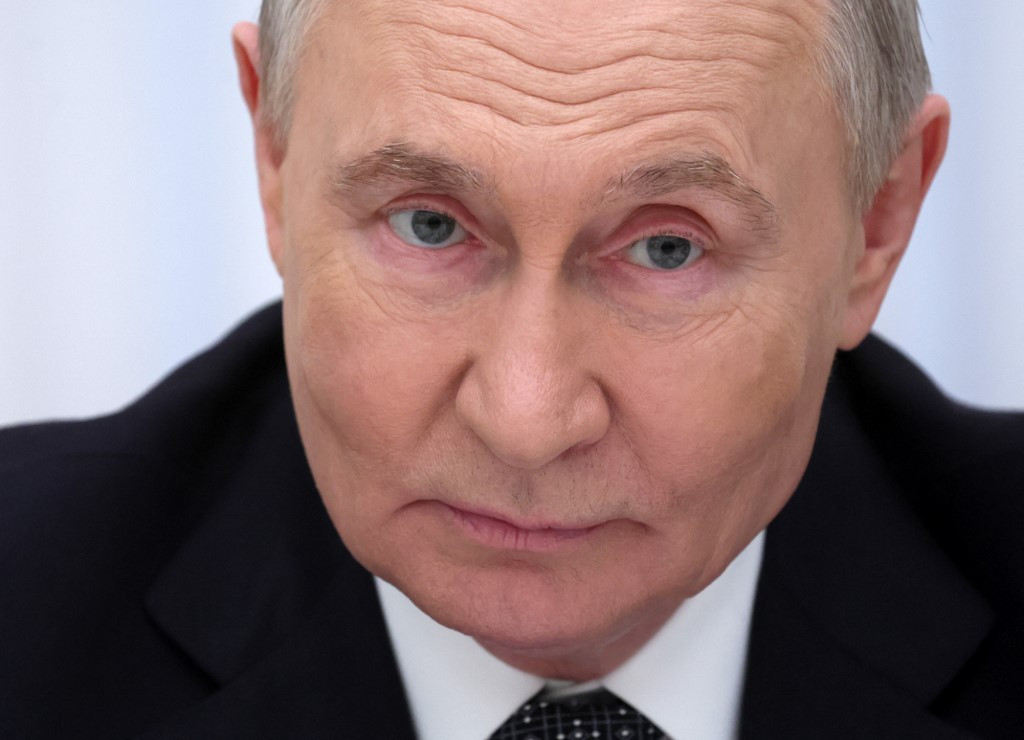
In a rare and significant moment of public acknowledgment, the Kremlin has openly addressed sharp criticism directed at Russian authorities, following a stark warning issued by a prominent social media influencer to President Vladimir Putin. The influencer cautioned that mounting pressure on ordinary Russians could transform the populace into a 'coiled spring', poised for potential unrest. This incident, initially reported by Reuters, has sent ripples through both domestic and international observers, offering a glimpse into the simmering discontent beneath Russia's seemingly monolithic political surface.
The Unprecedented Warning and Kremlin's Response
The warning itself came from a figure with considerable reach within Russian society, whose words carry weight among a segment of the population often overlooked by state-controlled media. While the specific identity of the influencer was not widely disclosed in initial reports, the impact of their message was undeniable. They articulated a growing sentiment of frustration and hardship among ordinary citizens, citing economic pressures, the human cost of the ongoing conflict in Ukraine, and perceived governmental indifference to their plight. The metaphor of a 'coiled spring' powerfully conveys a sense of suppressed energy and potential for sudden, forceful release.
What makes this event particularly noteworthy is the Kremlin's decision to publicly acknowledge the criticism. Historically, the Russian government has tended to dismiss or downplay internal dissent, often framing it as the work of foreign agents or fringe elements. This time, however, the response was different. Dmitry Peskov, the presidential spokesman, reportedly confirmed that the criticism had reached the highest echelons of power, stating that the authorities were "attentive to all points of view." This public acknowledgment, while carefully worded, suggests a recognition of the criticism's widespread nature and the potential for it to undermine public trust if left unaddressed. It also raises questions about the internal dynamics within the Russian elite and whether this public airing of grievances is a deliberate strategy or an unavoidable concession.
Historical Context: Russia's History of Unrest
Russia has a long and often turbulent history of social unrest, from the peasant revolts of the Tsarist era to the revolutionary upheavals of the early 20th century, and more recent protests against government policies. Understanding this historical backdrop is crucial to appreciating the significance of the influencer's warning. The Russian populace, while often characterized by resilience and a high tolerance for hardship, has also demonstrated a capacity for sudden and profound shifts in sentiment when pushed too far. The 'coiled spring' metaphor resonates with this historical pattern, evoking images of accumulated grievances reaching a breaking point.
Key historical moments include: * 1905 Revolution: Triggered by economic hardship, social inequality, and military defeat, leading to widespread strikes and political reforms. * 1917 Revolutions: Fuelled by World War I losses, food shortages, and public dissatisfaction with the monarchy, resulting in the overthrow of the Tsar and later the Bolshevik takeover. * Perestroika Era (late 1980s): Economic stagnation and political repression eventually led to widespread public discontent and the collapse of the Soviet Union.
While the current situation is distinct from these historical precedents, the underlying factors of economic strain, perceived injustice, and a sense of being unheard by the authorities remain potent ingredients for potential instability. The ongoing conflict in Ukraine adds another layer of complexity, with its significant economic costs, human casualties, and the psychological burden it places on Russian society.
Economic Pressures and Societal Strain
The core of the influencer's warning lies in the "mounting pressure on ordinary Russians." This pressure manifests in various forms, primarily economic. Despite official narratives of resilience, sanctions imposed by Western nations have had a tangible impact on the Russian economy. While the government has managed to stabilize the ruble and maintain some level of economic activity, ordinary citizens often face:
* Inflation: Rising prices for essential goods and services erode purchasing power. * Reduced access to goods and services: Sanctions and the departure of foreign companies limit consumer choices and access to certain technologies. * Labor market uncertainties: While unemployment remains low, wage growth may not keep pace with inflation, and some sectors face challenges. * Increased government spending on defense: Diverting resources from social programs and infrastructure projects.
Beyond economics, there are also significant societal strains. The mobilization of reservists for the conflict, the constant flow of news (both official and unofficial) about the war, and the growing isolation from the international community contribute to a sense of unease and psychological fatigue. For many, the initial patriotic fervor may be giving way to a more pragmatic assessment of the costs and benefits of the current trajectory.
Implications for Putin's Leadership and Future Stability
The Kremlin's acknowledgment of the influencer's warning suggests that even in a highly controlled information environment, public sentiment cannot be entirely ignored. For President Putin, who has historically relied on a carefully cultivated image of strength and stability, any widespread perception of unrest or dissatisfaction poses a significant challenge. His legitimacy is partly derived from his ability to deliver stability and prosperity, and if these are seen to be eroding, his position could be subtly, yet significantly, weakened.
Expert analysts suggest that while an immediate, large-scale uprising is unlikely given the state's robust security apparatus and control over information, the incident highlights a growing vulnerability. The 'coiled spring' analogy implies a gradual accumulation of tension rather than an instantaneous explosion. This slow build-up of discontent could manifest in various ways:
* Passive resistance: Reduced productivity, apathy, or quiet defiance. * Localized protests: Smaller, more frequent demonstrations on specific issues. * Erosion of trust: A decline in public confidence in state institutions and leadership. * Increased emigration: A brain drain of skilled individuals seeking opportunities elsewhere.
The Kremlin's challenge now is to manage this simmering discontent. This could involve a combination of tactics: increased propaganda to reinforce official narratives, targeted social welfare programs to alleviate economic hardship, or even selective crackdowns on perceived dissent. However, the very act of acknowledging the criticism suggests that the government is aware that its traditional methods of control may not be entirely sufficient to contain the rising tide of public sentiment.
The Path Forward: Navigating a Fractured Landscape
The incident serves as a crucial reminder that even in authoritarian states, public opinion remains a factor, albeit one that is often suppressed or manipulated. The influencer's warning, and the Kremlin's response, underscore the complex and often opaque dynamics at play within contemporary Russia. For international observers, it offers a valuable data point in assessing the long-term stability of Putin's regime and the potential for internal pressures to influence Moscow's foreign policy decisions.
Moving forward, the focus will be on how the Kremlin addresses these criticisms. Will it lead to genuine policy adjustments aimed at alleviating public hardship, or will it result in a more sophisticated form of information control and repression? The metaphor of the 'coiled spring' remains apt, suggesting that while the spring may not snap immediately, the tension continues to build. The future trajectory of Russia will depend, in part, on whether this tension can be released constructively or if it is destined to erupt in unforeseen ways, reshaping the nation's political and social landscape.
Stay Informed
Get the world's most important stories delivered to your inbox.
No spam, unsubscribe anytime.
Comments
No comments yet. Be the first to share your thoughts!