Motorola's Razr Rebirth: A Deep Dive into the New Flip Foldables and Their Market Impact
Motorola is making a bold statement in the foldable phone market with its refreshed Razr lineup, featuring the Razr 70, Razr 70+, and Razr 70 Ultra. This article explores how these new flip foldables aim to recapture market share, blending nostalgic design with cutting-edge technology. We delve into their features, competitive landscape, and potential to redefine user expectations in a rapidly evolving smartphone industry.
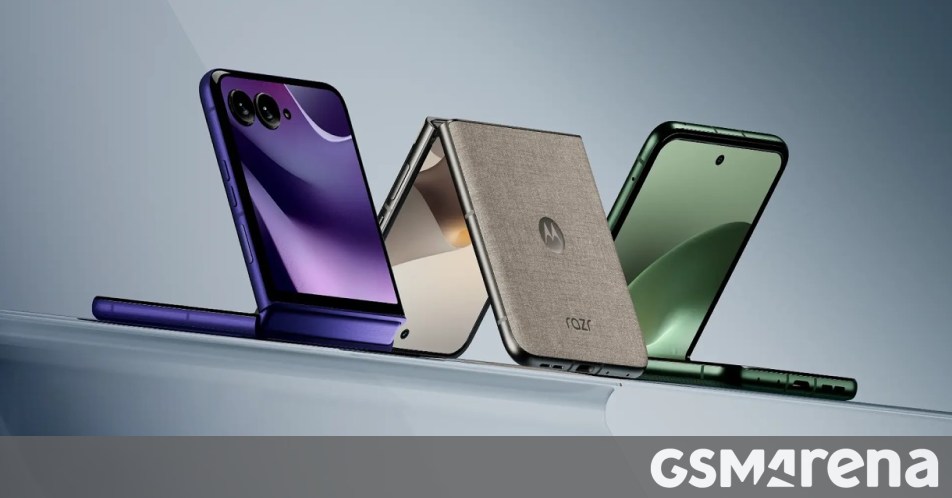
The smartphone industry is in a perpetual state of evolution, but few segments capture the imagination quite like foldables. For years, the concept of a phone that bends has been a futuristic dream, now a tangible reality. At the forefront of this foldable revolution, particularly in the clamshell or flip foldable form factor, stands Motorola. This year, the company has not only embraced the burgeoning book-style foldable market but has also significantly bolstered its iconic Razr line with three new models: the Razr 70, Razr 70+, and Razr 70 Ultra (known as Razr 2026, Razr+ 2026, and Razr Ultra 2026 in the US, respectively). These devices are more than just incremental updates; they represent Motorola's strategic push to dominate a niche that it arguably helped popularize decades ago.
The Legacy and the Leap: Razr's Enduring Appeal
Motorola's Razr brand holds a special place in the annals of mobile phone history. The original Motorola Razr V3, launched in 2004, was a cultural phenomenon, a sleek, impossibly thin flip phone that redefined mobile aesthetics. It sold over 130 million units, becoming a fashion accessory as much as a communication device. This deep-seated brand recognition is a powerful asset in today's crowded smartphone market. When Motorola first reintroduced the Razr as a foldable in 2019, it tapped into this nostalgia, aiming to blend the familiar flip design with modern flexible display technology. While early iterations faced challenges, the commitment to the flip form factor has remained unwavering.
The 2024 (or 2026 in the US nomenclature) lineup signifies a maturation of this commitment. By offering three distinct models, Motorola is attempting to cater to a broader spectrum of consumers, from those seeking an accessible entry into the foldable world to power users demanding premium features. This tiered approach is crucial in a market where price remains a significant barrier for many. The Razr 70 likely serves as the entry-level option, offering the core foldable experience at a more competitive price point. The Razr 70+ (or Razr+ 2026) will probably strike a balance between features and cost, while the Razr 70 Ultra (or Razr Ultra 2026) is positioned as the flagship, showcasing Motorola's most advanced technology and design prowess. This strategy mirrors successful approaches seen in the traditional smartphone market, where flagships drive innovation and mid-range devices capture volume.
Dissecting the New Razr Lineup: What to Expect
While specific detailed specifications were not fully disclosed in the source, the naming convention and market trends allow for informed speculation about what these new Razr models will bring to the table. The "Ultra" designation typically implies top-tier specifications, including:
* Advanced Processors: Expect the latest flagship Snapdragon or MediaTek Dimensity chipsets for seamless performance. * Enhanced Camera Systems: Foldables have historically lagged behind slab phones in camera quality, but the Ultra model will likely feature significant improvements, possibly including larger sensors, optical image stabilization, and advanced computational photography. * Larger, More Capable Cover Displays: The external display is a critical component of flip foldables, offering quick access to notifications, widgets, and even full apps without opening the phone. The Ultra model is expected to push the boundaries here, offering a larger, more interactive cover screen. * Premium Materials and Design: High-quality glass, aluminum frames, and potentially vegan leather finishes will underscore its flagship status.
The Razr 70 and 70+ will likely offer a compelling blend of features, potentially differentiating themselves through processor choice, camera capabilities, battery size, and the size/functionality of their cover displays. The key for Motorola will be to ensure that even the base Razr 70 provides a premium-feeling foldable experience, avoiding the perception of a compromised device. The success of this tiered strategy hinges on clear differentiation and compelling value propositions at each price point.
The Foldable Landscape: Competition and Innovation
Motorola is not alone in its pursuit of foldable dominance. The market is increasingly competitive, with major players like Samsung, Huawei, Oppo, and Xiaomi all vying for a piece of the pie. Samsung, in particular, has established itself as the market leader with its Galaxy Z Flip and Galaxy Z Fold series. The Z Flip, in particular, is the direct competitor to the Razr flip line, and Samsung's consistent yearly updates have set a high bar for reliability, software optimization, and ecosystem integration.
However, competition breeds innovation. Motorola's strength lies in its design heritage and its willingness to experiment. The company has often been praised for its clean Android experience and thoughtful software enhancements. For the new Razr models to truly stand out, they must offer more than just aesthetic appeal. Key areas where Motorola can differentiate include:
* Hinge Durability and Design: A robust and gapless hinge mechanism is paramount for user confidence and device longevity. * Battery Life: Often a concern for foldables due to their compact size and dual screens, improved battery optimization or larger capacities would be a significant advantage. * Software Experience: A smooth, intuitive software experience that leverages the foldable form factor (e.g., Flex View or tent mode functionalities) is crucial. * Price-to-Performance Ratio: Offering compelling features at a more aggressive price point, especially for the non-Ultra models, could attract a wider audience.
The market is also seeing the emergence of book-style foldables, which Motorola has now entered with its own offering. While the source mentions this as a significant development, the Razr brand remains synonymous with the flip form factor. This dual-pronged strategy allows Motorola to compete across both major foldable categories, expanding its potential market reach.
Implications for Consumers and the Future of Smartphones
The introduction of a robust, multi-tiered Razr lineup has several significant implications for consumers and the broader smartphone market. Firstly, it signals Motorola's serious commitment to the foldable segment. This increased competition is ultimately beneficial for consumers, driving down prices and accelerating innovation across the board. As more players enter the market and refine their offerings, foldables will become more accessible and appealing to a mainstream audience.
Secondly, the Razr's focus on the flip form factor highlights its enduring appeal. For many, the compact nature of a flip phone, combined with the larger screen when unfolded, offers a unique blend of portability and functionality. It's a statement piece, a device that stands out in a sea of rectangular slabs. The nostalgia factor, combined with modern technology, creates a compelling proposition.
Looking ahead, the success of these new Razr models will be a litmus test for Motorola's strategy. If they can deliver on performance, durability, and user experience at competitive price points, they could significantly bolster Motorola's market share in the premium segment. Furthermore, their success could encourage other manufacturers to invest more heavily in the flip foldable design, potentially leading to a renaissance of this iconic form factor. The future of smartphones is undoubtedly foldable, and Motorola, with its refreshed Razr lineup, is poised to play a pivotal role in shaping that future, proving that sometimes, the best way forward is to look back at what made us fall in love with phones in the first place, then reinvent it for tomorrow.
Stay Informed
Get the world's most important stories delivered to your inbox.
No spam, unsubscribe anytime.
Comments
No comments yet. Be the first to share your thoughts!