Namibia Emerges as TotalEnergies' New Energy Anchor: A Deep Dive into the Venus Project's Global Impact
TotalEnergies is poised to make a final investment decision on its colossal Venus offshore oil project in Namibia by July, signaling the nation's emergence as a "new anchor country" for the energy giant. This move underscores a significant strategic shift, positioning Namibia as a crucial hub for future global energy supply. The development promises substantial economic transformation for the Southern African nation, while also raising complex questions about environmental stewardship and sustainable growth in the era of energy transition.
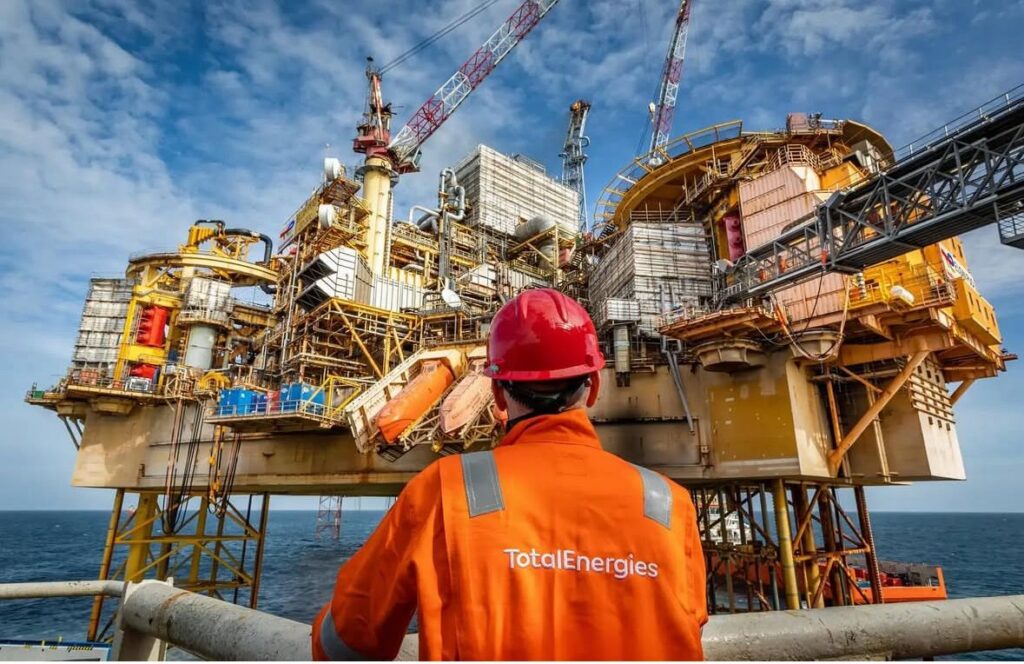
In a bold strategic declaration, TotalEnergies has identified Namibia as its “new anchor country,” signaling a profound shift in its global operational focus. This pivotal announcement comes as the French energy behemoth pushes towards a final investment decision (FID) for its monumental Venus offshore oil project by July. The implications of this move are far-reaching, not only for TotalEnergies' future trajectory but also for Namibia's economic landscape and its role in the evolving global energy matrix.
The Rise of Venus: A Game-Changer for TotalEnergies and Namibia
The Venus discovery, located in Block 2913B (PEL 56) in the Orange Basin, offshore Namibia, is nothing short of a geological marvel. Discovered in February 2022, it is estimated to hold billions of barrels of oil equivalent, positioning it among the largest deepwater finds globally in recent years. TotalEnergies' CEO, Patrick Pouyanné, explicitly stated during the company's first-quarter earnings call on April 29 that the company is "very confident" in the project's economics, highlighting its low technical cost of around $20 per barrel. This cost efficiency is a critical factor in today's volatile energy markets, making Venus an exceptionally attractive prospect even amidst calls for a global energy transition.
For Namibia, a nation that has historically relied heavily on mining and tourism, the Venus project represents an unprecedented opportunity for economic diversification and growth. The potential for significant government revenues through royalties, taxes, and state participation could fundamentally reshape the country's fiscal health, funding critical infrastructure, education, and healthcare initiatives. Furthermore, the project is expected to generate thousands of direct and indirect jobs, fostering local content development and skills transfer within the nascent oil and gas sector. The sheer scale of investment required for such a deepwater development will undoubtedly spur ancillary industries, from logistics and supply chain services to specialized engineering and environmental consultancies.
Strategic Reorientation: Why Namibia Now?
TotalEnergies' decision to elevate Namibia to an "anchor country" status is not arbitrary; it is the culmination of several strategic considerations. Firstly, the geological prospectivity of the Orange Basin has proven to be exceptional, with multiple world-class discoveries by TotalEnergies and Shell. This region is rapidly emerging as a new frontier for hydrocarbon exploration and production, offering substantial long-term reserves.
Secondly, Namibia offers a relatively stable political and regulatory environment compared to some other African oil-producing nations. This stability provides a predictable framework for large-scale, long-term investments, which are crucial for projects of Venus's magnitude. The Namibian government has also demonstrated a proactive stance in attracting foreign direct investment, understanding the transformative potential of these discoveries.
Thirdly, the global energy landscape is undergoing a complex transition. While there is a strong push towards renewables, the demand for oil and gas is projected to remain robust for decades, particularly in developing economies. TotalEnergies, like other supermajors, is navigating this transition by investing in low-cost, low-emission intensity projects that can generate strong returns while gradually diversifying into green energy. Venus, with its reported low technical cost and potential for efficient production, aligns with this strategy. The company has also emphasized its commitment to minimizing the project's environmental footprint, though specific details on carbon capture or emissions reduction technologies for Venus are still emerging.
Economic Windfalls and Development Challenges
The economic implications for Namibia are profound. The country's GDP could see a substantial boost, potentially transforming it into one of Africa's wealthiest nations per capita. The National Petroleum Corporation of Namibia (NAMCOR), as a state-owned entity, is expected to play a significant role, ensuring that a portion of the wealth generated remains within the country. This could lead to the establishment of a sovereign wealth fund, similar to Norway's, to manage and invest oil revenues for future generations.
However, this newfound wealth also brings significant challenges. The "resource curse" phenomenon, where resource-rich nations fail to translate their wealth into broad-based development, is a well-documented risk. Namibia will need robust governance structures, transparent revenue management, and effective policies to avoid pitfalls such as corruption, Dutch disease (where the booming resource sector stifles other industries), and widening inequality. The government's ability to negotiate favorable terms with TotalEnergies and other operators, ensuring equitable benefit sharing, will be paramount.
Furthermore, the development of a massive offshore oil project requires substantial infrastructure development, including ports, logistics hubs, and specialized services. This presents opportunities for local businesses but also demands careful planning to avoid environmental degradation and ensure sustainable development practices. The potential for local content requirements to foster Namibian participation in the supply chain will be crucial for maximizing domestic benefits.
Environmental Stewardship and the Energy Transition Dilemma
The declaration of Namibia as an energy anchor country by TotalEnergies comes at a time of heightened global awareness regarding climate change and the urgent need for an energy transition. Environmental advocacy groups and international organizations are increasingly scrutinizing new fossil fuel projects. TotalEnergies has publicly committed to becoming a multi-energy company with a net-zero ambition by 2050. However, the development of a project like Venus raises questions about the pace and sincerity of this transition.
For Namibia, the dilemma is acute. On one hand, the economic imperative to leverage its natural resources for development is undeniable. On the other, the country is vulnerable to the impacts of climate change and has signed international agreements to reduce emissions. Balancing these competing priorities will require a nuanced approach. TotalEnergies will likely face pressure to implement best-in-class environmental practices, utilize advanced technologies to minimize flaring and methane emissions, and potentially invest in carbon capture and storage (CCS) solutions if feasible.
Transparency regarding environmental impact assessments, community engagement, and benefit-sharing mechanisms will be vital for the project's social license to operate. The long-term success of Venus will not only be measured by its financial returns but also by its contribution to Namibia's sustainable development goals and its alignment with global climate objectives.
Looking Ahead: Namibia's Place in the Global Energy Future
As TotalEnergies moves closer to its final investment decision, the world watches Namibia. The Venus project is more than just an oil discovery; it is a symbol of the complex interplay between energy security, economic development, and environmental responsibility. If managed effectively, this development could propel Namibia onto the global stage as a significant energy producer, transforming the lives of its citizens and providing a new source of energy for a world still heavily reliant on hydrocarbons.
The journey from discovery to production will be long and complex, fraught with technical, financial, and socio-environmental challenges. However, TotalEnergies' unwavering confidence, coupled with Namibia's strategic potential, suggests that this Southern African nation is indeed poised to become a critical new anchor in the global energy landscape, charting a course that will be closely observed by industry, governments, and environmentalists alike.
Stay Informed
Get the world's most important stories delivered to your inbox.
No spam, unsubscribe anytime.
Comments
No comments yet. Be the first to share your thoughts!