New Zealand Defends Patrol Flight Near China Amid Sovereignty Tensions
New Zealand has firmly defended its military patrol flight near China, asserting adherence to international law after Beijing accused Wellington of undermining its security interests. This incident highlights growing geopolitical tensions in the Indo-Pacific, with smaller nations navigating complex relationships between major powers. The P-8A Poseidon's mission underscores the broader struggle over freedom of navigation and regional influence.
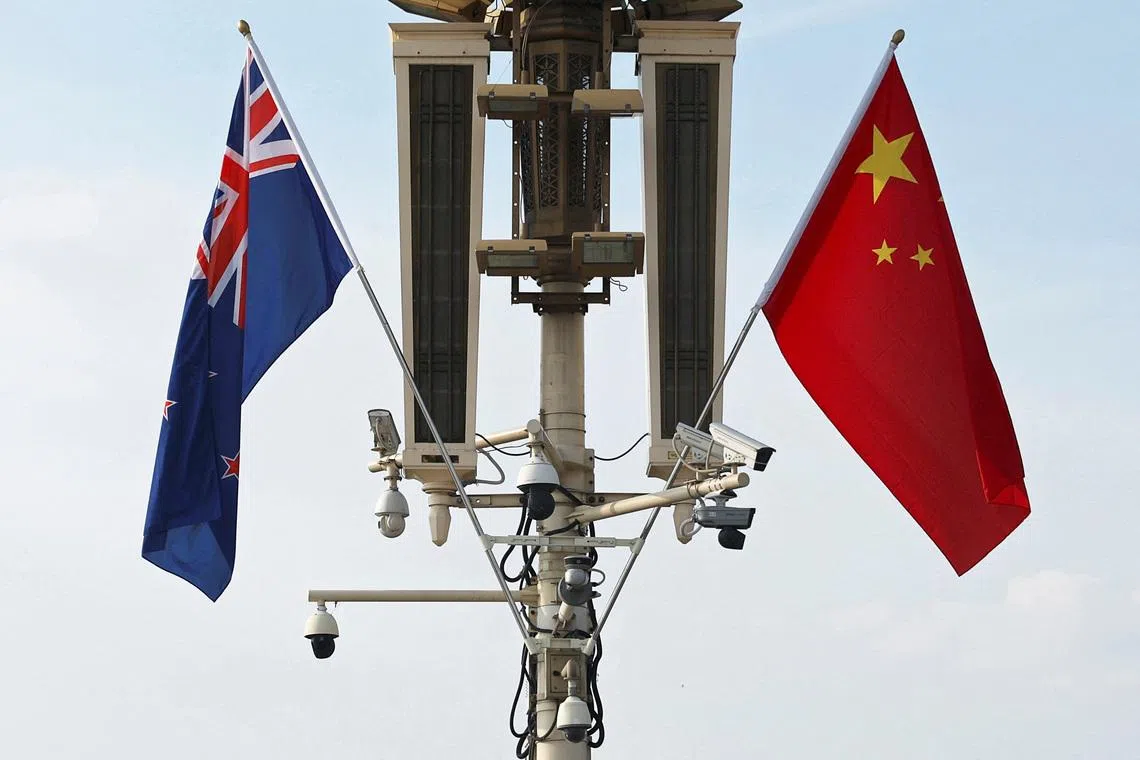
The tranquil waters of the Pacific, long associated with idyllic island nations and serene landscapes, are increasingly becoming a theatre for geopolitical friction. At the heart of a recent diplomatic spat lies New Zealand, a nation often perceived as a quiet observer on the global stage, now firmly defending its military actions near China. On April 18, Wellington asserted that its P-8A Poseidon patrol aircraft operated strictly "in accordance with international law" after Beijing’s foreign ministry accused it of undermining China’s security interests. This incident, while seemingly minor, is a potent symbol of the complex and often delicate balance of power in the Indo-Pacific region.
A Routine Patrol or a Provocation?
The incident unfolded when a New Zealand P-8A Poseidon, a sophisticated maritime surveillance and anti-submarine warfare aircraft, conducted a patrol flight. While the exact location was not disclosed in initial reports, China's swift and sharp rebuke indicates the flight was perceived as encroaching on sensitive areas or challenging its asserted territorial claims. China’s foreign ministry spokesperson, Lin Jian, stated on April 17 that New Zealand's actions were "inconsistent with the spirit of the comprehensive strategic partnership between China and New Zealand" and urged Wellington to "stop all dangerous and provocative actions." This language, typically reserved for more overt challenges, underscores Beijing's sensitivity to foreign military presence near its borders.
New Zealand, through its Defence Minister Judith Collins, unequivocally rejected the accusation. Collins emphasized that the New Zealand Defence Force (NZDF) operates globally, including in the South China Sea, in full compliance with international law, particularly the United Nations Convention on the Law of the Sea (UNCLOS). This convention, ratified by 168 parties including both China and New Zealand, establishes a framework for maritime activities, including freedom of navigation and overflight in international waters and airspace. Wellington's stance is not merely defensive; it is an affirmation of a fundamental principle that many nations, particularly those reliant on global trade routes, consider sacrosanct.
The Broader Geopolitical Chessboard
This incident cannot be viewed in isolation. It is part of a larger pattern of increasing military activity and asserting of maritime claims across the Indo-Pacific. China's rapid military modernization and its expansive claims in the South China Sea – including the construction of artificial islands and militarization of features – have raised concerns among its neighbours and Western powers alike. The "nine-dash line", China's historical claim over vast swathes of the South China Sea, is largely unrecognized by international law, including a 2016 ruling by the Permanent Court of Arbitration that invalidated many of China's claims.
For New Zealand, a small trading nation heavily reliant on global stability and adherence to international rules, upholding freedom of navigation is not just a matter of principle but of national interest. Its defence policy, while not overtly confrontational, emphasizes contributing to regional security and stability. Participation in surveillance missions, often alongside allies like Australia and the United States, is seen as a way to monitor compliance with international law and deter destabilizing actions. The P-8A Poseidon, acquired recently by New Zealand, represents a significant upgrade to its maritime surveillance capabilities, allowing it to project its presence further and more effectively.
Navigating the Dragon and the Eagle: New Zealand's Foreign Policy Dilemma
New Zealand finds itself in a precarious position, balancing its deep economic ties with China – its largest trading partner – with its traditional security alliances and shared democratic values with Western nations. This "hedging strategy" is common among smaller Indo-Pacific nations attempting to avoid being forced to choose sides in a burgeoning great power competition. However, incidents like the patrol flight demonstrate the increasing difficulty of maintaining such a balance.
* Economic Dependence: China is a crucial market for New Zealand's agricultural exports, tourism, and other goods and services. Disrupting this relationship carries significant economic risks. * Security Alliances: New Zealand is a member of the Five Eyes intelligence-sharing alliance (with Australia, Canada, the UK, and the US) and maintains close defence cooperation with Australia and the US, participating in joint exercises and intelligence gathering. * Values and Principles: Wellington consistently advocates for a rules-based international order, human rights, and peaceful resolution of disputes, principles that sometimes clash with Beijing's foreign policy actions.
This delicate dance requires astute diplomacy. While New Zealand is firm on its right to operate in international airspace, it also seeks to manage the fallout to prevent broader diplomatic or economic repercussions. The incident serves as a reminder that even seemingly routine military activities can become flashpoints in a region where sovereignty and influence are fiercely contested.
Implications for Regional Stability and International Law
The New Zealand-China incident highlights several critical implications for the Indo-Pacific and the global community:
1. Erosion of Norms: China's consistent rejection of international rulings and its assertive posture in disputed territories challenge the established norms of international law, particularly UNCLOS. The willingness of nations like New Zealand to push back, even diplomatically, is crucial for maintaining these norms. 2. Freedom of Navigation Operations (FONOPs): The incident underscores the ongoing importance of FONOPs conducted by various navies and air forces. These operations are designed to assert the right to transit international waters and airspace, preventing claims from becoming de facto territorial control. 3. Escalation Risk: While this specific incident did not escalate militarily, the potential for miscalculation or accidental confrontation remains a significant concern. Increased military presence and close encounters raise the risk of unintended clashes. 4. Solidarity Among Middle Powers: New Zealand's firm stance, while independent, also signals solidarity with other nations that advocate for a free and open Indo-Pacific. It reinforces the idea that smaller nations are not passive actors but active contributors to regional security.
Looking ahead, the Indo-Pacific will likely continue to be a region of heightened strategic competition. Nations like New Zealand will face ongoing pressure to navigate these complex dynamics. Their ability to uphold international law while managing critical bilateral relationships will be a litmus test for the future of the rules-based international order. The P-8A patrol flight, far from being an isolated event, is a small but significant chapter in the unfolding narrative of power, principle, and prosperity in the 21st century's most dynamic region. It serves as a stark reminder that even a nation as geographically distant as New Zealand has a vital stake in the preservation of global maritime freedoms.
Stay Informed
Get the world's most important stories delivered to your inbox.
No spam, unsubscribe anytime.
Comments
No comments yet. Be the first to share your thoughts!