Nissan's Strategic Shift: Sunderland Line Closure and 900 European Job Cuts Amidst Global Auto Rebalancing
Nissan is set to close one of its two production lines at its Sunderland plant, a move signaling a broader cost-cutting strategy across Europe that will see 900 positions eliminated. While the Sunderland roles are confirmed safe, this decision reflects the automotive giant's response to fluctuating market demands, supply chain pressures, and the accelerating transition to electric vehicles. The restructuring aims to optimize efficiency and profitability in a fiercely competitive global landscape.
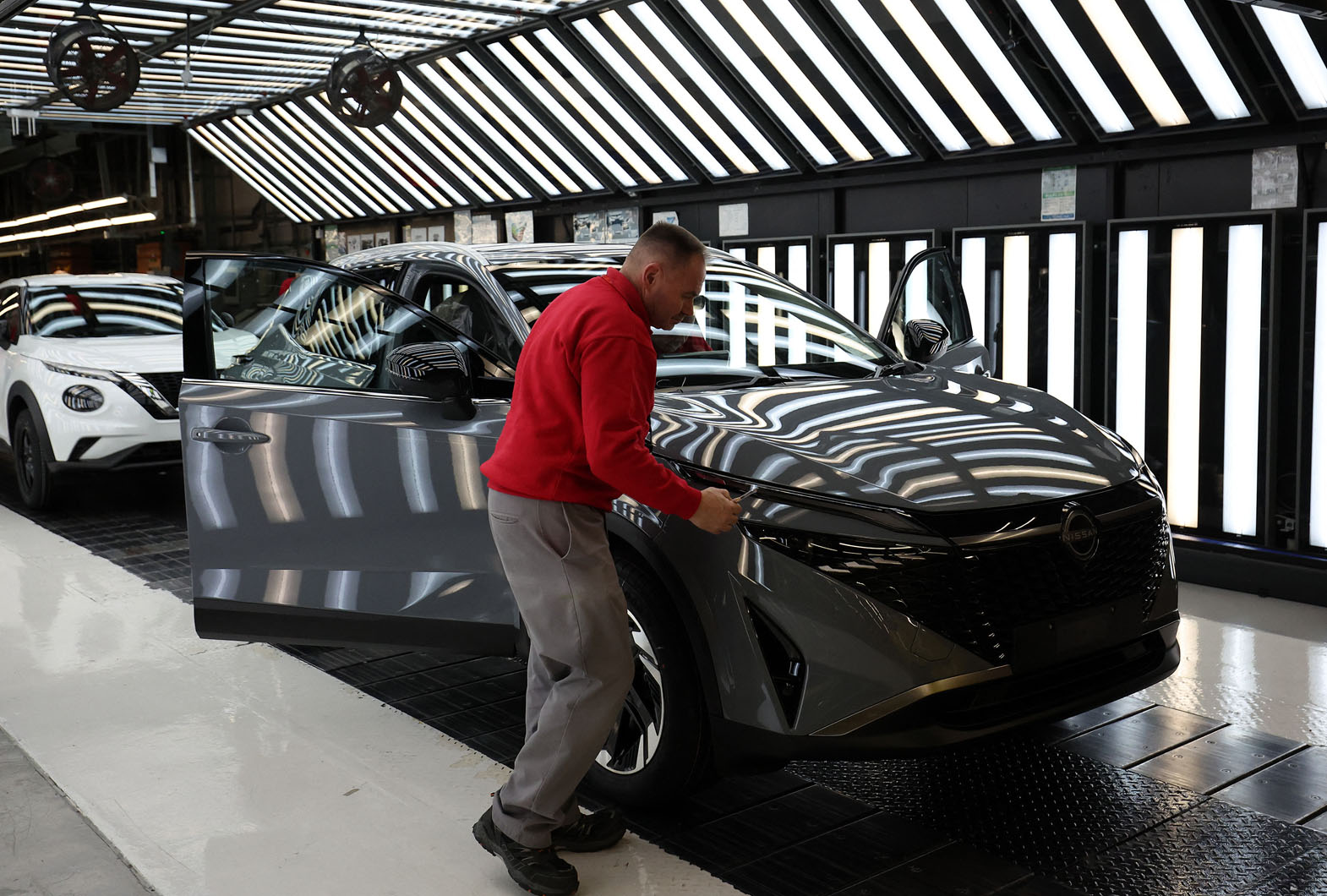
In a significant strategic recalibration, Japanese automotive titan Nissan has announced the closure of one of its two production lines at its flagship Sunderland plant in the UK. This decision, part of a wider cost-cutting initiative, will lead to the elimination of 900 jobs across its European operations, though critically, the company has confirmed that positions at the Sunderland facility itself are secure. The move underscores the intense pressures facing the global automotive industry, from volatile consumer demand and supply chain disruptions to the monumental shift towards electrification.
The Sunderland plant, a cornerstone of Nissan's European manufacturing footprint, is renowned for producing popular models such as the all-electric Leaf, the stylish Juke crossover, and the ubiquitous Qashqai SUV. While the plant's output will be consolidated onto a single line, Nissan assures that production volumes will not be impacted, leveraging increased efficiency and flexibility. This restructuring is not merely a reactive measure but a proactive step by Nissan to streamline its operations, enhance competitiveness, and fortify its financial resilience in a rapidly evolving market. The automotive sector, particularly in Europe, is navigating a complex confluence of stringent emissions regulations, geopolitical uncertainties, and the colossal investments required for EV development, making such strategic adjustments almost inevitable for long-term viability.
The Global Automotive Headwinds and Nissan's Response
The automotive industry has been on a rollercoaster ride since the onset of the pandemic. Supply chain bottlenecks, particularly the persistent semiconductor shortage, have crippled production schedules globally. Simultaneously, inflationary pressures have driven up raw material costs, squeezing profit margins. For legacy automakers like Nissan, the challenge is compounded by the imperative to transition from internal combustion engines (ICE) to electric vehicles (EVs) at an unprecedented pace. This shift demands colossal capital expenditure in research and development, battery technology, and charging infrastructure, all while maintaining profitability from their existing ICE portfolios.
Nissan's decision to consolidate production lines and reduce its European workforce by 900 positions reflects a calculated effort to optimize its manufacturing footprint and reduce operational overheads. The company has been implementing a global transformation plan, 'Nissan NEXT,' since 2020, aimed at rationalizing its product portfolio, optimizing production capacity, and focusing on core markets and technologies. This latest announcement aligns perfectly with that overarching strategy, seeking to create a leaner, more agile organization capable of responding swiftly to market dynamics.
Sunderland: A Pillar of UK Manufacturing
The Nissan Sunderland plant holds a unique and storied place in UK manufacturing history. Established in 1986, it quickly became one of the most productive car factories in Europe, a testament to its highly skilled workforce and efficient operational practices. For decades, it has been a significant employer in the North East of England, contributing substantially to the regional economy. The plant's ability to adapt and innovate has been crucial, from pioneering lean manufacturing techniques to becoming a leading producer of electric vehicles with the Leaf.
The confirmation that jobs at Sunderland are safe, despite the line closure, is a critical point of reassurance for the local community and the broader UK automotive sector. It suggests that Nissan views Sunderland as a strategic asset for its future, particularly in the context of EV production. The plant is slated to play a pivotal role in Nissan's electrification strategy, with plans to produce future EV models. This commitment underscores the UK's potential as a hub for advanced automotive manufacturing, provided it can offer a stable and competitive business environment, including access to skilled labor and robust supply chains.
Implications for the European Automotive Landscape
The 900 job cuts across Europe, while not directly impacting Sunderland, signal broader adjustments within Nissan's continental operations. These reductions are likely to affect administrative, sales, and potentially other manufacturing facilities outside the UK. Such moves are not isolated to Nissan; several major automakers have announced similar restructuring efforts, including plant closures, workforce reductions, and strategic alliances, as they grapple with the costs of electrification and the need for greater efficiency.
The European automotive market is characterized by intense competition, fragmented demand, and increasingly stringent environmental regulations. The transition to EVs, while necessary, is capital-intensive and fraught with risks. Automakers must balance the need to invest heavily in new technologies with the pressure to maintain profitability and market share. Nissan's actions are indicative of a wider trend where companies are forced to make tough decisions to secure their long-term future, prioritizing efficiency and strategic focus over broad-based operations.
The Road Ahead: Electrification and Efficiency
Nissan's future, like that of many global automakers, is inextricably linked to electrification. The company has set ambitious targets for EV sales and is investing heavily in new platforms, battery technologies, and charging solutions. The consolidation at Sunderland, by enhancing efficiency, is intended to free up resources that can be redirected towards these critical growth areas. The ability to produce multiple models, including ICE and EV variants, on a single, flexible line is a key advantage in managing the transition.
Furthermore, the focus on cost-cutting extends beyond manufacturing. Nissan is also scrutinizing its entire value chain, from procurement to logistics and sales, to identify further efficiencies. The goal is to build a more resilient and profitable business model that can thrive in the face of ongoing industry transformation. For consumers, this could eventually translate into more competitively priced EVs and a broader range of sustainable mobility solutions. For the workforce, it means a continuous need for upskilling and adaptation to new technologies and manufacturing processes.
In conclusion, Nissan's decision to close a production line at Sunderland and cut 900 jobs in Europe is a stark reminder of the profound structural changes sweeping through the global automotive industry. It is a strategic maneuver designed to bolster the company's financial health and accelerate its pivot towards an electrified future. While the immediate impact is on jobs and operational structures, the underlying narrative is one of adaptation, resilience, and the relentless pursuit of efficiency in a world where the car as we know it is being fundamentally redefined. The Sunderland plant, though undergoing consolidation, remains a vital cog in Nissan's global machinery, positioned to lead the charge into the electric age, demonstrating that even in times of significant change, strategic focus can secure future prosperity.
Stay Informed
Get the world's most important stories delivered to your inbox.
No spam, unsubscribe anytime.
Comments
No comments yet. Be the first to share your thoughts!