Operation Chavín de Huántar: The Daring Rescue That Ended Peru's Hostage Crisis
On April 22, 1997, a four-month hostage crisis at the Japanese ambassador's residence in Lima, Peru, culminated in a breathtaking military operation. 'Chavín de Huántar' saw Peruvian special forces storm the compound, rescuing 71 hostages and ending the standoff with the Tupac Amaru Revolutionary Movement (MRTA). This intricate mission, executed with precision and daring, remains a pivotal moment in counter-terrorism history, demonstrating both the high stakes and the complex strategies involved in such interventions.
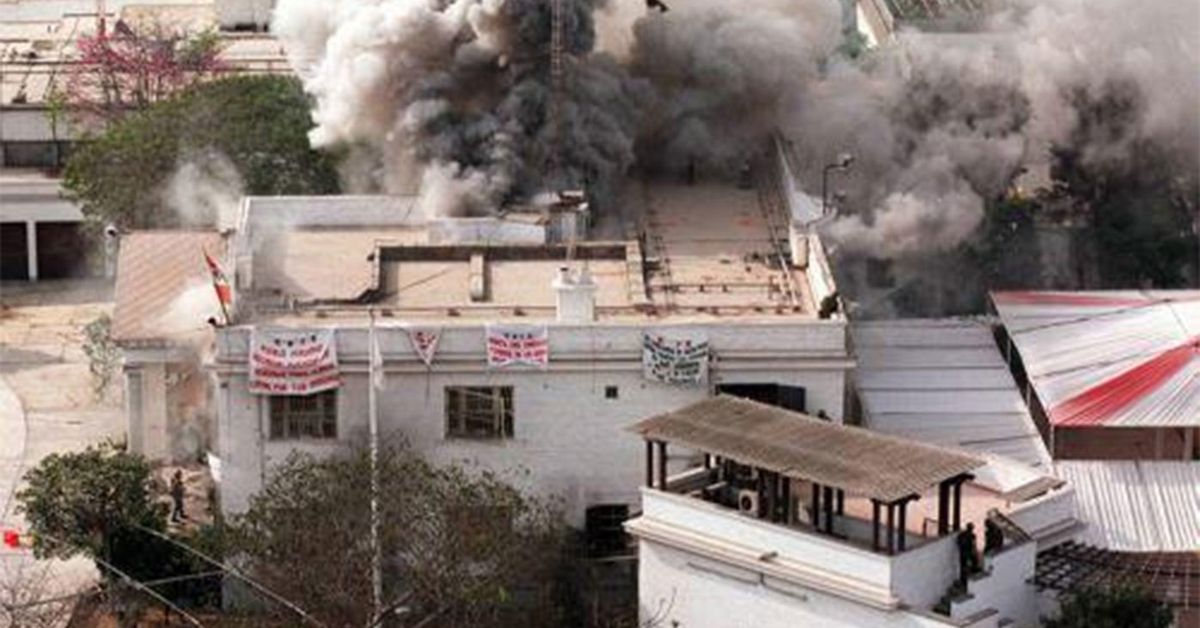
The air in Lima, Peru, on April 22, 1997, was thick with tension, a palpable unease that had hung over the city for 126 days. Inside the Japanese ambassador’s residence, a grim tableau of diplomacy and terror had unfolded since December 17, 1996. Dozens of high-profile hostages – diplomats, government officials, military officers, and business executives – were held captive by the Tupac Amaru Revolutionary Movement (MRTA), a Marxist-Leninist insurgent group. What followed that day was a military operation so audacious, so meticulously planned, and so fraught with peril that it would forever be etched into the annals of counter-terrorism: Operation Chavín de Huántar. It was a rescue mission that lasted barely 20 minutes but had been four months in the making, a testament to human courage and strategic brilliance.
The Genesis of a Crisis: A Nation Held Captive
The crisis began on a festive note, a celebration of Emperor Akihito's birthday, ironically a symbol of international goodwill. The Japanese ambassador's residence was teeming with hundreds of guests when 14 heavily armed MRTA rebels, led by Néstor Cerpa Cartolini, stormed the compound. Their demands were clear: the release of 400 imprisoned MRTA members, a change in Peru's economic policies, and a ransom. The initial chaos saw many women and elderly guests released, but 72 men remained, trapped in a diplomatic nightmare. This act of terror plunged Peru, already grappling with the legacy of the Shining Path insurgency, into a new, agonizing chapter. The world watched, aghast, as negotiations faltered, and the plight of the hostages became a daily headline.
President Alberto Fujimori's government faced an impossible dilemma. Yielding to the terrorists' demands would set a dangerous precedent, but a direct assault carried immense risks, not least the potential loss of innocent lives. Behind the scenes, however, a clandestine plan was already taking shape. While public negotiations played out, a secret, parallel effort was underway to prepare for a military option. This period of feigned diplomacy bought invaluable time for intelligence gathering and the meticulous construction of a rescue strategy.
Under the Surface: The Tunneling Operation
The heart of Operation Chavín de Huántar lay beneath the very foundations of the ambassador's residence. For months, a team of Peruvian military engineers, working in absolute secrecy, dug a network of tunnels leading directly under key points of the compound. This was no ordinary excavation; it was an engineering marvel, designed to allow special forces to breach the building simultaneously from multiple points, catching the terrorists completely by surprise. The tunnels were equipped with ventilation, lighting, and even soundproofing to prevent detection. The sheer scale of this undertaking, executed right under the noses of the MRTA, speaks volumes about the dedication and ingenuity of the Peruvian forces.
To mask the noise of the digging, the military employed ingenious tactics. Loud music was constantly played at a nearby base, ostensibly for recreational purposes, but in reality, to cover the sounds of picks and shovels. Hostages were even encouraged to play soccer in the compound's courtyard, a seemingly benign activity that provided further cover for the subterranean work. Intelligence was also gathered through various means, including tiny microphones smuggled into the residence and even through the subtle observations of released hostages, piecing together a detailed picture of the MRTA's positions, routines, and armaments. This intelligence was critical for the precise targeting required for the assault.
The Assault: 20 Minutes of Controlled Chaos
At 3:23 PM on April 22, 1997, the order was given. In a coordinated explosion, the floors of the residence erupted as Peruvian commandos, members of the special forces unit known as the 'Chavín de Huántar', burst forth from the tunnels. Simultaneously, other teams stormed the building from the main entrance and surrounding walls. The element of surprise was absolute. The MRTA rebels, caught off guard, were overwhelmed. The operation was a whirlwind of gunfire, explosions, and shouts, all unfolding with terrifying speed.
Each commando had a specific target and a clear objective: neutralize the terrorists and secure the hostages. The training had been rigorous, simulating every possible scenario. The commandos moved with precision, their actions honed by months of preparation. Within minutes, the main resistance was crushed. Three commandos, including Colonel Juan Valer Sandoval and Captain Raúl Jiménez Chávez, tragically lost their lives in the heroic effort. All 14 MRTA members were killed. Miraculously, 71 of the 72 hostages were rescued, though one, Supreme Court Justice Carlos Giusti Acuña, died of a heart attack during the initial assault. The world watched in awe as images of the rescued hostages, some visibly shaken but alive, emerged from the compound. The four-month ordeal was over.
Legacy and Implications: A Controversial Victory
Operation Chavín de Huántar was hailed internationally as a textbook example of a successful hostage rescue mission. It demonstrated Peru's resolve against terrorism and its capacity for complex military operations. President Fujimori's popularity soared, and the mission became a symbol of national pride. However, the operation was not without controversy. The fact that all 14 MRTA members were killed, some allegedly executed after surrendering, led to accusations of human rights violations. These claims sparked investigations by international bodies and remain a contentious issue in Peru's history, highlighting the ethical complexities inherent in such high-stakes interventions.
Beyond the immediate aftermath, the operation had profound implications. It sent a clear message to terrorist organizations globally that governments would not always negotiate, and that direct action, however risky, was a viable option. It also showcased the critical importance of intelligence gathering, meticulous planning, and specialized training in counter-terrorism efforts. For Peru, it marked a significant blow to the MRTA, which never fully recovered its operational capacity, contributing to the eventual decline of major insurgent groups in the country. The bravery of the commandos and the strategic brilliance behind the operation continue to be studied by military strategists worldwide, a stark reminder of the thin line between diplomatic failure and decisive action in the face of terror.
Today, the site of the former ambassador's residence stands as a quiet reminder of those tense months. The legacy of Chavín de Huántar is complex: a triumph of military strategy and courage, yet shadowed by questions of justice. It remains a powerful case study in the global fight against terrorism, illustrating the immense pressures on leadership, the sacrifices made by special forces, and the enduring debate over the moral boundaries of warfare. The operation underscored that while immediate threats can be neutralized, the deeper wounds of conflict often take generations to heal.
Stay Informed
Get the world's most important stories delivered to your inbox.
No spam, unsubscribe anytime.
Comments
No comments yet. Be the first to share your thoughts!