Pakistan Urges Diplomacy at UNSC: A Call for Restraint in Middle East Crises
Pakistan has strongly advocated for diplomacy, restraint, and dialogue as the only viable path to resolve the escalating Israel-Palestine conflict and the US-Iran tensions in the Strait of Hormuz. Speaking at a critical UN Security Council debate, Pakistan's Permanent Representative emphasized the urgent need for peaceful solutions to prevent further destabilization of the Middle East. This stance underscores a global concern for regional peace and security amid growing geopolitical friction. The call highlights the international community's responsibility to de-escalate conflicts through established diplomatic channels.
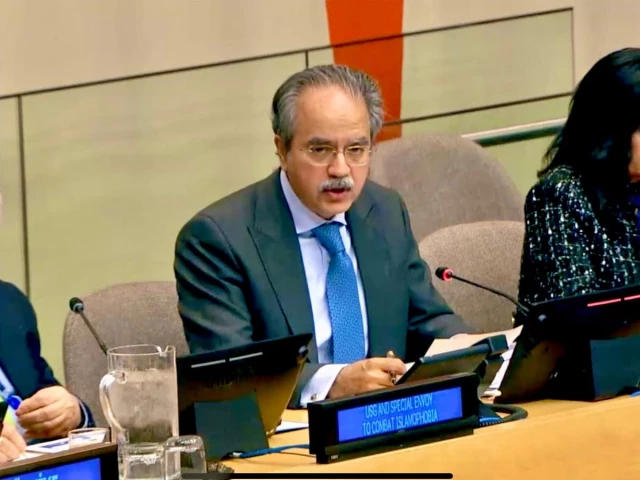
In a world increasingly fraught with geopolitical tensions, Pakistan has emerged as a vocal proponent for peace, urging the international community to prioritize diplomacy, restraint, and dialogue in addressing the volatile situations in the Middle East. At a recent United Nations Security Council (UNSC) open debate, Pakistan's Permanent Representative underscored the critical need for peaceful resolutions to both the enduring Israel-Palestine conflict and the simmering US-Iran tensions surrounding the Strait of Hormuz. This impassioned plea comes at a juncture where the region stands on the precipice of further instability, with global ramifications. The message from Islamabad is clear: only through concerted diplomatic efforts can a wider conflagration be averted, safeguarding regional and international peace.
The Enduring Agony of Israel-Palestine
The Israeli-Palestinian conflict, a humanitarian and political crisis spanning decades, remains one of the most intractable challenges on the global agenda. Pakistan's call for diplomacy is rooted in the recognition that military solutions have consistently failed to bring lasting peace or justice. The conflict, characterized by cycles of violence, occupation, and displacement, has claimed countless lives and fostered deep-seated resentment. International law, particularly UN resolutions, provides a framework for a two-state solution – an independent, sovereign Palestinian state alongside Israel, with East Jerusalem as its capital. However, progress has been consistently hampered by political intransigence, expanding settlements, and a lack of sustained, meaningful negotiations.
Pakistan, historically a strong advocate for Palestinian rights, reiterated its unwavering support for the Palestinian people's right to self-determination and the establishment of their independent state. The UNSC debate offered a crucial platform to remind member states of their collective responsibility to uphold international law and protect civilian populations. The human cost of the conflict is staggering: according to various UN agencies and human rights organizations, thousands of Palestinians and Israelis have been killed, and millions displaced. The economic blockade on Gaza, for instance, has created a severe humanitarian crisis, with high unemployment rates and inadequate access to basic services. These conditions fuel despair and further entrench the cycle of violence, making the call for a diplomatic breakthrough not just political rhetoric, but a moral imperative.
Navigating the Volatile Waters of Hormuz
Simultaneously, the Strait of Hormuz, a narrow waterway connecting the Persian Gulf to the open ocean, has become another flashpoint of international concern. This strategic choke point, through which approximately one-fifth of the world's crude oil supply passes, is central to the ongoing tensions between the United States and Iran. Recent incidents, including tanker seizures, drone shoot-downs, and accusations of sabotage, have significantly heightened the risk of a military confrontation. Such a conflict would not only devastate the regional economy but also send shockwaves through global energy markets, potentially triggering a worldwide recession.
Pakistan's intervention at the UNSC highlighted the urgent need for de-escalation and dialogue to prevent miscalculation. The country shares a border with Iran and has significant economic ties with Gulf states, making regional stability a direct national interest. The potential for a military escalation in Hormuz is immense, with consequences far beyond the immediate belligerents. A disruption of oil flows could lead to soaring prices, impacting consumers and industries globally. Furthermore, the environmental damage from a major conflict in such a vital marine ecosystem would be catastrophic. Pakistan's emphasis on restraint is a direct appeal to both Washington and Tehran to step back from the brink, engage in direct or indirect negotiations, and explore diplomatic off-ramps to their current standoff. The international community, through bodies like the UNSC, has a role to play in facilitating such dialogue and ensuring that international maritime law is respected by all parties.
The Role of the United Nations Security Council
As the primary body responsible for maintaining international peace and security, the UNSC holds immense responsibility in these crises. Pakistan's address was a direct challenge to the Council to live up to its mandate. While the UNSC's effectiveness is often hampered by the veto power of its permanent members, its role as a forum for dialogue and a platform for expressing international consensus remains crucial. The very act of holding an open debate on the Middle East, as Pakistan participated in, allows for a broader range of perspectives to be heard and recorded.
However, the call for diplomacy also implicitly critiques the limitations of the current international system. The protracted nature of the Israel-Palestine conflict and the recurring crises in the Gulf region demonstrate that resolutions, when passed, are not always implemented, and diplomatic initiatives often falter. Pakistan's statement serves as a reminder that the Security Council must move beyond mere condemnation or expressions of concern and actively pursue mechanisms for conflict prevention and resolution. This includes robust mediation efforts, enforcement of international humanitarian law, and support for confidence-building measures between adversaries. The credibility of the UN system itself is at stake when such critical issues remain unresolved for decades.
A Path Forward: Beyond Rhetoric
Pakistan's principled stand at the UNSC is a reflection of a broader global sentiment that favors peaceful conflict resolution over military adventurism. The message resonates with many nations that understand the devastating human and economic costs of war. Moving forward, the international community must translate these calls for diplomacy into concrete actions. This involves:
* Sustained diplomatic engagement: Not just reactive measures, but proactive and continuous efforts to bring parties to the negotiating table. * Adherence to international law: Upholding UN resolutions and principles as the foundation for just and lasting peace. * Protection of civilians: Ensuring humanitarian access and safeguarding human rights in conflict zones. * Regional cooperation: Encouraging dialogue and cooperation among regional states to address shared security concerns.
In conclusion, Pakistan's appeal for restraint, dialogue, and diplomacy at the UN Security Council is a timely and urgent reminder that peace in the Middle East is not an unattainable ideal but a necessary endeavor requiring collective political will. The stakes are too high, and the potential for catastrophic consequences too great, to allow these critical issues to fester. The path to stability, though arduous, lies firmly in the realm of peaceful negotiation and mutual respect, guided by the principles of international law and humanitarian concern. The world watches, hoping that these calls for reason will prevail over the drums of war.
Stay Informed
Get the world's most important stories delivered to your inbox.
No spam, unsubscribe anytime.
Comments
No comments yet. Be the first to share your thoughts!