Pakistan's Police Crisis: Underpaid, Under-Resourced, and Under Fire
A new report sheds light on the dire state of Pakistan's police force, revealing a system where officers are consistently underpaid, under-resourced, and left vulnerable despite being the most frequently targeted security personnel. This systemic neglect not only compromises their effectiveness in maintaining law and order but also fuels public distrust and exacerbates security challenges across the nation. The findings underscore an urgent need for comprehensive reforms to bolster police welfare, training, and equipment, crucial for national stability.
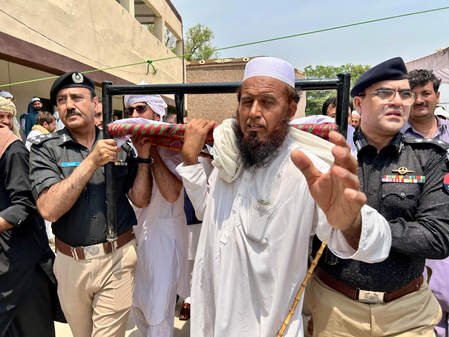
In the volatile landscape of Pakistan, where security forces frequently face threats from diverse militant groups and criminal organizations, one arm of the state's defense stands out for its paradoxical vulnerability: the police. A recent, damning report has pulled back the curtain on the grim reality faced by Pakistan's law enforcement, exposing a system characterized by profound neglect. Despite being the most frequently targeted security force in the country, police personnel are simultaneously the cheapest to maintain, consistently underpaid, critically under-resourced, and left dangerously exposed. This stark arithmetic not only reflects a deeply flawed allocation of priorities but also has profound implications for national security, public safety, and the very fabric of governance.
A System in Peril: The Human Cost of Neglect
The report paints a grim picture of the daily lives of Pakistani police officers. Imagine a force tasked with maintaining law and order, combating terrorism, and protecting citizens, yet its members struggle to make ends meet. Their salaries are often insufficient to cover basic living expenses, forcing many into precarious financial situations. This economic vulnerability is compounded by a severe lack of essential equipment. Officers frequently lack modern weaponry, adequate protective gear, and even basic communication tools. Patrolling dangerous areas with outdated rifles and insufficient body armor is not just a risk; it's a death sentence waiting to happen. The psychological toll is immense, with officers constantly facing the threat of violence while feeling unsupported by the state they serve. This creates a vicious cycle: low morale leads to reduced effectiveness, which in turn erodes public confidence and makes the force even more susceptible to attacks and corruption.
Historically, the police in Pakistan have often been viewed with suspicion by the populace, a legacy of colonial-era practices and subsequent political interference. However, the current crisis goes beyond mere perception. It's a tangible failure of state responsibility towards its frontline defenders. The report highlights that while other security agencies often receive substantial budgets and modern equipment, the police are consistently relegated to the bottom of the financial hierarchy. This disparity is not merely an administrative oversight; it is a strategic blunder that undermines the entire security apparatus. A strong, well-equipped, and motivated police force is the bedrock of internal security, capable of intelligence gathering, community policing, and rapid response to localized threats. When this bedrock crumbles, the entire structure of national security becomes unstable.
Operational Deficiencies and Public Distrust
The lack of resources translates directly into operational deficiencies. Without proper training facilities, modern forensic tools, and advanced investigative techniques, police struggle to effectively tackle complex crimes, including terrorism and organized crime. The reliance on outdated methods not only hinders justice but also allows criminals to operate with greater impunity. Furthermore, the absence of adequate transport and communication infrastructure means slower response times, particularly in remote or rural areas, leaving communities vulnerable and fostering a sense of abandonment.
Public trust, already fragile, is further eroded by these systemic issues. When citizens see police officers struggling with basic resources, or perceive them as ineffective due to lack of training or equipment, their confidence in the state's ability to protect them diminishes. This lack of trust can manifest in several ways: reluctance to report crimes, unwillingness to cooperate with investigations, and a general sense of disillusionment with the justice system. In a country grappling with extremism, community cooperation is paramount for intelligence gathering and counter-terrorism efforts. A disrespected and under-resourced police force struggles to build the necessary bridges with the communities it serves, creating fertile ground for radicalization and criminal activity.
The Path Forward: Urgent Reforms and Investment
Addressing this multifaceted crisis requires a comprehensive and sustained commitment to reform. The report implicitly calls for a fundamental re-evaluation of how Pakistan values and invests in its police force. Firstly, there must be a significant increase in police salaries to ensure a dignified standard of living for officers and their families. This will not only boost morale but also attract higher caliber recruits and reduce the temptation for corruption.
Secondly, a massive injection of resources is needed for equipment and infrastructure. This includes modernizing weaponry, providing high-quality protective gear, investing in advanced communication systems, and upgrading police stations and training academies. Specialized units require tailored equipment and training to combat specific threats, such as cybercrime or terrorism.
Thirdly, comprehensive training programs must be implemented, focusing on modern policing techniques, human rights, community engagement, and psychological support. A well-trained officer is not only more effective but also more likely to uphold ethical standards and build public trust. Fourthly, political interference in police operations and appointments must be curtailed to foster professionalism and operational independence. This is crucial for establishing meritocracy and accountability within the force.
Finally, fostering a culture of accountability and transparency is paramount. Independent oversight mechanisms can help address grievances and ensure that police actions are just and lawful. Simultaneously, public awareness campaigns can help educate citizens about the challenges faced by the police and promote a more cooperative relationship.
Conclusion: A Matter of National Security
The report on Pakistan's police system is more than just an administrative critique; it is a stark warning about the fragility of the state's internal security. The continued neglect of its most frequently targeted security force is an indefensible arithmetic that Pakistan can no longer afford. Investing in the police is not merely an expenditure; it is an investment in national stability, public safety, and the rule of law. Without a strong, well-supported, and trusted police force, Pakistan will continue to grapple with internal security challenges, making the path to peace and prosperity ever more arduous. The time for piecemeal solutions is over; what is needed is a holistic and urgent commitment to transform the Pakistani police into a modern, professional, and respected institution capable of meeting the complex demands of the 21st century.
Stay Informed
Get the world's most important stories delivered to your inbox.
No spam, unsubscribe anytime.
Comments
No comments yet. Be the first to share your thoughts!