Play vs. Productivity: New Research Reveals How Calf Feeding Impacts Cognitive Development and Welfare
Groundbreaking research from the University of Bristol, published in Scientific Reports, reveals a fascinating trade-off in dairy calves: those fed less perform cognitive tasks faster but sacrifice vital play behavior. Conversely, well-fed calves exhibit increased playfulness, highlighting a critical link between nutrition, cognitive development, and animal welfare. This study challenges conventional feeding practices and opens new avenues for understanding animal behavior and improving livestock management.
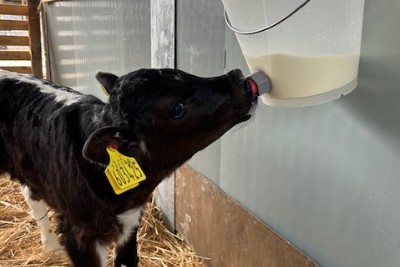
In the intricate dance of survival, every creature makes choices that prioritize immediate needs over long-term well-being. For young animals, the imperative to find food often trumps all else, a stark reality brought into sharp focus by groundbreaking research from the University of Bristol. Published in the prestigious Nature journal Scientific Reports, this study offers a compelling look at how nutritional intake profoundly shapes the behavior, cognitive development, and overall welfare of dairy calves, revealing a surprising dichotomy between efficiency in food acquisition and the capacity for play.
The findings are both intuitive and revelatory: calves fed less are more driven, performing tasks faster and exhibiting superior memory when the reward is milk. Yet, this heightened focus comes at a significant cost – a marked reduction in playful behavior. On the other hand, their better-fed counterparts, while potentially less 'driven' in the face of hunger, are far more inclined to engage in the joyous, exploratory activities characteristic of healthy, developing young animals. This research doesn't just add another layer to our understanding of animal psychology; it challenges established practices in livestock farming and prompts a re-evaluation of what constitutes optimal animal welfare.
The Instinctual Drive for Survival: Hunger's Cognitive Edge
The study's core observation revolves around the motivation of the calves. When food is scarce, the drive to secure sustenance becomes paramount, sharpening cognitive functions related to foraging and memory. Researchers designed experiments where calves had to solve puzzles or navigate mazes to access milk. The results were unequivocal: calves on restricted diets consistently outperformed their well-fed peers in these tasks. They learned faster, remembered solutions longer, and exhibited a more persistent effort to obtain their reward. This phenomenon, often observed across species, underscores the evolutionary principle that hunger is a powerful motivator, capable of enhancing cognitive performance when survival is at stake. For dairy calves, whose natural instinct is to suckle frequently, a restricted feeding regimen mimics a state of mild deprivation, thereby activating these survival-driven cognitive pathways.
Historically, dairy farming practices have often involved restricted milk feeding for calves, partly to encourage earlier weaning onto solid feeds and partly due to economic considerations. The rationale has often been that a slightly hungry calf will be more eager to eat solid food, thus promoting rumen development. However, this research suggests that while such practices might foster certain cognitive efficiencies related to food acquisition, they might inadvertently suppress other crucial aspects of development, particularly social and exploratory play. The Bristol team's work provides empirical evidence that the acute focus on food, while beneficial for task completion, overshadows the broader developmental needs of the young animal.
The Unsung Importance of Play in Animal Development
While the efficiency of hungry calves in task completion is noteworthy, the study's most poignant revelation lies in the stark contrast in play behavior. Calves that received more food were significantly more playful. They engaged in more running, jumping, head-butting, and social interactions – behaviors vital for physical, social, and cognitive development. Play is not merely a frivolous pastime; it is a critical component of learning and adaptation in young mammals. Through play, animals develop motor skills, learn social hierarchies, practice hunting or escaping behaviors, and build resilience. It's a behavioral laboratory where they experiment with their environment and their interactions within it.
For dairy calves, play can include 'zoomies' (sudden bursts of running), head-to-head pushing, and mock fighting. These activities are essential for developing strong bones and muscles, refining coordination, and understanding social cues. The absence or reduction of play, as observed in the less-fed calves, can have long-term implications for their physical health, social integration, and even their ability to cope with stress later in life. This finding resonates with similar observations in other species, from primates to domestic pets, where play deprivation is linked to behavioral problems and developmental delays. The research thus highlights a critical ethical consideration: are we, in our pursuit of efficient production, inadvertently compromising the fundamental developmental needs and overall well-being of these young animals?
Implications for Dairy Farming and Animal Welfare
The implications of this research for the dairy industry are profound. It challenges the long-held belief that restricted feeding for calves is benign or even beneficial. Instead, it suggests a significant trade-off: improved cognitive performance in food-seeking tasks at the expense of crucial play behavior. This forces a re-evaluation of current feeding protocols and encourages a shift towards practices that prioritize holistic calf development rather than just early weaning or feed efficiency.
* Rethinking Feeding Regimens: The study advocates for feeding strategies that allow calves to express natural behaviors, including play. This might involve providing more milk, or milk for longer periods, potentially through automated feeders that allow for ad libitum access or more frequent, smaller meals. Such approaches could foster both cognitive development and physical/social well-being. * Welfare Indicators: Playfulness could serve as a valuable indicator of good welfare. Farmers and veterinarians could use observed play behavior as a simple, non-invasive metric to assess the well-being of their calves. A group of playful calves is likely a healthy and thriving group. * Economic Considerations vs. Ethics: While economic pressures are undeniable in agriculture, the research prompts a discussion about the ethical responsibilities towards livestock. Investing in better feeding practices might have short-term costs but could lead to healthier, more resilient animals in the long run, potentially reducing veterinary expenses and improving overall productivity and public perception of the industry.
Broader Ecological and Evolutionary Perspectives
Beyond dairy farming, this research offers insights into broader ecological and evolutionary principles. It illustrates the fundamental trade-off between energy allocation for immediate survival (e.g., foraging, vigilance) and energy allocation for development and social learning (e.g., play, exploration). In environments where resources are scarce, animals are naturally selected to prioritize efficient resource acquisition. However, in more abundant environments, the luxury of play becomes possible, allowing for the development of more complex cognitive and social skills that can be beneficial in the long term.
This study also subtly touches upon the concept of allostasis, the process by which the body achieves stability through physiological or behavioral change. When food is restricted, the calf's allostatic load increases as it constantly adapts to a state of mild hunger, channeling resources into problem-solving for food. When food is abundant, this load decreases, freeing up resources for other developmental activities like play. Understanding these physiological and behavioral trade-offs is crucial for designing optimal environments for animal rearing, whether in agriculture or conservation.
A Forward-Looking Vision for Animal Welfare
The University of Bristol's research serves as a powerful reminder that animal welfare is a multifaceted concept, extending beyond mere physical health to encompass behavioral and psychological well-being. By demonstrating the profound impact of feeding practices on both cognitive function and play, the study provides a scientific basis for advocating for more enriched environments and nutrition for young animals. As consumers become increasingly aware and concerned about the provenance and welfare standards of their food, research like this provides critical data to inform both industry practices and public policy.
Moving forward, the challenge for the dairy industry and animal welfare advocates will be to translate these scientific findings into practical, economically viable solutions. This might involve further research into optimal feeding curves, exploring the long-term health and productivity benefits of playful calves, and developing educational programs for farmers. Ultimately, fostering an environment where calves can not only survive but thrive – exhibiting their natural, joyful behaviors – is a goal that benefits the animals, the industry, and society as a whole. This research is a significant step towards a more compassionate and scientifically informed approach to animal husbandry, paving the way for a future where productivity and welfare are not mutually exclusive but deeply intertwined.
Stay Informed
Get the world's most important stories delivered to your inbox.
No spam, unsubscribe anytime.
Comments
No comments yet. Be the first to share your thoughts!