Poland's Mountain Railway Revolution: Podłęże-Piekiełko Project Forges New European Transport Corridor
Poland is embarking on a monumental infrastructure endeavor with the Podłęże-Piekiełko railway project, launching a €448 million tender for six critical tunnels. This ambitious undertaking aims to modernize and expand rail connectivity in the Lesser Poland Voivodeship, significantly reducing travel times and enhancing freight capacity. The project is poised to transform regional development and strengthen Poland's position as a key transit hub between the Baltic and Adriatic Seas.
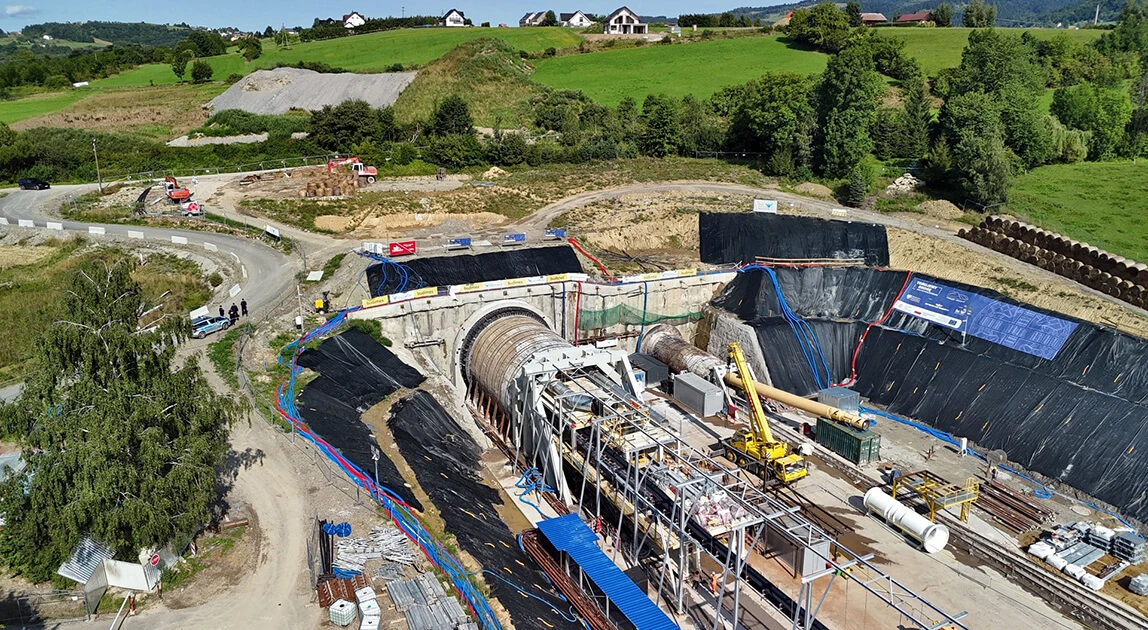
In a bold move set to redefine Central European connectivity, Poland has initiated a colossal railway infrastructure project, the Podłęże-Piekiełko line, marking a significant stride towards modernizing its transport network. The national rail infrastructure authority, PKP Polskie Linie Kolejowe (PKP PLK), recently announced a €448.5 million (PLN 1.9 billion) tender for the construction of six vital railway tunnels. This particular tender focuses on the challenging Kasina Wielka to Szczyrzyc and Porąbka–Stróża sections, forming a crucial part of the broader, multi-billion-euro endeavor. This project is not merely about laying tracks; it's about carving new arteries through the mountainous terrain of the Lesser Poland Voivodeship, promising a future of faster, more efficient, and environmentally friendly transportation.
A Vision for Modern Polish Railways
The Podłęże-Piekiełko project is a cornerstone of Poland's long-term strategy to enhance its rail network, which has historically faced challenges due to its age and the demanding topography of certain regions. The existing railway lines, particularly those traversing the Beskid Mountains, are often circuitous and slow, limiting their capacity for both passenger and freight traffic. The new line, approximately 58 kilometers long, is designed to bypass these bottlenecks, connecting the existing Kraków-Zakopane line with a new route that will dramatically cut travel times. For instance, a journey from Kraków to Nowy Sącz is expected to be reduced from over two hours to just one hour, while the route to Zakopane could see similar significant improvements.
This initiative is more than a regional upgrade; it is an integral component of the Trans-European Transport Network (TEN-T), specifically the Baltic-Adriatic Corridor. By improving connections between Poland's northern ports and the southern borders, the project will facilitate smoother trade flows across Europe, bolstering economic ties and reducing logistical costs for businesses. The strategic importance of this corridor cannot be overstated, as it links major industrial centers and ports, serving as a vital artery for the continent's economy. The investment underscores Poland's commitment to becoming a pivotal transit hub, leveraging its geographical position to its full potential.
Engineering Marvels: Tunnels and Viaducts
The mountainous landscape of Southern Poland presents formidable engineering challenges, making the construction of tunnels and viaducts an absolute necessity. The current tender specifically calls for the construction of six railway tunnels, which will be among the most complex and demanding aspects of the project. These tunnels will vary in length and complexity, requiring state-of-the-art construction techniques and meticulous planning to navigate geological formations and ensure long-term stability. While the specific lengths of the tunnels in this particular tender are yet to be fully detailed, previous reports on the broader project have indicated tunnels exceeding 2 kilometers in length, showcasing the scale of the undertaking.
Beyond the tunnels, the project will also involve the construction of numerous viaducts and bridges, designed to span valleys and rivers, integrating the new line seamlessly into the natural environment. The total length of these engineering structures, including tunnels and bridges, is projected to be substantial, accounting for a significant portion of the new line's route. Such extensive infrastructure development requires not only immense capital but also a highly skilled workforce and advanced technological solutions, positioning Poland at the forefront of modern railway engineering in Europe.
Funding and Broader Impact
Financing for such a grand project is a multi-faceted affair. The total estimated cost of the Podłęże-Piekiełko project is substantial, running into several billion euros. While the current tender for the tunnels is valued at €448.5 million, the overall funding strategy involves significant contributions from the European Union. As a TEN-T project, it qualifies for substantial EU co-financing through various instruments, including the Connecting Europe Facility (CEF) and potentially cohesion funds. This European backing highlights the project's importance not just for Poland, but for the entire continent's transport infrastructure and economic integration.
The economic impact of the project extends far beyond the construction phase. Once operational, the new railway line is expected to stimulate regional development in the Lesser Poland Voivodeship, improving accessibility for tourists visiting popular destinations like Zakopane and the Beskid Mountains. This increased accessibility will likely boost local economies, supporting tourism, hospitality, and related services. Furthermore, the enhanced freight capacity will benefit industries across Poland and neighboring countries, offering a more efficient and environmentally friendly alternative to road transport, thus contributing to the EU's green transport objectives.
Environmental Considerations and Public Engagement
Infrastructure projects of this magnitude inevitably raise environmental concerns. PKP PLK has emphasized its commitment to minimizing the ecological footprint of the Podłęże-Piekiełko line. This includes conducting thorough environmental impact assessments, implementing measures to protect local flora and fauna, and designing structures that blend harmoniously with the landscape. The choice of rail transport itself is a step towards sustainability, as trains are significantly more energy-efficient and produce fewer emissions per ton-kilometer than road vehicles.
Public engagement and stakeholder consultation have also been crucial components of the project's planning stages. Local communities, environmental groups, and regional authorities have been involved in discussions to address concerns, gather feedback, and ensure that the project benefits all stakeholders. While large-scale infrastructure can sometimes face local opposition, the long-term economic and social advantages, coupled with careful environmental planning, often garner broad support.
The Future of Polish and European Rail
The Podłęże-Piekiełko project represents a powerful statement about Poland's ambitions to solidify its position as a modern European nation with world-class infrastructure. It is a testament to the country's vision for a more connected, efficient, and sustainable future. As the construction of these six tunnels begins, it will not only reshape the physical landscape of Southern Poland but also pave the way for enhanced economic opportunities, improved travel experiences, and a stronger, more integrated European transport network.
This undertaking, alongside other major rail investments across the continent, signals a renewed focus on rail as the backbone of European mobility. The successful completion of the Podłęże-Piekiełko line will not only serve the immediate needs of Polish citizens and businesses but will also contribute significantly to the broader goals of the European Union, fostering greater cohesion and prosperity across its member states. The mountains of Lesser Poland are about to witness a transformation, ushering in a new era of rail travel and trade that will resonate across the continent for decades to come.
Stay Informed
Get the world's most important stories delivered to your inbox.
No spam, unsubscribe anytime.
Comments
No comments yet. Be the first to share your thoughts!