Precious Metals Surge: Can a Weak Dollar and Geopolitics Fuel Gold and Silver's Breakout?
Gold and silver are experiencing a significant rally, driven by a weakening US dollar and falling oil prices. Geopolitical tensions and improving global sentiment are further bolstering demand for these safe-haven assets. Analysts are now eyeing potential breakouts, with silver's industrial demand and gold's traditional safe-haven appeal positioning them for continued gains amidst economic uncertainties and shifting market dynamics.
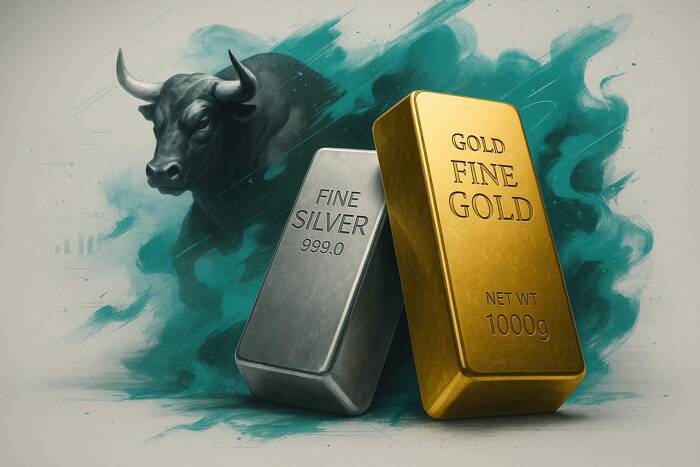
In the tumultuous landscape of global finance, few assets capture the imagination and investment capital quite like gold and silver. For centuries, these precious metals have served as a bedrock of value, a hedge against inflation, and a sanctuary during times of economic and geopolitical upheaval. Today, they are once again at the forefront of market discussions, exhibiting a robust rally fueled by a confluence of powerful macroeconomic and geopolitical currents. The question on every investor's mind: Is this the dawn of a sustained breakout for gold and silver, or merely a temporary surge?
The current upward trajectory of both gold and silver is multi-faceted, reflecting a complex interplay of global economic indicators and political tensions. A significant catalyst has been the weakening US dollar, which traditionally shares an inverse relationship with commodities priced in the greenback. As the dollar loses strength, these metals become more affordable for international buyers, thereby boosting demand. Simultaneously, a notable drop in oil prices has contributed to an environment where investors seek alternative stores of value, further channeling capital into precious metals. Beyond these immediate drivers, the enduring specter of geopolitical tensions – from ongoing conflicts to diplomatic impasses – continues to underpin demand for safe-haven assets. Paradoxically, even improving global sentiment, particularly with prospects of de-escalation in certain regions, is interpreted by some as a sign of greater stability, encouraging investment in tangible assets.
The Dollar's Dilemma and Commodity Correlation
The US dollar's recent performance has been a critical factor in the precious metals rally. A weaker dollar makes dollar-denominated commodities, including gold and silver, cheaper for holders of other currencies. This inverse correlation is a fundamental principle in commodity markets. The dollar's decline can be attributed to several factors, including changing expectations for interest rate differentials between the US and other major economies, and concerns over the US fiscal position. For instance, if the Federal Reserve signals a more dovish stance or other central banks adopt a more hawkish approach, the dollar could face further downward pressure. Historically, periods of sustained dollar weakness have often coincided with significant bull runs in precious metals. Data from the World Gold Council frequently highlights this trend, showing that a 1% depreciation in the dollar index can lead to a measurable increase in gold prices, though the exact correlation can vary based on market conditions and other prevailing factors.
Moreover, the recent dip in crude oil prices plays a subtle yet important role. While seemingly unrelated, lower oil prices can sometimes signal broader concerns about global economic growth, pushing investors towards safe-haven assets. Conversely, very high oil prices can fuel inflation, also driving demand for gold as an inflation hedge. The current scenario, where oil prices have softened, seems to be interpreted by the market as a sign of potential economic headwinds, making gold and silver more attractive. This dynamic underscores the complex web of interdependencies within global financial markets, where a shift in one major commodity can ripple through others.
Geopolitical Undercurrents and Safe-Haven Demand
Geopolitical instability has always been a powerful driver for precious metals. The ongoing conflicts in Eastern Europe and the Middle East, coupled with broader geopolitical realignments, create an environment of uncertainty that naturally pushes investors towards assets perceived as stable and reliable. Gold, in particular, has long been revered as the ultimate safe haven, a store of value that transcends national currencies and political boundaries. Its appeal intensifies when traditional financial markets appear volatile or vulnerable to external shocks. Recent reports from the International Monetary Fund (IMF) and various central banks indicate a continued trend of central bank gold accumulation, a clear signal of institutional hedging against global risks. This institutional demand provides a strong floor for gold prices and reflects a long-term strategic view on its role in national reserves.
Interestingly, the source material also points to improving global sentiment due to possible US-Iran negotiations. While seemingly contradictory to the safe-haven narrative, this can be interpreted in two ways. First, a reduction in specific geopolitical tensions might free up investment capital that was previously held back by extreme uncertainty, leading to a broader market rally that includes precious metals. Second, even if specific tensions ease, the underlying structural geopolitical risks remain, and investors might simply be re-allocating within the safe-haven spectrum, or viewing a more stable global environment as conducive to long-term investment in tangible assets like gold and silver, especially if it implies sustained economic activity that benefits industrial metals like silver.
Silver's Dual Appeal: Industrial and Investment Demand
While gold often garners headlines as the premier safe haven, silver (XAG) presents a unique investment proposition due to its dual nature. It functions both as a precious metal and an industrial commodity. Approximately half of global silver demand comes from industrial applications, including electronics, solar panels, and medical devices. This industrial demand makes silver particularly sensitive to the health of the global economy. As the source notes,
Stay Informed
Get the world's most important stories delivered to your inbox.
No spam, unsubscribe anytime.
Comments
No comments yet. Be the first to share your thoughts!