Putin's Peace Gambit: Is the Ukraine Conflict Nearing an End, and What Role Does the US Play?
Russian President Vladimir Putin recently claimed the Ukraine conflict is "coming to an end" and surprisingly thanked the United States for facilitating talks. This unexpected diplomatic overture, amid ongoing hostilities and prisoner exchanges, raises critical questions about the true state of negotiations and the potential for a resolution. Analysts are scrutinizing whether this represents a genuine shift in Moscow's stance or a strategic maneuver ahead of further developments.
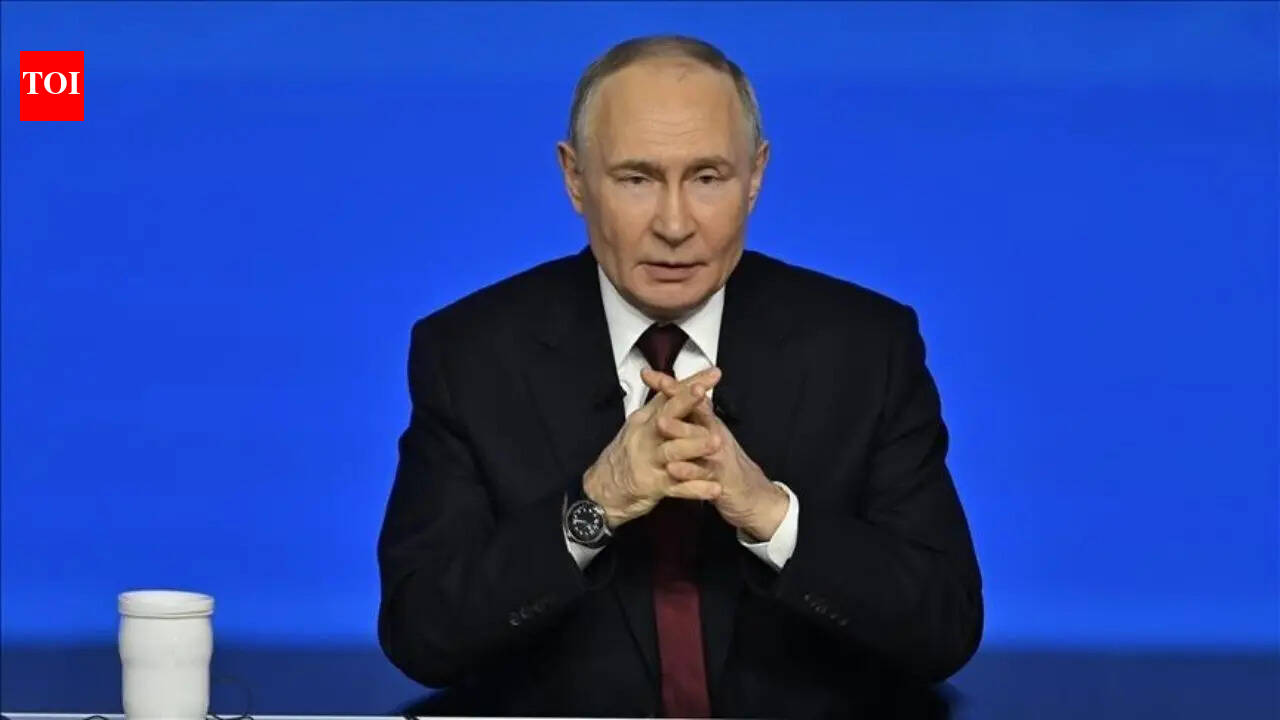
In a statement that sent ripples through international diplomatic circles, Russian President Vladimir Putin declared on Saturday that the Ukraine conflict was “coming to an end” and, perhaps even more remarkably, extended gratitude to the United States for its role in facilitating talks. This pronouncement, coming from a leader whose nation has been embroiled in a full-scale invasion for over two years, immediately sparked intense speculation and analysis. While Putin emphasized that the ultimate resolution concerned only Russia and Ukraine, his acknowledgment of Washington's involvement signals a complex, multi-layered diplomatic landscape that often operates beneath the surface of public pronouncements and battlefield realities. The declaration arrives amidst reports of ongoing prisoner-of-war (POW) swaps and persistent, albeit often stalled, efforts to find a diplomatic off-ramp to one of Europe's most devastating conflicts since World War II.
The Shifting Sands of Diplomacy: Putin's Unexpected Thanks
Putin's expression of gratitude towards the United States is particularly noteworthy given the deeply adversarial relationship between Moscow and Washington since the full-scale invasion began in February 2022. The US has been Ukraine's staunchest ally, providing billions in military and financial aid, imposing crippling sanctions on Russia, and leading international efforts to isolate the Kremlin. Against this backdrop, a public 'thank you' from Putin is highly unusual. It suggests that despite the public rhetoric and geopolitical posturing, channels of communication, however informal or indirect, remain open between the two nuclear powers. These channels are often critical in de-escalating tensions and exploring potential pathways to peace, even if they do not immediately yield breakthroughs. The nature of these "facilitated talks" remains largely undisclosed, adding to the intrigue. Are they direct, high-level discussions, or more indirect back-channel communications mediated through third parties? The opacity surrounding these interactions allows for a wide range of interpretations, from genuine progress towards de-escalation to a tactical move designed to sow discord among Ukraine's allies or project an image of Russia as a willing participant in peace efforts.
Historically, the US has played a pivotal, albeit often behind-the-scenes, role in mediating conflicts globally. During the Cold War, despite profound ideological differences, Washington and Moscow maintained lines of communication to prevent catastrophic escalation. In the post-Cold War era, the US has frequently engaged in shuttle diplomacy and facilitated negotiations in various hotspots. Putin's acknowledgment could be a nod to this historical role, or it could be a strategic attempt to frame the US as a partner in peace rather than solely an adversary, potentially aiming to drive a wedge between Washington and Kyiv's more hardline European supporters. The timing, coinciding with renewed debates in the US Congress over aid to Ukraine and upcoming elections in both countries, further complicates the analysis.
'Coming to an End': A Battlefield Reality or a Diplomatic Ploy?
The assertion that the conflict is “coming to an end” is perhaps the most audacious part of Putin's statement. On the ground, fighting remains fierce, particularly in eastern Ukraine, with both sides reporting heavy casualties and incremental territorial changes. Ukraine continues to receive significant Western military support, and its leadership has repeatedly vowed to fight until all Russian forces are expelled from its internationally recognized borders. From Kyiv's perspective, an end to the conflict can only come with a full restoration of its territorial integrity and sovereignty, including Crimea and the Donbas regions. Russia, conversely, has annexed four Ukrainian regions and continues to occupy others, demanding recognition of these claims as a prerequisite for any peace deal. The chasm between these positions remains vast.
Expert military analysts note that while the front lines have largely stabilized, neither side appears to have the immediate capacity for a decisive breakthrough. Russia has made slow but steady gains in some areas, while Ukraine has demonstrated remarkable resilience and tactical innovation. The conflict has evolved into a grinding war of attrition, heavily reliant on artillery, drones, and trench warfare. In this context, Putin's declaration could be interpreted in several ways:
* A statement of intent: Russia believes it has achieved its strategic objectives or is close to doing so, and is now signaling its readiness for a settlement on its terms. * A psychological operation: Designed to demoralize Ukrainian forces and their Western backers, suggesting that continued resistance is futile. * A domestic message: To reassure the Russian populace that the 'special military operation' is progressing as planned and nearing a conclusion, especially as the economic and human costs mount. * A precursor to new diplomatic initiatives: Setting the stage for a push towards negotiations, perhaps through intermediaries, where Russia hopes to dictate the terms.
The idea of the conflict 'coming to an end' also needs to be contextualized within Russian strategic thinking. For Moscow, an 'end' might not mean a full withdrawal, but rather a cessation of active hostilities that freezes the current front lines, effectively legitimizing its territorial gains. This is a red line for Ukraine and its Western allies, who insist on the principle of inviolable borders and international law.
The Role of Prisoner Swaps and Humanitarian Diplomacy
Amidst the grand geopolitical pronouncements, the more tangible signs of communication between warring parties often emerge in humanitarian efforts, such as prisoner-of-war exchanges. Putin's statement also mentioned awaiting Kyiv's response on a POW swap, underscoring that these humanitarian channels are active and sometimes serve as a rare point of contact. Prisoner exchanges, while not directly addressing the underlying political issues of the conflict, require significant coordination and trust between adversaries. They can be a litmus test for the willingness of both sides to engage in practical, albeit limited, cooperation.
Historically, POW swaps have often preceded or accompanied broader peace initiatives. During the Vietnam War, prisoner releases were a crucial element of the Paris Peace Accords. In more recent conflicts, such as those in the Middle East, such exchanges have been used to build confidence and signal a readiness for de-escalation. The fact that a POW swap is on the table, and that Putin is publicly acknowledging it, suggests a degree of operational communication between Moscow and Kyiv, perhaps facilitated by third parties like Turkey or the UAE, which have previously played mediating roles. These exchanges, while offering hope to the families of those captured, do not inherently guarantee a broader peace, but they do keep open a vital, if narrow, window for dialogue.
Implications for International Relations and Future Stability
Putin's latest remarks carry significant implications for international relations. If the US is indeed facilitating talks, it signals a potential shift in its approach, perhaps moving from solely supporting Ukraine's military efforts to actively exploring diplomatic solutions, even if these are highly sensitive and conducted away from public scrutiny. This could be a recognition that a purely military solution is increasingly elusive and that a prolonged conflict carries unacceptable global risks, including nuclear escalation and economic instability.
For Europe, the prospect of an end to the conflict, however remote or conditional, would be met with a mixture of relief and apprehension. Relief from the immediate threat of war on its doorstep, but apprehension about the terms of any peace deal and its implications for regional security architecture. Many European nations remain deeply skeptical of Russia's intentions and would be wary of any agreement that appears to reward aggression or undermine Ukraine's sovereignty. The unity of the Western alliance, a cornerstone of the response to the invasion, would be severely tested by any serious peace negotiations.
Looking ahead, the path to a genuine and lasting peace remains fraught with obstacles. The core disagreements over territory, sovereignty, and security guarantees are profound. Any resolution would likely require painful compromises from both sides and robust international guarantees to ensure its longevity. Putin's statement, while intriguing, must be viewed through the lens of a leader known for strategic ambiguity and calculated pronouncements. It could be a genuine olive branch, a tactical distraction, or a signal that the conflict is entering a new, potentially diplomatic, phase. The world watches, cautiously, for Kyiv's response and the true meaning behind Moscow's unexpected words of gratitude and peace.
Ultimately, the 'end' of the Ukraine conflict will not be a simple declaration but a complex, arduous process of negotiation, de-escalation, and reconciliation, if it ever comes. The involvement of the US, however acknowledged, underscores the global stakes and the intricate web of actors whose influence, both overt and covert, will shape the future of Eastern Europe and beyond.
Stay Informed
Get the world's most important stories delivered to your inbox.
No spam, unsubscribe anytime.
Comments
No comments yet. Be the first to share your thoughts!