Rare Late-April Snowfall Blankets Southern Africa's Highlands: A Deep Dive into the 'Cut-Off Low'
Southern Africa's mountainous regions, including Lesotho and the Drakensberg, are experiencing significant late-April snowfall, a phenomenon driven by a powerful 'cut-off low' pressure system. This unusual weather event brings both picturesque landscapes and potential challenges for local communities and infrastructure. Experts are analyzing its broader implications for regional climate patterns and seasonal shifts.
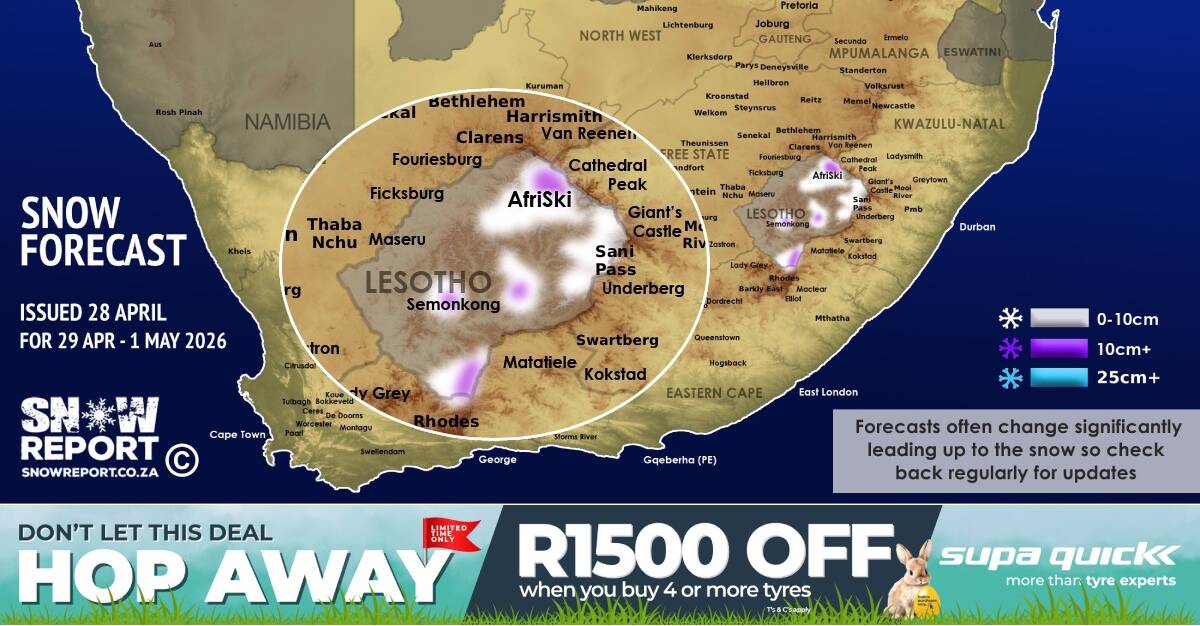
As the Southern Hemisphere transitions into autumn, an unexpected and significant weather event is unfolding across the high-altitude regions of Southern Africa. From late Wednesday, April 29th, through Friday, May 1st, 2026, Lesotho, the majestic Drakensberg mountains, and parts of the Eastern Cape are being blanketed by a rare late-season snowfall. This dramatic atmospheric shift, driven by a powerful 'cut-off low' pressure system, has transformed the rugged landscapes into a winter wonderland, captivating observers while posing unique challenges for residents and infrastructure.
The timing of this snowfall, typically associated with the deeper winter months of June and July, makes it particularly noteworthy. While sporadic early or late season snow is not unheard of, the intensity and widespread nature of this event signal a significant meteorological occurrence. PulseWorld delves into the science behind this phenomenon, its immediate impacts, and what it might signify for the region's climate future.
The Anatomy of a 'Cut-Off Low': A Meteorological Marvel
At the heart of this unusual weather pattern is a 'cut-off low' pressure system. Unlike typical low-pressure systems that move along predictable tracks, a cut-off low detaches itself from the main westerly atmospheric flow, becoming isolated and often stationary. This isolation allows it to deepen and persist, drawing in vast amounts of cold, moist air from the polar regions. When this cold, unstable air encounters the elevated terrain of the Drakensberg and Lesotho, it is forced upwards, cools rapidly, and condenses, leading to heavy precipitation – in this case, snow.
Dr. Thandiwe Mkhize, a senior climatologist at the University of Cape Town, explains the mechanism: “A cut-off low acts like a powerful, self-contained weather engine. It can linger for days, continuously feeding cold air and moisture into a region. For snow to fall in late April, the system must be exceptionally strong, pulling polar air much further north than usual and maintaining temperatures below freezing at significant altitudes. The orographic lift provided by the Drakensberg escarpment then acts as a catalyst, enhancing the precipitation.”
These systems are known for their unpredictability and can lead to extreme weather, including heavy rainfall, strong winds, and, as witnessed now, significant snowfall. Their formation is complex, often linked to interactions between upper-level atmospheric waves and surface conditions.
Impact on Communities and Infrastructure
The immediate impact of such heavy snowfall in these regions is multifaceted. For the mountainous kingdom of Lesotho, where a significant portion of the population resides in rural, high-altitude areas, the snow brings both beauty and hardship. Roads, often unpaved and treacherous even in good weather, become impassable, isolating communities. Livestock, a cornerstone of the Basotho economy, are vulnerable to exposure and lack of fodder.
“Our biggest concern is always the safety of our people and their livestock,” says Tsepo Mohale, a local government official in Mokhotlong, Lesotho. “While the snow is beautiful and brings much-needed moisture, it can also cut off access to essential services like healthcare and supplies. We have activated emergency response teams to monitor vulnerable areas and ensure aid can reach those in need once conditions improve.”
The Drakensberg, a UNESCO World Heritage site and a popular tourist destination, will see its iconic peaks transformed. While this might attract adventurous tourists seeking stunning winter vistas, it also poses risks for hikers and mountaineers. Authorities have issued warnings, urging extreme caution and advising against non-essential travel in affected areas.
Infrastructure, particularly power lines and communication networks, is also at risk from heavy snow and strong winds. The Eastern Cape, with its lower-lying areas, might experience heavy rain and localized flooding, transitioning from snow at higher elevations to rain further down.
Broader Climate Context: A Sign of Shifting Patterns?
The occurrence of such a significant late-season snowfall naturally raises questions about its connection to broader climate change. While a single weather event cannot definitively prove climate trends, its intensity and timing contribute to a growing body of evidence suggesting increased variability in global weather patterns.
Dr. Mkhize elaborates: “While cut-off lows are a natural phenomenon, there's ongoing research into whether climate change might be influencing their frequency, intensity, or geographical distribution. Warmer global temperatures can lead to more moisture in the atmosphere, which, when combined with a powerful cold front from a cut-off low, could potentially result in heavier precipitation events, whether as rain or snow depending on the temperature profile. It's a complex interplay, and we need long-term data to draw definitive conclusions.”
Some climate models suggest that as the planet warms, certain regions might experience more extreme weather events, including more intense cold snaps in unexpected seasons, even as overall average temperatures rise. This paradox highlights the complexity of climate change, which doesn't simply mean uniform warming but rather a disruption of established weather norms.
Looking Ahead: Resilience and Adaptation
As the snow begins to settle and then eventually melts, the focus will shift to recovery and adaptation. For the agricultural sector, the moisture brought by the snow could be beneficial for pastures and water reservoirs, particularly as the dry winter months approach. However, the immediate challenges of livestock protection and access remain paramount.
Local authorities and disaster management agencies in Lesotho and South Africa are gaining valuable experience from these events. Improved early warning systems, better infrastructure resilience, and community preparedness programs are crucial for mitigating the impact of increasingly unpredictable weather.
The late-April snowfall serves as a vivid reminder of nature's power and the intricate dance of atmospheric forces. For the residents of Southern Africa's highlands, it's a testament to their resilience in the face of challenging conditions, and for scientists, it’s another data point in the ongoing effort to understand and predict our changing climate. As the world watches, the 'cut-off low' has once again carved its mark, leaving behind a landscape transformed and a renewed appreciation for the dynamic forces that shape our planet.
Stay Informed
Get the world's most important stories delivered to your inbox.
No spam, unsubscribe anytime.
Comments
No comments yet. Be the first to share your thoughts!