Ray Dalio on China's Ascendancy: A New 'Tribute System' Reshaping Global Power
Billionaire investor Ray Dalio suggests that China's growing global influence is ushering in an era reminiscent of historical 'tribute systems,' where nations acknowledge its rising power. This shift challenges the long-standing US-led world order, prompting a reevaluation of international alliances and economic dependencies. Dalio's insights highlight a profound geopolitical transformation with significant implications for global trade, diplomacy, and the future balance of power.
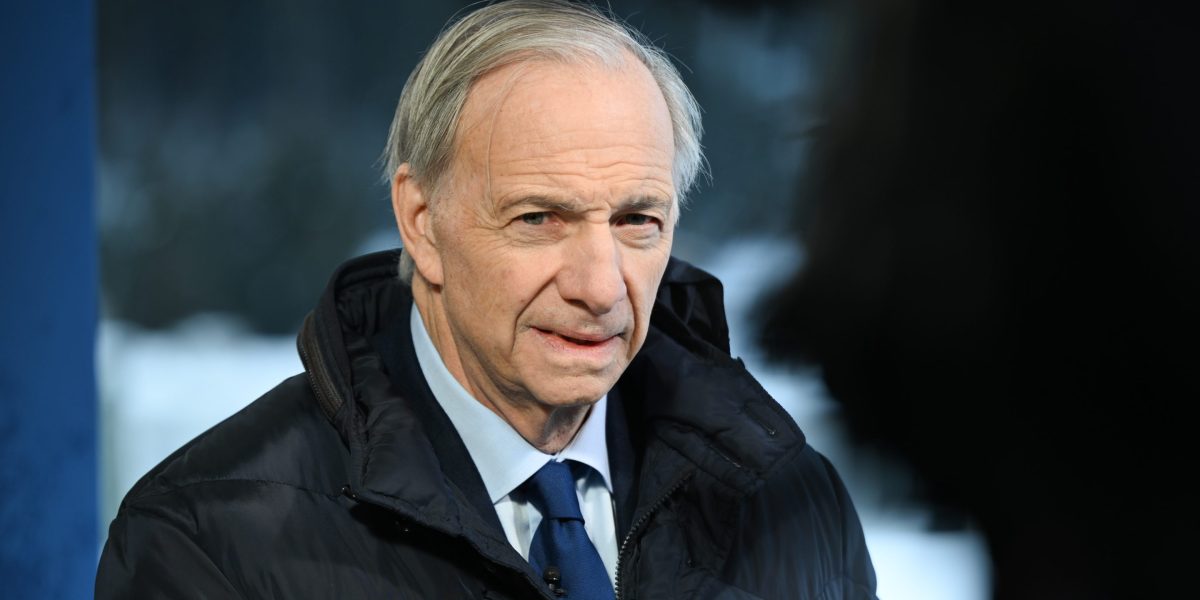
In the intricate dance of global geopolitics, few voices command as much attention as Ray Dalio, the billionaire founder of Bridgewater Associates. His recent pronouncements on China's ascendancy have sent ripples through international finance and diplomatic circles, suggesting a profound reordering of the world stage. Dalio posits that China's growing might is not merely a shift in economic power, but the emergence of a new 'tribute system'—a historical echo where nations acknowledge a dominant power through deference and engagement. This perspective challenges the very foundations of the post-World War II order, long anchored by American hegemony.
“You’re seeing a number of leaders go up to China. It’s like the tribute system that existed throughout history to come and recognize the differences in power,” Dalio stated in an interview for Bloomberg Television’s Wall Street Week with David Westin. This observation is particularly poignant in an era where the United States, with its extensive military presence across 80 countries, has historically been viewed as the indispensable global partner. However, Dalio argues, “Right now, that perception is changing,” signaling a critical juncture in international relations.
The Historical Echo of Tribute Systems
The concept of a 'tribute system' is deeply rooted in history, particularly in East Asia, where imperial China often served as the central power. Neighboring states would offer tribute—gifts, goods, or symbolic gestures—to the Chinese emperor, not necessarily as a sign of subjugation, but as an acknowledgment of China's cultural, economic, and military preeminence. In return, these states often received protection, trade benefits, and cultural exchange, integrating them into a hierarchical, yet often stable, regional order. This system was less about direct conquest and more about maintaining a sphere of influence through soft power, economic leverage, and cultural prestige.
Dalio's application of this historical framework to contemporary China suggests that modern diplomacy and economic relations are beginning to mirror these ancient patterns. As China's economic output continues to grow, its technological prowess expands, and its Belt and Road Initiative (BRI) reshapes global infrastructure, more and more nations are finding it advantageous, if not necessary, to align their interests with Beijing. This alignment often manifests in increased trade, investment, and diplomatic overtures, which Dalio interprets as a form of modern-day 'tribute'—a recognition of China's undeniable and growing influence.
Shifting Sands of Global Power: US vs. China
For decades, the United States has been the undisputed global hegemon, its power underpinned by a robust economy, technological innovation, and an unparalleled military reach. The US dollar remains the world's primary reserve currency, and its network of alliances has shaped international security. However, this dominance is increasingly being challenged. China's rapid economic growth has lifted hundreds of millions out of poverty and created a vast consumer market. Its investment in cutting-edge technologies, from artificial intelligence to quantum computing, positions it as a formidable competitor.
The strategic implications are vast. While the US maintains a formidable military presence globally, China's military modernization, particularly in naval power and cyber warfare, is narrowing the gap. Economically, China has become the largest trading partner for a significant number of countries, creating intricate dependencies. The BRI, for instance, has extended China's economic and political influence across Asia, Africa, and parts of Europe, offering infrastructure development in exchange for deeper ties. This economic gravity is a powerful magnet, drawing nations into China's orbit and potentially reshaping traditional alliances.
Dalio's observation that leaders are increasingly visiting China signifies a practical acknowledgment of this shift. These visits are not merely ceremonial; they represent crucial diplomatic and economic engagements where nations seek to secure their interests in a world where Beijing's voice carries increasing weight. The perception of the US as the sole dependable partner is indeed changing, as countries seek to diversify their alliances and economic relationships in a more multipolar world.
Economic Interdependence and Geopolitical Realities
The global economy is characterized by deep interdependence, making a complete decoupling between major powers incredibly complex. China is not only a manufacturing powerhouse but also a massive consumer market and a significant source of capital. Countries that rely on Chinese trade and investment find themselves in a delicate balancing act, navigating their relationships with both Washington and Beijing. This creates a complex web of allegiances and dependencies, where economic pragmatism often dictates foreign policy.
Consider the example of resource-rich nations in Africa or Southeast Asian economies that have benefited immensely from Chinese infrastructure projects and market access. For these countries, aligning with China is not just a strategic choice but an economic imperative. Similarly, European nations, while maintaining strong transatlantic ties, also recognize the immense opportunities presented by the Chinese market and its technological advancements. This economic gravitational pull is a key component of what Dalio describes as the 'tribute system'—nations are drawn to China's economic engine, implicitly acknowledging its central role in the global economy.
The Future of Global Order: Multipolarity or New Hegemony?
Dalio's 'tribute system' thesis raises critical questions about the future of global governance. Is the world heading towards a truly multipolar order where several great powers balance each other, or is it merely transitioning from one hegemon (the US) to another (China)? The answer likely lies in a complex interplay of both. While China's influence is undeniably growing, the US still possesses significant advantages in innovation, military power, and a robust network of democratic alliances.
However, the trend suggests a world where China's gravitational pull will continue to increase, requiring other nations to adapt their foreign policy and economic strategies. For businesses and investors, understanding this evolving geopolitical landscape is paramount. Supply chains, market access, and regulatory environments will increasingly be shaped by the dynamics between these great powers. The rise of digital currencies and blockchain technology, for instance, could further complicate this picture, potentially offering alternative financial rails that bypass traditional Western-dominated systems.
In conclusion, Ray Dalio's provocative 'tribute system' analogy serves as a powerful lens through which to view the ongoing transformation of global power. It underscores the historical echoes in contemporary geopolitics and highlights the profound implications of China's ascent. As nations increasingly navigate a world where Beijing's influence is undeniable, the international community must grapple with the challenges and opportunities presented by this new era. The coming decades will undoubtedly be defined by how the world adapts to this shifting balance, determining whether we forge a new, more equitable multipolar order or simply witness the rise of a new dominant power. The stakes, for global stability and prosperity, could not be higher.
Stay Informed
Get the world's most important stories delivered to your inbox.
No spam, unsubscribe anytime.
Comments
No comments yet. Be the first to share your thoughts!