RFK Jr.'s Defense of Trump's Drug Price Math Sparks Controversy and Skepticism
US Health and Human Services Secretary Robert F. Kennedy Jr. has ignited a firestorm of criticism by attempting to justify former President Donald Trump's 'mathematically absurd' claims regarding prescription drug price reductions. Kennedy Jr.'s assertion that Trump possesses a 'unique method of calculating percentages' has drawn widespread ridicule and raised serious questions about the administration's approach to data integrity and public policy. This incident highlights the ongoing tension between political rhetoric and factual accuracy in critical public health debates, particularly concerning the complex issue of pharmaceutical costs.
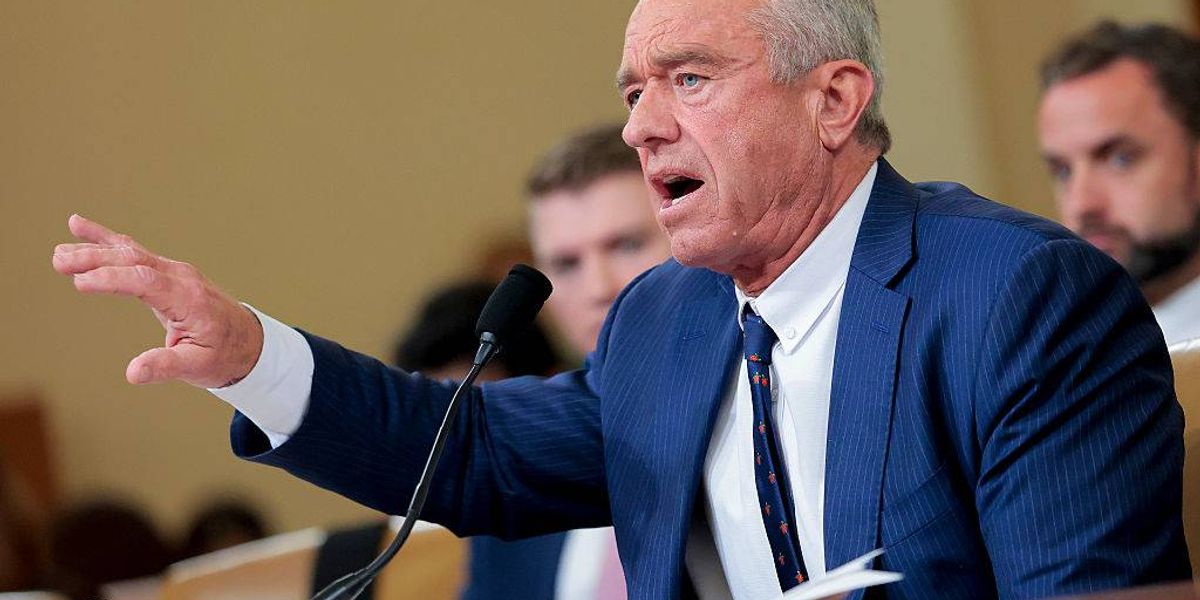
In a political landscape often characterized by rhetorical flourishes and contested narratives, a recent statement by US Health and Human Services Secretary Robert F. Kennedy Jr. has plunged the administration into a fresh controversy, drawing sharp criticism and widespread skepticism. Kennedy Jr. found himself in the unenviable position of defending former President Donald Trump’s assertions about prescription drug price reductions, claims that have been widely debunked as mathematically unsound. His explanation? That Trump possesses a “unique method of calculating percentages,” an assertion that has been met with a mixture of disbelief and ridicule from across the political spectrum and expert communities.
This incident is not merely a gaffe; it illuminates a deeper, more troubling trend concerning the intersection of political communication, scientific literacy, and public trust. When a senior official in a critical health agency suggests that fundamental mathematical principles can be subject to individual interpretation, it inevitably erodes confidence in the data and policies emanating from that office. The implications for public discourse, especially on complex issues like healthcare costs, are profound.
The Heart of the Controversy: Mathematical Absurdity
At the core of the uproar are former President Trump's repeated claims about significant percentage reductions in prescription drug prices under his administration. While reducing drug costs is a bipartisan goal and a critical concern for millions of Americans, the specific figures cited by Trump have consistently failed to align with standard economic analyses or verifiable data. Experts, including economists, statisticians, and healthcare policy analysts, have pointed out that the percentages claimed by Trump often defy basic arithmetic, sometimes suggesting reductions that are physically impossible given the starting points or market dynamics.
For instance, if a drug's price was $100 and Trump claimed a 50% reduction, standard math would put its new price at $50. However, Trump's figures often implied reductions far beyond what market data supported, or used methodologies that conflated list prices with net prices, or compared different time periods in a misleading way. It is within this context of persistent, verifiable mathematical discrepancies that Secretary Kennedy Jr. stepped in, not to clarify or correct, but to offer a defense that many found more perplexing than the original claims.
RFK Jr.'s Defense: A 'Unique Way of Calculating'
Secretary Kennedy Jr.'s defense, delivered during a public appearance, was succinct yet impactful: President Trump, he suggested, “has his own way of calculating” these percentages. This statement immediately drew parallels to previous instances where administrations have been accused of presenting “alternative facts” or questioning established scientific consensus. The idea that mathematical percentages, a cornerstone of quantitative analysis and objective measurement, could be subject to a personalized calculation method has been widely condemned as an affront to logical reasoning and data integrity.
Critics argue that such a defense undermines the very foundation of evidence-based policymaking. If basic arithmetic can be reinterpreted, what does that mean for complex epidemiological data, economic forecasts, or clinical trial results? The role of the Secretary of Health and Human Services is to safeguard public health, a mission that inherently relies on accurate data and transparent communication. To imply that facts are malleable to political convenience sets a dangerous precedent, especially for an agency tasked with critical public health decisions.
Historical Context and Implications for Public Trust
This incident is not isolated. Throughout history, political leaders have occasionally stretched or manipulated data to bolster their narratives. However, the current climate, amplified by social media and deep partisan divides, makes such instances particularly potent. The erosion of trust in institutions, including government agencies and the media, is a well-documented phenomenon, and statements like Kennedy Jr.'s contribute directly to this decline.
Historically, administrations have faced scrutiny over economic statistics, unemployment rates, or inflation figures. What makes this case distinct is the direct challenge to a universally accepted principle: mathematics. By suggesting a personalized approach to percentages, the administration risks alienating not just political opponents but also the scientific community and a public that relies on consistent, verifiable information to make informed decisions about their health and finances.
Key implications of this controversy include:
* Erosion of Data Integrity: If mathematical principles are negotiable, the credibility of all government data comes into question. * Impact on Policy Debates: Productive discussions on complex issues like drug pricing require a shared understanding of facts. When facts are disputed at a fundamental level, effective policymaking becomes nearly impossible. * Public Health Concerns: The HHS Secretary's role is crucial for public health. Undermining trust in data can have serious consequences, particularly during crises requiring public cooperation based on factual information. * Precedent for Future Discourse: This incident could set a precedent for future political figures to dismiss inconvenient data as merely a different
Stay Informed
Get the world's most important stories delivered to your inbox.
No spam, unsubscribe anytime.
Comments
No comments yet. Be the first to share your thoughts!