Robotics' Eyes: How Vision Connectivity is Driving the Autonomous Revolution
From industrial arms to self-driving cars, vision is paramount for modern robotics. This article explores the dramatic evolution of connectivity technologies, from early USB and Ethernet to advanced GMSL, that enable robots to 'see' and interpret their world. Discover how these innovations are shaping the future of automation and autonomy, overcoming challenges like data bandwidth and latency.
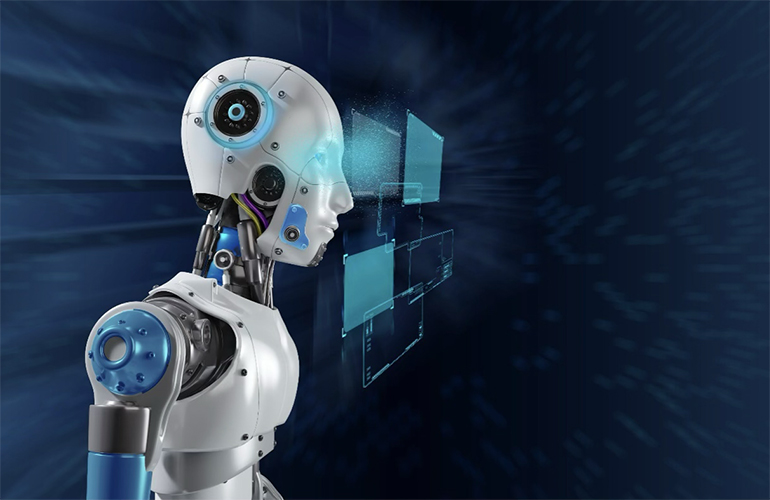
The world of robotics is undergoing a profound transformation, moving beyond repetitive tasks in controlled environments to embracing complex, dynamic, and often unpredictable real-world scenarios. At the heart of this revolution lies vision, the foundational sensing modality that grants robots the ability to perceive, understand, and interact with their surroundings. But for robots to truly 'see' and act intelligently, the data from their sophisticated cameras must be transported swiftly, reliably, and efficiently. This is where vision connectivity comes into play, a critical, often overlooked, technological backbone whose evolution has been as rapid and impactful as the robots themselves.
The Dawn of Robotic Vision: Early Connections
In the nascent stages of robotics, vision systems were relatively simplistic, often limited to basic inspection or guidance tasks. The connectivity solutions reflected this simplicity. USB (Universal Serial Bus), particularly USB 2.0, emerged as a popular choice due to its ubiquity, ease of use, and plug-and-play functionality. It offered a convenient way to connect cameras to embedded processors, suitable for applications requiring low data rates or short distances. However, as camera resolutions increased and frame rates climbed, USB's limitations became apparent. Its maximum bandwidth of 480 Mbps (USB 2.0) quickly became a bottleneck, restricting the number of cameras or the quality of the video stream a robot could handle. The distance limitations, typically a few meters, also posed challenges for larger robotic systems or those requiring distributed sensing.
Ethernet, specifically Gigabit Ethernet (GbE), offered a significant leap forward. With speeds of 1 Gbps, it provided substantially higher bandwidth and, crucially, allowed for much longer cable lengths—up to 100 meters without repeaters. This made it ideal for industrial settings where cameras might be spread across a factory floor or mounted on large robotic arms. Technologies like GigE Vision standardized the transmission of image data over Ethernet, simplifying integration and interoperability. While a robust solution for many industrial applications, Ethernet still presented challenges. Its packet-based nature could introduce latency variations, and its power consumption, especially for multiple cameras, was a concern for battery-powered mobile robots. Furthermore, the cabling could be bulky, and connectors were not always robust enough for the vibration and shock common in robotic environments.
The Rise of Embedded and Automotive Demands
As robotics moved towards higher autonomy, particularly in areas like autonomous vehicles, drones, and advanced mobile robots, the demands on vision connectivity intensified dramatically. These applications require:
* High-resolution, high-frame-rate cameras: For detailed environmental perception and real-time decision-making. * Multiple cameras: Often 8, 12, or even more cameras for 360-degree vision and depth perception. * Low latency: Critical for safety-critical applications where split-second reactions are necessary. * Robustness: Cables and connectors must withstand harsh environmental conditions, vibration, and temperature extremes. * Power efficiency: Especially for battery-operated systems. * Compactness: Minimizing cable bulk and weight.
These stringent requirements pushed the industry to look beyond traditional USB and Ethernet solutions, paving the way for more specialized interfaces.
GMSL: The Game Changer for High-Performance Vision
One of the most significant advancements in vision connectivity for high-performance robotics and automotive applications has been GMSL (Gigabit Multimedia Serial Link). Developed by Analog Devices (formerly Maxim Integrated), GMSL is a high-speed serial interface designed specifically for transmitting video, audio, and control data over a single coaxial or shielded twisted-pair (STP) cable. Its key advantages are transformative:
* High Bandwidth: GMSL offers impressive data rates, with GMSL2 supporting up to 6 Gbps and GMSL3 reaching 12 Gbps. This allows for the transmission of multiple uncompressed HD or 4K video streams simultaneously from a single camera or multiple cameras over a single link. * Long Reach: GMSL can reliably transmit data over cables up to 15 meters or more, significantly extending the reach compared to USB and even some Ethernet setups, crucial for large vehicles or distributed sensor networks. * Low Latency: Its serial nature and dedicated channels minimize latency, making it ideal for real-time perception and control loops. * Power over Coax/STP (PoC/PoSTP): A major benefit is the ability to deliver power to the camera over the same cable that carries data, simplifying wiring harnesses and reducing weight and complexity. This is particularly valuable in automotive and mobile robotics where every gram and every cable counts. * Robustness: GMSL connectors and cables are designed for automotive-grade reliability, resistant to EMI/RFI, vibration, and temperature fluctuations, making them suitable for demanding industrial and outdoor environments. * Bidirectional Control Channel: Beyond video, GMSL includes a bidirectional control channel that allows for camera configuration, diagnostics, and synchronization, offering a comprehensive solution for complex vision systems.
The Future Landscape: GMSL and Beyond
While GMSL has become a dominant force in advanced robotic vision, particularly in automotive and ADAS (Advanced Driver-Assistance Systems), the evolution doesn't stop there. Other serial interfaces like FPD-Link III/IV (from Texas Instruments) offer similar capabilities and are also widely adopted. The trend is clear: serdes (serializer/deserializer) technology is becoming the standard for high-bandwidth, long-reach, and robust vision connectivity.
The implications for robotics are profound. With GMSL and similar technologies, robots can now be equipped with an unprecedented number of high-resolution cameras, enabling richer 3D perception, more accurate object detection and tracking, and superior environmental understanding. This directly translates to:
* Enhanced Autonomy: Robots can navigate complex environments with greater confidence and safety. * Improved Safety: Faster data transmission and lower latency mean quicker reaction times to unexpected obstacles or events. * Greater Scalability: Easier integration of more sensors without overwhelming the system with bulky wiring or power demands. * New Applications: Opening doors for robots in areas previously deemed too challenging, from last-mile delivery to complex surgical assistance.
As we look ahead, the demand for even higher bandwidth, lower power, and more intelligent connectivity solutions will continue. We may see further integration of processing capabilities directly into the camera modules, reducing the data burden on the host processor. The convergence of vision, AI, and advanced connectivity is not just an incremental improvement; it is fundamentally redefining what autonomous systems can achieve. The journey from simple USB connections to sophisticated GMSL links underscores a critical truth: the eyes of a robot are only as good as the pathways that carry their sight, and these pathways are continuously evolving to meet the ever-expanding ambitions of artificial intelligence and automation.
Stay Informed
Get the world's most important stories delivered to your inbox.
No spam, unsubscribe anytime.
Comments
No comments yet. Be the first to share your thoughts!