Russia's Leningrad Oblast Declared 'Front-Line Region' Amid Escalating Ukrainian Drone Attacks on Oil Infrastructure
Leningrad Oblast Governor Alexander Drozdenko has declared the region a 'front-line' territory following intensified Ukrainian drone attacks targeting critical oil infrastructure. These strikes, primarily on Ust-Luga and Primorsk, mark a significant escalation in Ukraine's strategy to disrupt Russian energy exports and military logistics. The declaration underscores the shifting geography of the conflict, pushing the war's economic and strategic impacts deeper into Russian territory.
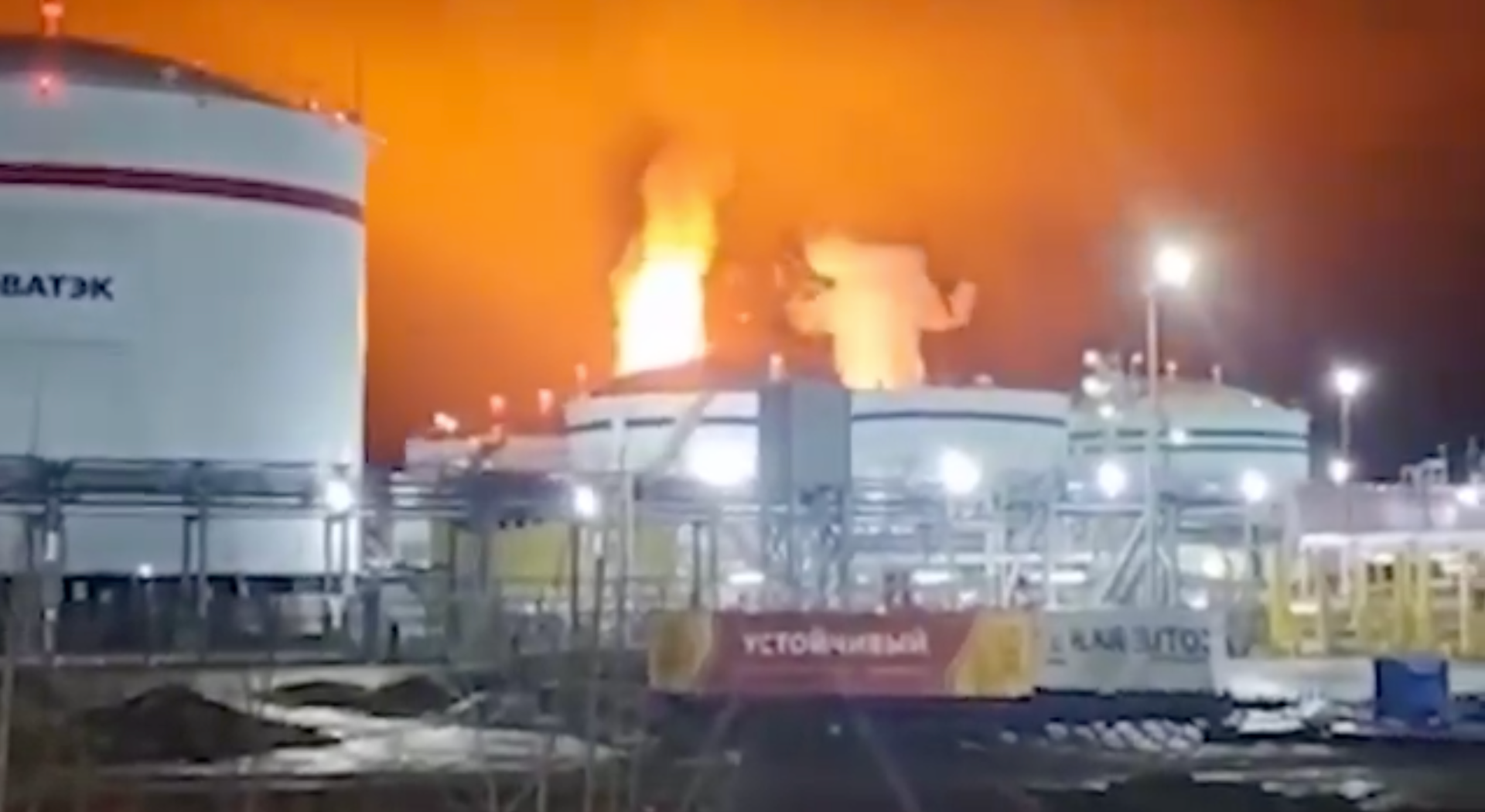
The strategic landscape of the Russia-Ukraine conflict has taken a dramatic turn, with Russia's Leningrad Oblast, home to vital energy export facilities, now officially designated a 'front-line region'. This stark declaration, made by Governor Alexander Drozdenko during a televised briefing with former Russian president Dmitry Medvedev on April 30, signals a profound escalation in Ukrainian targeting strategy. The attacks, primarily focused on the critical oil terminals in the port cities of Ust-Luga and Primorsk, represent Ukraine's determined effort to cripple Russia's economic lifeline and disrupt its war machine. This shift not only brings the conflict closer to Russia's economic heartland but also raises significant questions about the future trajectory of the war and its broader geopolitical implications.
The New Front: Leningrad Oblast Under Siege
Historically, the Leningrad Oblast, located hundreds of kilometers from the Ukrainian border, was considered a safe rear area, far removed from the direct hostilities. However, the advent of long-range Ukrainian drones has dramatically redrawn the map of conflict. The recent strikes on Ust-Luga, a major Baltic Sea port operated by Novatek, Russia's largest independent natural gas producer, and Primorsk, another key oil export hub, demonstrate Ukraine's evolving capabilities and its intent to inflict economic pain. These facilities are crucial for Russia's crude oil and refined product exports to global markets, making them high-value targets. The governor's acknowledgment of the region as a 'front-line' area is not merely rhetorical; it reflects a tangible increase in perceived threat and the need for heightened security measures, including anti-drone defenses and potential civilian preparedness protocols. This development forces Moscow to divert resources and attention to protecting its vital economic assets, stretching its already burdened military and security apparatus.
Ukraine's Strategic Calculus: Economic Warfare
Ukraine's strategy behind these deep-strike operations is multi-faceted. Firstly, by targeting oil infrastructure, Kyiv aims to reduce Russia's revenue from energy exports, which directly funds its war effort. Russia remains one of the world's largest oil and gas producers, and these exports are a cornerstone of its federal budget. Disrupting operations at terminals like Ust-Luga and Primorsk can lead to reduced export volumes, increased insurance costs for shipping, and logistical bottlenecks, all of which translate into financial losses for Moscow. Secondly, these attacks serve a psychological purpose, demonstrating Ukraine's ability to strike deep within Russian territory, undermining the Kremlin's narrative of control and security. This can sow public unease and pressure the Russian leadership. Thirdly, by forcing Russia to invest heavily in air defense systems and security personnel far from the actual front lines, Ukraine seeks to dilute Russia's military resources, potentially creating vulnerabilities elsewhere. The strikes are a clear signal that no part of Russia's economic infrastructure is entirely safe, shifting the burden of defense onto Moscow's shoulders.
The Economic Fallout and Global Implications
The attacks on Russian oil infrastructure have immediate and long-term economic consequences. While Russia has demonstrated resilience in rerouting some oil exports, sustained disruptions could impact global energy markets. A significant reduction in Russian oil supply, even if temporary, could lead to price volatility, affecting consumers worldwide. For Russia, the economic impact extends beyond direct revenue loss. The need to repair damaged facilities, enhance security, and potentially reconfigure export logistics incurs substantial costs. Furthermore, the perception of increased risk in Russian ports could deter international shipping and insurance companies, further complicating its export operations. The declaration of Leningrad Oblast as a 'front-line' region also implies a potential for greater militarization of the area, which could affect local industries and civilian life, albeit indirectly. This escalation underscores the interconnectedness of global energy security and regional conflict, making these attacks a matter of international concern.
Historical Parallels and Future Trajectories
The current situation in Leningrad Oblast draws parallels with historical instances where economic targets became central to wartime strategy. From the Allied bombing campaigns against German industrial centers in WWII to more recent conflicts, the targeting of an adversary's economic base is a well-established tactic. What makes the current scenario unique is the use of relatively inexpensive, long-range drones to achieve strategic effects deep within enemy territory, circumventing traditional air defenses. This technological shift lowers the barrier to entry for such operations and expands the potential theater of conflict far beyond conventional front lines. Looking ahead, this escalation suggests that Ukraine will continue to prioritize economic targets, particularly those related to energy and military production. Russia, in turn, will likely intensify its efforts to bolster air defenses across its vast territory, potentially at the expense of offensive capabilities or other strategic priorities. The conflict is evolving into a protracted war of attrition, not just on the battlefield, but also in the economic and logistical spheres, with each side seeking to undermine the other's capacity to sustain the fight.
Conclusion: A War Without Borders
The declaration of Leningrad Oblast as a 'front-line region' is a stark reminder that the war in Ukraine is increasingly transcending traditional geographical boundaries. Ukraine's successful long-range drone attacks on critical Russian oil infrastructure represent a strategic pivot, aiming to hit Russia where it hurts most: its economy. This move not only challenges Russia's sense of security but also forces it to re-evaluate its defense priorities and resource allocation. As the conflict enters this new phase of economic warfare, the implications for both combatants and the global community are profound. The ability of Ukraine to project power deep into Russian territory signals a new chapter in modern warfare, where the front line is no longer a static geographical boundary but a dynamic, permeable zone encompassing vital economic and strategic assets. The world watches as this strategic chess match unfolds, with each move carrying the potential for significant geopolitical and economic repercussions, reshaping the future of international relations and energy security.
Stay Informed
Get the world's most important stories delivered to your inbox.
No spam, unsubscribe anytime.
Comments
No comments yet. Be the first to share your thoughts!