SamuRoid: China's Compact Humanoid Robot Redefines Affordable AI Robotics
A new compact humanoid robot from China, SamuRoid, is making waves by integrating advanced AI and ROS on an affordable platform. Developed by XiaoR Geek Technology, this 22-DOF bionic robot, powered by a Raspberry Pi 4, aims to democratize access to embodied AI research and education. Its natural interaction capabilities, including vision and speech, position it as a significant step towards more accessible and versatile robotic applications worldwide.
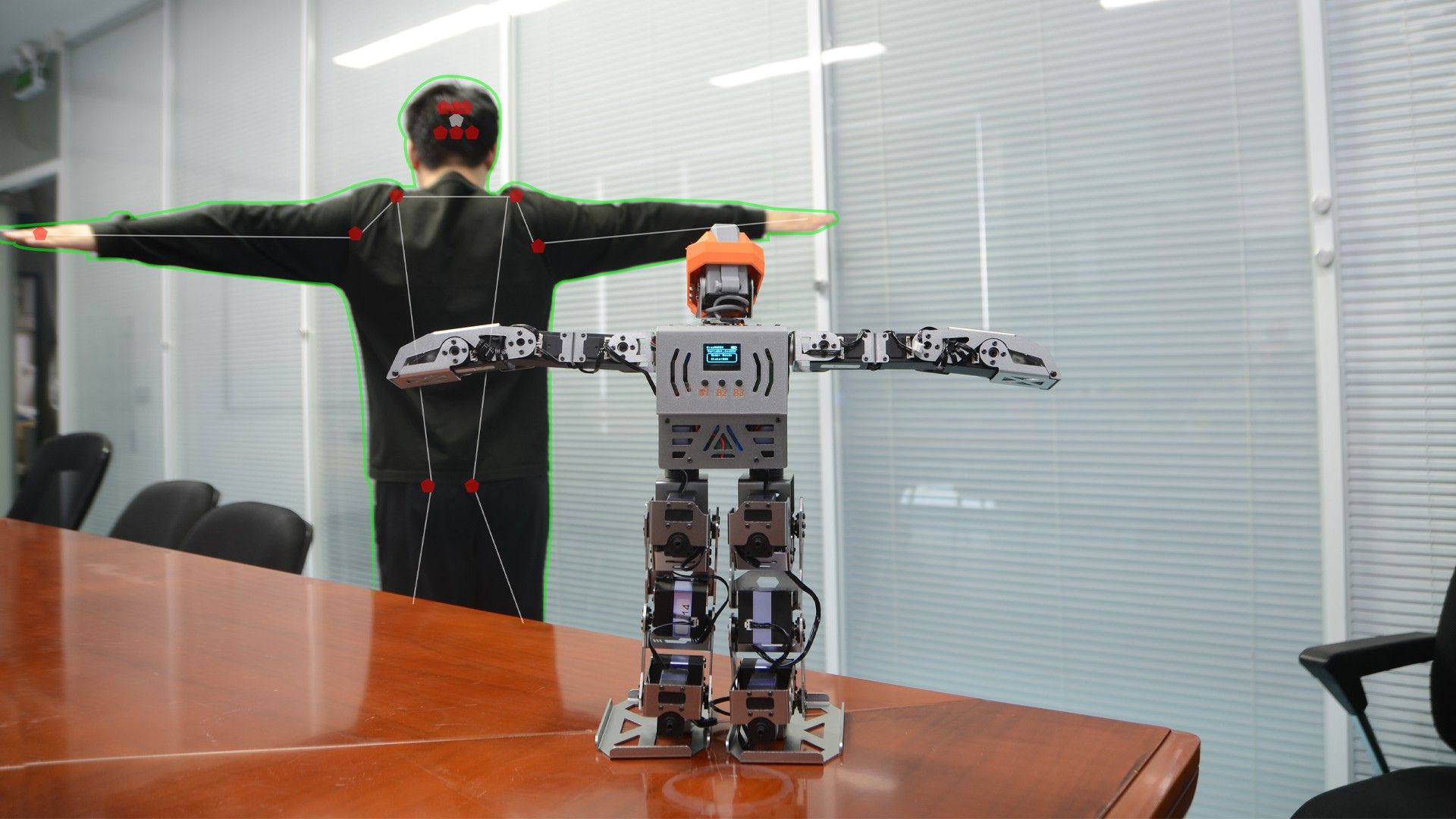
The dream of intelligent, human-like robots has long captivated the collective imagination, fueled by science fiction and the relentless pursuit of technological advancement. For decades, these sophisticated machines remained largely the domain of well-funded research institutions and industrial giants. However, a recent development from China is poised to dramatically alter this landscape, democratizing access to advanced robotics and embodied AI. Shenzhen-based XiaoR Geek Technology has unveiled SamuRoid, a compact humanoid robot that promises to push the boundaries of affordability and capability in the burgeoning field of robotics.
At its core, SamuRoid is a 22-DOF (Degrees of Freedom) bionic platform designed not just for display, but for active research, education, and development. What sets it apart is its strategic choice of a Raspberry Pi 4 Model B as its central processing unit. This decision is a game-changer, significantly reducing the cost barrier typically associated with high-performance robotics. By leveraging open-source hardware and software, SamuRoid makes sophisticated humanoid robotics accessible to a much broader audience, from university labs to independent developers and even advanced hobbyists. This move aligns perfectly with the global trend towards making cutting-edge technology more pervasive and inclusive.
The Architecture of Affordability: ROS and Raspberry Pi
The choice of the Raspberry Pi 4 is more than just a cost-saving measure; it's a foundational design philosophy. The Raspberry Pi ecosystem is renowned for its versatility, community support, and robust performance for its size and price point. This allows SamuRoid to run complex software environments efficiently. Crucially, the robot is built upon the Robot Operating System (ROS), the de facto standard for robotics software development. ROS provides a flexible framework for writing robot software, offering a collection of tools, libraries, and conventions that simplify the creation of complex robotic behaviors. This combination means that researchers and developers can tap into a vast existing knowledge base and a thriving open-source community, accelerating development cycles and fostering innovation.
SamuRoid’s 22 degrees of freedom grant it remarkable agility and expressiveness for its size. These DOF are distributed across its body, allowing for a wide range of movements, from walking and balancing to intricate arm and hand gestures. Such articulation is vital for tasks requiring fine motor skills or nuanced interaction with the environment. Furthermore, the robot is equipped with an array of sensors that enable it to perceive its surroundings. It can see through integrated cameras, allowing for object recognition, navigation, and even facial recognition capabilities. It can hear via microphones, opening avenues for voice command interpretation and sound localization. These sensory inputs are crucial for its ability to interact naturally with humans and its environment, moving beyond pre-programmed routines to more adaptive and intelligent behaviors.
Embodied AI: Bridging the Gap Between Code and Reality
The true power of SamuRoid lies in its embodiment of Artificial Intelligence (AI). It's not merely a remote-controlled device; it's designed to process information, make decisions, and learn from its interactions. This concept of embodied AI is a critical frontier in robotics, where intelligence is not just abstract computation but is deeply intertwined with the physical form and its interaction with the real world. For instance, a robot that learns to walk by trial and error in a physical environment gains a different kind of understanding than one simulated purely in software. SamuRoid provides an affordable platform for exploring these complex interactions.
Its ability to see, hear, and interact naturally implies sophisticated AI algorithms at play. This includes computer vision for interpreting visual data, natural language processing for understanding spoken commands, and machine learning models for adapting its behavior over time. The integration of these AI capabilities on a compact, affordable platform like SamuRoid means that more researchers can experiment with cutting-edge AI techniques in a physical context, leading to faster iteration and discovery. This could accelerate breakthroughs in areas such as human-robot collaboration, assistive robotics, and even advanced manufacturing, where robots need to operate autonomously in dynamic environments.
Historical Context and Future Implications
The journey towards affordable humanoid robots has been long and arduous. Early humanoid projects, such as Honda's ASIMO, were technological marvels but came with astronomical price tags, limiting their accessibility to a select few. The past decade has seen a gradual shift, with companies like Boston Dynamics pushing the boundaries of dynamic movement and balance, while others focused on more specialized industrial applications. However, the gap remained for a truly versatile, open, and affordable humanoid platform for general research and education. SamuRoid steps into this void, drawing inspiration from the open-source movement that has revolutionized software development.
The implications of SamuRoid's emergence are profound: * Democratization of Robotics Research: Lowering the cost of entry means more universities, smaller labs, and individual innovators can contribute to the field, fostering a more diverse and dynamic research ecosystem. * Educational Tool: It serves as an unparalleled educational tool, allowing students to learn about robotics, AI, and programming through hands-on experience with a physical humanoid robot, rather than just simulations. * Prototyping and Development: For startups and companies, SamuRoid offers a cost-effective platform for prototyping new AI algorithms, robotic behaviors, and human-robot interaction paradigms before investing in more expensive, specialized hardware. * Community Building: Its reliance on ROS and Raspberry Pi will likely foster a strong community of developers and users, sharing code, ideas, and solutions, further accelerating its capabilities and applications.
While SamuRoid is currently positioned for researchers and educators, its underlying principles – affordability, open-source integration, and embodied AI capabilities – lay the groundwork for future commercial applications. Imagine personalized home assistants that can physically interact with their environment, or educational robots that can adapt to a student's learning style. The potential is vast, limited only by the ingenuity of the developers who will now have access to this powerful platform.
The Road Ahead: Challenges and Opportunities
Despite its promising features, SamuRoid, like any nascent technology, faces challenges. The performance of a Raspberry Pi, while impressive for its cost, still has limitations compared to high-end industrial controllers, particularly for extremely complex real-time computations required for advanced dynamic tasks. Battery life, robustness in diverse environments, and the development of intuitive programming interfaces will also be key areas for improvement. However, these are not insurmountable obstacles but rather opportunities for the vibrant open-source community to contribute and innovate.
The global robotics market is projected to continue its rapid growth, with humanoid robots expected to play an increasingly significant role. Reports suggest the humanoid robot market could reach tens of billions of dollars in the coming decade. SamuRoid's contribution is not just another product; it's a catalyst. By making advanced humanoid robotics more accessible, XiaoR Geek Technology is not just selling a robot; they are fostering a new generation of roboticists and AI developers. This could lead to an explosion of innovation, pushing the boundaries of what these machines can do and how they integrate into our daily lives. The era of affordable, intelligent, and interactive humanoid robots is not just on the horizon; with SamuRoid, it's already here, ready to be explored and expanded upon by a global community of innovators.
Stay Informed
Get the world's most important stories delivered to your inbox.
No spam, unsubscribe anytime.
Comments
No comments yet. Be the first to share your thoughts!