Sanctions Evasion: Malaysia's Maritime Agency Exposes Iranian Oil Transfers Near Its Waters
Malaysia's maritime agency has brought to light a sophisticated network of sanctioned Iranian oil transfers occurring near its territorial waters. These illicit ship-to-ship operations exploit 'jurisdictional gaps,' creating a complex challenge for international enforcement. The revelations underscore the ongoing cat-and-mouse game between sanctioning bodies and those seeking to circumvent restrictions, raising questions about global maritime security and compliance. This report delves into the intricate details of these transfers and their broader implications.
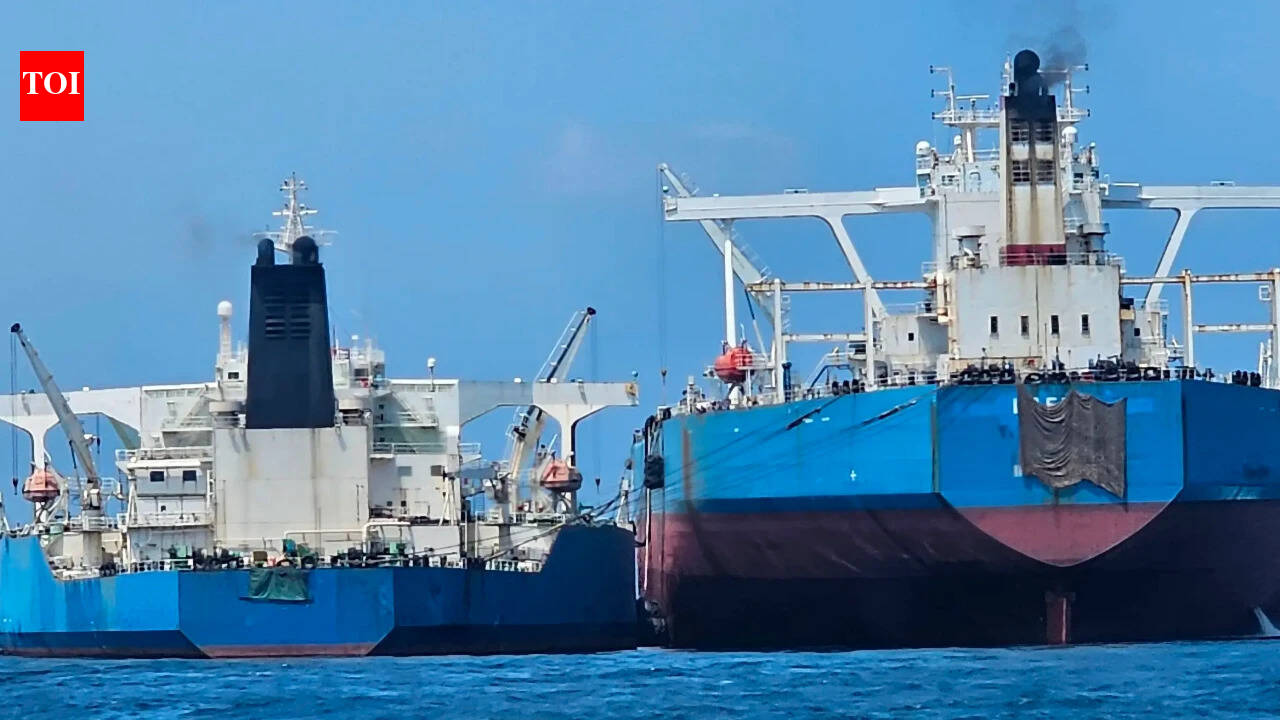
In the intricate and often opaque world of global maritime trade, a significant revelation has emerged from Southeast Asia, spotlighting the persistent challenges of enforcing international sanctions. Malaysia's maritime agency, the Malaysian Maritime Enforcement Agency (MMEA), has publicly acknowledged that tankers linked to Iran are actively exploiting what it terms 'jurisdictional gaps' to conduct illicit ship-to-ship (STS) transfers of sanctioned oil. These operations, occurring perilously close to Malaysian waters, have ignited a fresh debate on maritime security, international law, and the effectiveness of sanctions regimes.
The MMEA's statement serves as a direct response to persistent allegations that Malaysian authorities have been turning a blind eye to these activities. By admitting the existence of such transfers and attributing them to jurisdictional ambiguities, Malaysia has shifted the narrative, framing the issue not as one of complicity, but of complex enforcement challenges. This situation underscores the ingenuity of those seeking to evade sanctions and the inherent difficulties faced by coastal nations in monitoring vast stretches of ocean.
The Anatomy of Sanctions Evasion: A Maritime Chess Game
The practice of ship-to-ship transfers, while legitimate for many commercial purposes, becomes a critical vulnerability when used to circumvent sanctions. In this context, tankers carrying sanctioned Iranian oil often engage in STS operations with other vessels, frequently in international waters or areas with unclear jurisdiction. The oil is then re-documented, sometimes blended, and subsequently sold as originating from a different source, effectively washing its sanctioned origins. This 'dark fleet' activity often involves disconnecting AIS (Automatic Identification System) transponders, using false flags, and employing complex corporate structures to obscure ownership and origin.
Malaysia's unique geographical position, straddling vital shipping lanes like the Strait of Malacca, makes it an attractive, albeit risky, location for such clandestine activities. The MMEA's acknowledgment of 'jurisdictional gaps' highlights a critical aspect of international maritime law: while a nation has sovereign rights over its territorial waters (typically 12 nautical miles from its baseline), the contiguous zone (up to 24 nautical miles) offers limited enforcement powers, and beyond that, in the exclusive economic zone (EEZ) and high seas, enforcement becomes significantly more complex, often requiring international cooperation or specific UN mandates. It is in these grey areas that the 'dark fleet' thrives.
Historical Context: A Persistent Problem
The issue of Iranian oil sanctions evasion is not new. Following the re-imposition of U.S. sanctions on Iran's oil sector in 2018, the Islamic Republic has consistently sought innovative ways to maintain its oil exports, which are a cornerstone of its economy. These efforts have included everything from switching off transponders to using shell companies and engaging in elaborate STS transfers. Countries like China, for instance, have been identified as major recipients of Iranian oil, often disguised through such methods.
Previous instances have seen vessels linked to Iran being detained or investigated in various parts of the world, from Gibraltar to Indonesia. The U.S. Treasury Department has repeatedly issued advisories and imposed sanctions on entities involved in facilitating these illicit transfers, emphasizing the global nature of the problem. However, the sheer scale of global shipping and the economic incentives for evasion make it an enduring challenge for international bodies and national authorities alike. The MMEA's recent statements echo a long-standing pattern of cat-and-mouse games on the high seas.
Implications for Global Maritime Security and Trade
The implications of these ongoing activities are far-reaching. Firstly, they undermine the effectiveness of international sanctions, which are often imposed to curb proliferation, terrorism financing, or human rights abuses. When sanctions are easily circumvented, their deterrent effect diminishes, potentially emboldening rogue actors.
Secondly, these illicit transfers pose significant environmental risks. Vessels involved in dark fleet operations often operate with less stringent maintenance and safety standards, increasing the likelihood of oil spills or other maritime accidents. Such incidents could have devastating consequences for marine ecosystems and coastal communities, particularly in ecologically sensitive regions like Southeast Asia.
Thirdly, the exploitation of jurisdictional gaps strains international relations and cooperation. While Malaysia has stated its commitment to upholding international law, the nuance of its position — acknowledging the problem while pointing to legal complexities — highlights the need for clearer international frameworks and enhanced multilateral enforcement mechanisms. The U.S. and its allies will likely continue to pressure countries to tighten their maritime surveillance and enforcement, potentially leading to diplomatic tensions.
Finally, for legitimate shipping and trade, the presence of a 'dark fleet' creates an uneven playing field and can lead to increased scrutiny and compliance costs for law-abiding operators. It also raises concerns about the integrity of global supply chains and the potential for illicit funds to permeate the financial system.
The Path Forward: Enhanced Surveillance and Cooperation
Addressing this complex issue requires a multi-pronged approach. The MMEA's candidness is a crucial first step, acknowledging the problem rather than denying it. Moving forward, several measures could be considered:
* Technological Advancements: Investing in advanced satellite surveillance, AI-driven analytics, and drone technology could significantly enhance the ability to track vessels, even those attempting to hide their movements by switching off AIS. * International Cooperation: Strengthening intelligence sharing and joint enforcement operations between maritime agencies of different nations is paramount. This includes sharing best practices and coordinating responses to vessels engaged in suspicious activities. * Clarifying Jurisdictional Boundaries: While challenging, international discussions could aim to clarify enforcement powers in contiguous zones and EEZs, particularly concerning sanction evasion activities. This might involve updating existing maritime conventions or establishing new protocols. * Pressure on Flag States: Greater pressure needs to be exerted on 'flag of convenience' states to ensure their registered vessels comply with international sanctions and maritime safety standards. Revoking flags from non-compliant vessels could be a powerful deterrent. * Financial Sector Vigilance: Banks and financial institutions must remain vigilant against transactions that could be linked to illicit oil trade, implementing robust due diligence and Know Your Customer (KYC) protocols.
The MMEA's statement, while revealing a persistent challenge, also opens a window for renewed focus and concerted action. The global community cannot afford to allow 'jurisdictional gaps' to become permanent loopholes for those seeking to undermine international peace and security through illicit trade. The waters near Malaysia are not just a stage for these transfers; they are a stark reminder of the continuous struggle to uphold rule of law in the vast, interconnected global oceans.
Stay Informed
Get the world's most important stories delivered to your inbox.
No spam, unsubscribe anytime.
Comments
No comments yet. Be the first to share your thoughts!