Selfie to Shotgun: The Alleged Trump Assassin's Chilling Prelude
New details emerge in the alleged assassination attempt on President Donald Trump, revealing the chilling moments before Cole Allen's attack. Prosecutors state Allen took a selfie in his hotel room just before bursting through security with a pump-action shotgun. This incident raises profound questions about security protocols and the psychological underpinnings of such extreme acts.
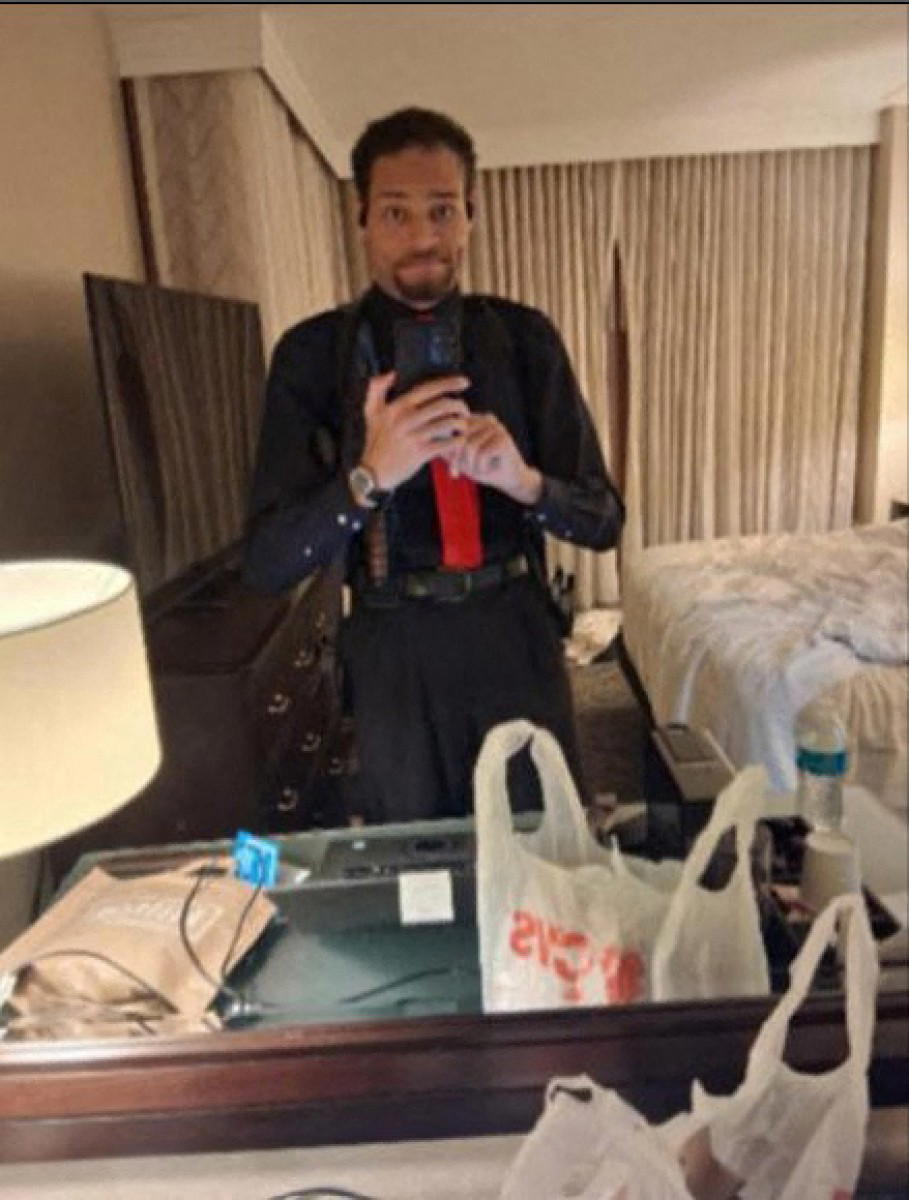
In a revelation that sends shivers down the spine of a nation already grappling with heightened political tensions, prosecutors have unveiled a chilling detail surrounding the alleged assassination attempt on former President Donald Trump. The man accused, Cole Allen, reportedly took a selfie in his hotel room moments before launching his assault, a stark and unsettling prelude to an act of extreme violence. This seemingly mundane act of self-documentation, juxtaposed with the gravity of the subsequent events, paints a disturbing picture of premeditation and a deeply troubled mindset.
The incident, which unfolded just after 8:30 pm on a Saturday, saw Allen burst through security with a pump-action shotgun, aiming to target the former president. The swift and decisive action of security personnel averted what could have been a national tragedy, but the psychological impact and the questions it raises about the nature of political extremism and individual radicalization linger. This event is not merely a footnote in the annals of political history; it is a stark reminder of the ever-present threats faced by public figures and the complex interplay of personal grievances, political fervor, and mental health issues that can culminate in such desperate acts.
The Unsettling Narrative of Premeditation
The detail of the selfie is particularly unsettling. In an age dominated by social media and self-portraits, the act of taking a selfie has become almost second nature. Yet, when placed in the context of an alleged assassination attempt, it transforms into a chilling testament to the perpetrator's state of mind. Was it a final, defiant act of self-recognition? A twisted form of documentation for posterity? Or perhaps a desperate cry for attention, even in the face of certain capture or death? Prosecutors have yet to elaborate on the exact nature or content of the selfie, but its mere existence suggests a level of premeditation and self-awareness that goes beyond a spontaneous outburst of violence. It implies a conscious decision, a moment of reflection, however warped, before crossing a line into an act of profound criminality.
This level of premeditation aligns with historical patterns seen in other high-profile attacks. From John Wilkes Booth's meticulous planning to Lee Harvey Oswald's calculated movements, acts targeting political leaders often involve a degree of forethought. The modern twist, however, is the digital footprint – a selfie, a social media post, an online manifesto – that increasingly accompanies these dark narratives. This digital trail provides investigators with crucial insights but also offers a disturbing window into the minds of those who contemplate such extreme actions, highlighting the evolving landscape of threats in the digital age.
Security Implications and the 'Lone Wolf' Threat
The alleged breach of security by Cole Allen, despite the eventual neutralization of the threat, immediately raises serious questions about the efficacy of protective measures for high-profile individuals. While the Secret Service and other security agencies are renowned for their vigilance, the incident underscores the persistent challenge posed by determined individuals, often acting alone. The phrase 'lone wolf' attacker has become a grim staple in security discourse, referring to individuals who plan and execute attacks independently, making them notoriously difficult to detect through traditional intelligence gathering.
Such attacks often exploit perceived vulnerabilities, whether it's a momentary lapse in vigilance, an unexpected access point, or simply overwhelming a single point of entry with brute force. The use of a pump-action shotgun further highlights the intent to inflict maximum damage, bypassing less lethal means. This incident will undoubtedly lead to a rigorous review of security protocols, not just for former presidents but for all public figures, prompting discussions on everything from venue security to threat assessment methodologies and the role of public intelligence in identifying potential risks. The challenge lies in balancing robust security with the need for public accessibility, a perennial dilemma for democratic leaders.
The Psychology of Radicalization and Political Violence
The motivations behind Cole Allen's alleged actions are likely to be a central focus of the ongoing investigation. While specific details remain under wraps, such acts of political violence often stem from a complex interplay of factors including personal grievances, ideological extremism, mental health issues, and exposure to radicalizing content. The current political climate, characterized by deep polarization and often inflammatory rhetoric, can unfortunately serve as a fertile ground for individuals susceptible to extreme ideologies.
Studies by organizations like the National Consortium for the Study of Terrorism and Responses to Terrorism (START) at the University of Maryland consistently show that while no single profile defines a domestic extremist, common threads often include a sense of disenfranchisement, a belief in conspiracy theories, and a desire for societal change through violent means. The selfie, in this context, could be interpreted as a final act of agency, a declaration of intent before an act perceived by the perpetrator as significant, however misguided or destructive. Understanding these psychological pathways is crucial not only for prosecuting individual cases but for developing broader strategies to counter radicalization and prevent future violence.
A Nation on Edge: The Broader Context
This alleged assassination attempt does not occur in a vacuum. It is set against a backdrop of increasing political volatility in the United States, marked by events like the January 6th Capitol riot and a general escalation of rhetoric across the political spectrum. The targeting of a former president, regardless of political affiliation, is a grave matter that transcends partisan divides and strikes at the heart of democratic stability. It serves as a stark reminder that political disagreements, when allowed to fester into hatred and calls for violence, can have real-world, dangerous consequences.
Public discourse, media responsibility, and the role of political leaders in moderating tone become paramount in such an environment. When figures of authority or influence use language that demonizes opponents or incites anger, the risk of individuals interpreting such rhetoric as a call to action increases. The incident involving Cole Allen forces a national introspection on the health of its political discourse and the collective responsibility to foster an environment where disagreements can be aired without resorting to threats or violence. The path forward requires a concerted effort to de-escalate tensions, promote civic engagement, and address the underlying societal issues that contribute to radicalization.
Conclusion: Vigilance in a Volatile Era
The alleged attempt on Donald Trump's life, preceded by a chilling selfie, is a sobering moment for the nation. It underscores the persistent threat of political violence and the complex challenges faced by security agencies in protecting public figures. As investigations continue, the focus will undoubtedly shift to understanding Cole Allen's motives and the broader implications for national security. This event serves as a powerful reminder that in an era of heightened political polarization, vigilance, robust security measures, and a collective commitment to peaceful discourse are not merely ideals, but essential safeguards against the erosion of democratic norms and the potential for tragic outcomes. The nation watches, hoping that lessons learned from this harrowing incident can help prevent future acts of extremism and violence, ensuring the safety of its leaders and the stability of its institutions.
Stay Informed
Get the world's most important stories delivered to your inbox.
No spam, unsubscribe anytime.
Comments
No comments yet. Be the first to share your thoughts!