Singapore's Compassionate Governance: PM Wong's Tears and the Future of Social Compact
Singapore's Prime Minister Lawrence Wong recently displayed profound emotion while reading a letter from a repatriated citizen, underscoring the nation's commitment to its people. This poignant moment at the May Day rally highlighted the government's pledge to safeguard citizens amidst global challenges like energy crises and the AI revolution. It sparked a broader discussion on the evolving social contract and the role of leadership in fostering national unity and resilience.
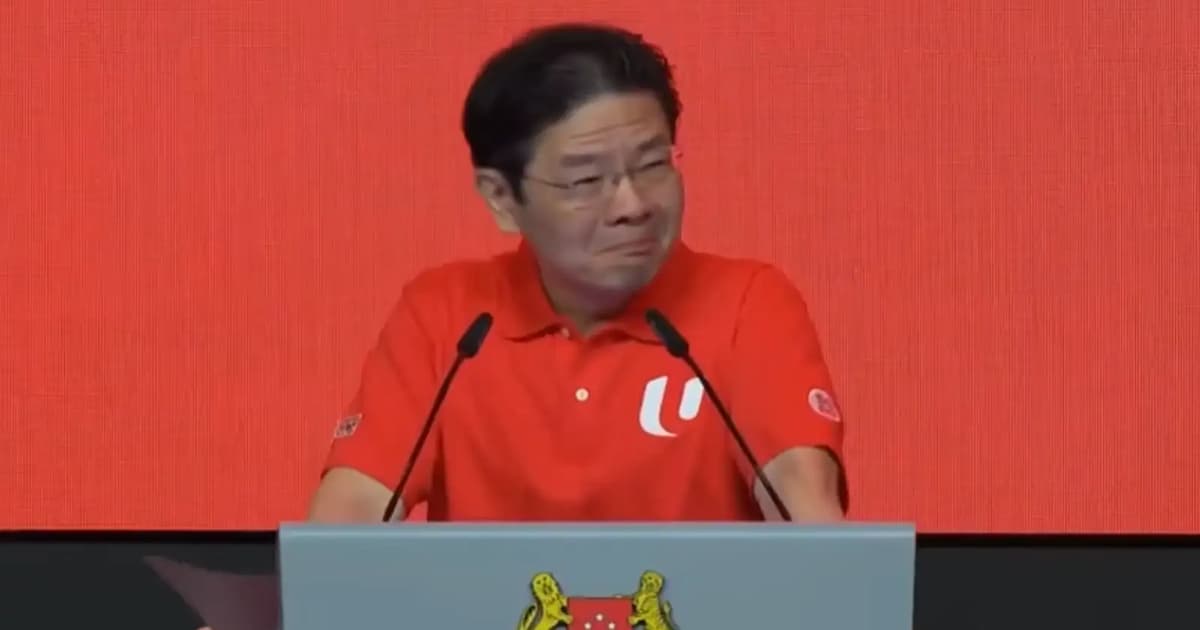
In a world often characterized by political stoicism and detached governance, a recent event in Singapore offered a rare glimpse into the human heart of leadership. At the annual May Day rally, Prime Minister Lawrence Wong, just weeks into his new role, was visibly moved to tears as he read a heartfelt letter from Nishar Keshvani, a Singaporean citizen repatriated from Riyadh by the Singapore Air Force. This deeply personal moment, captured and widely shared, transcended mere political rhetoric, becoming a powerful symbol of Singapore's unique social compact and its government's unwavering commitment to its people, even in the face of complex global uncertainties like the energy crisis and the burgeoning AI revolution.
A Leader's Emotion: A Window into Governance
The scene unfolded as PM Wong addressed the nation's workers, outlining his vision for a future-ready Singapore. As he recounted Keshvani's story – a citizen facing hardship abroad, brought home through state intervention – his voice wavered, and he paused, visibly struggling to compose himself. The excerpt he read spoke of gratitude and the profound sense of belonging Keshvani felt, knowing his government had not forgotten him. This public display of emotion, far from being a sign of weakness, resonated deeply with many, both within Singapore and internationally. It humanized the often-impersonal machinery of state, projecting an image of a government that genuinely cares for its citizens' well-being, echoing the nation's foundational principle of collective responsibility and mutual support. This incident harks back to similar moments in Singaporean political history, where leaders like Lee Kuan Yew, despite their formidable reputations, occasionally revealed their emotional depth, reinforcing the idea of a shared destiny between the government and its people.
The Singaporean Social Compact: A Historical Perspective
Singapore's commitment to its citizens, often termed its 'social compact,' is not a new phenomenon but a cornerstone of its post-independence success. From its early days as a vulnerable island nation, the People's Action Party (PAP) government, under founding father Lee Kuan Yew, forged a unique agreement with its populace: in exchange for political stability, economic growth, and social harmony, citizens would grant the government a strong mandate and trust in its long-term vision. This compact manifested in robust public housing, world-class education, universal healthcare, and a strong national defense. The state actively intervened in areas often left to market forces in other nations, ensuring a baseline quality of life and opportunities for all. The repatriation of Nishar Keshvani is a modern-day embodiment of this historical compact, demonstrating that the government's protective embrace extends beyond its geographical borders when its citizens are in need. This proactive stance contrasts sharply with the often-individualistic approaches seen in many Western democracies, where citizens abroad might find themselves navigating crises with less direct state support.
Navigating Future Challenges: Energy, AI, and Beyond
PM Wong's address explicitly linked the government's compassionate actions to its broader strategy for confronting future challenges. He articulated a clear commitment to looking after Singaporeans, whether they face the immediate pressures of an energy crisis or the transformative, potentially disruptive, forces of the AI revolution. The energy crisis, exacerbated by geopolitical tensions and supply chain disruptions, poses significant economic and social challenges globally. For a small, energy-importing nation like Singapore, ensuring stable and affordable energy access is paramount. The government's strategy includes diversifying energy sources, investing in renewable technologies, and implementing robust contingency plans to shield its citizens and businesses from price volatility. Similarly, the AI revolution presents both immense opportunities and profound anxieties. While AI promises increased productivity and innovation, it also raises concerns about job displacement, ethical dilemmas, and the need for continuous skill upgrading. Wong's administration is positioning Singapore to be a leader in AI development and adoption, but crucially, it aims to do so in a way that benefits all Singaporeans. This involves: * Massive investment in education and reskilling programs: Ensuring workers can adapt to new roles created by AI. * Ethical AI governance frameworks: Developing policies to ensure AI is used responsibly and equitably. * Support for businesses: Helping enterprises leverage AI for growth while managing its impact on their workforce.
The underlying message is clear: Singapore will not leave its citizens behind as the world undergoes rapid technological and economic shifts. This proactive, state-led approach to future-proofing its society is a hallmark of Singaporean governance.
Implications for Global Leadership and Social Cohesion
The incident and PM Wong's subsequent remarks carry significant implications, both domestically and for how Singapore is perceived on the international stage. Domestically, it reinforces trust in the leadership and strengthens national cohesion. In an era of increasing polarization and distrust in institutions, such displays of empathy can be powerful unifying forces. For the international community, it presents Singapore as a model of responsible and compassionate governance. In a world grappling with the downsides of globalization – where citizens often feel disconnected from their governments – Singapore's approach offers an alternative narrative. It suggests that a strong state can also be a caring state, capable of balancing economic pragmatism with social welfare. This could inspire other nations to re-evaluate their own social contracts, particularly as they confront similar challenges like technological disruption and resource scarcity. The emphasis on 'looking after its own' is not isolationist; rather, it's a foundation for a resilient society capable of engaging with the world from a position of strength and unity.
Conclusion: A Testament to Enduring Values
Prime Minister Lawrence Wong's emotional moment was more than just a fleeting display of sentiment; it was a potent reaffirmation of Singapore's core values. It underscored that at the heart of its ambitious economic strategies and technological advancements lies a deep-seated commitment to its people. As Singapore navigates the complexities of the 21st century – from climate change to geopolitical shifts and the relentless march of technology – its ability to maintain a strong, empathetic social compact will be its most enduring asset. The tears shed for Nishar Keshvani were not just for one individual; they were a testament to a nation's promise to care for every citizen, a promise that continues to define Singapore's unique path in the world. This human-centric approach to governance, exemplified by a leader's raw emotion, offers a compelling vision for how nations can build resilience and foster a sense of shared purpose in an increasingly uncertain future.
Stay Informed
Get the world's most important stories delivered to your inbox.
No spam, unsubscribe anytime.
Comments
No comments yet. Be the first to share your thoughts!