Strait of Hormuz Tensions Escalate: US Seizes Iranian Ship Amidst Stalled Peace Efforts
The volatile relationship between the United States and Iran has reached a new flashpoint following the US seizure of an Iranian container ship in the strategically vital Strait of Hormuz. This incident, confirmed by former President Trump, comes as diplomatic efforts remain gridlocked, with Tehran firmly rejecting US peace talks. Meanwhile, a US delegation heads to Pakistan for crucial negotiations, highlighting the complex web of regional and international dynamics at play in the Middle East.
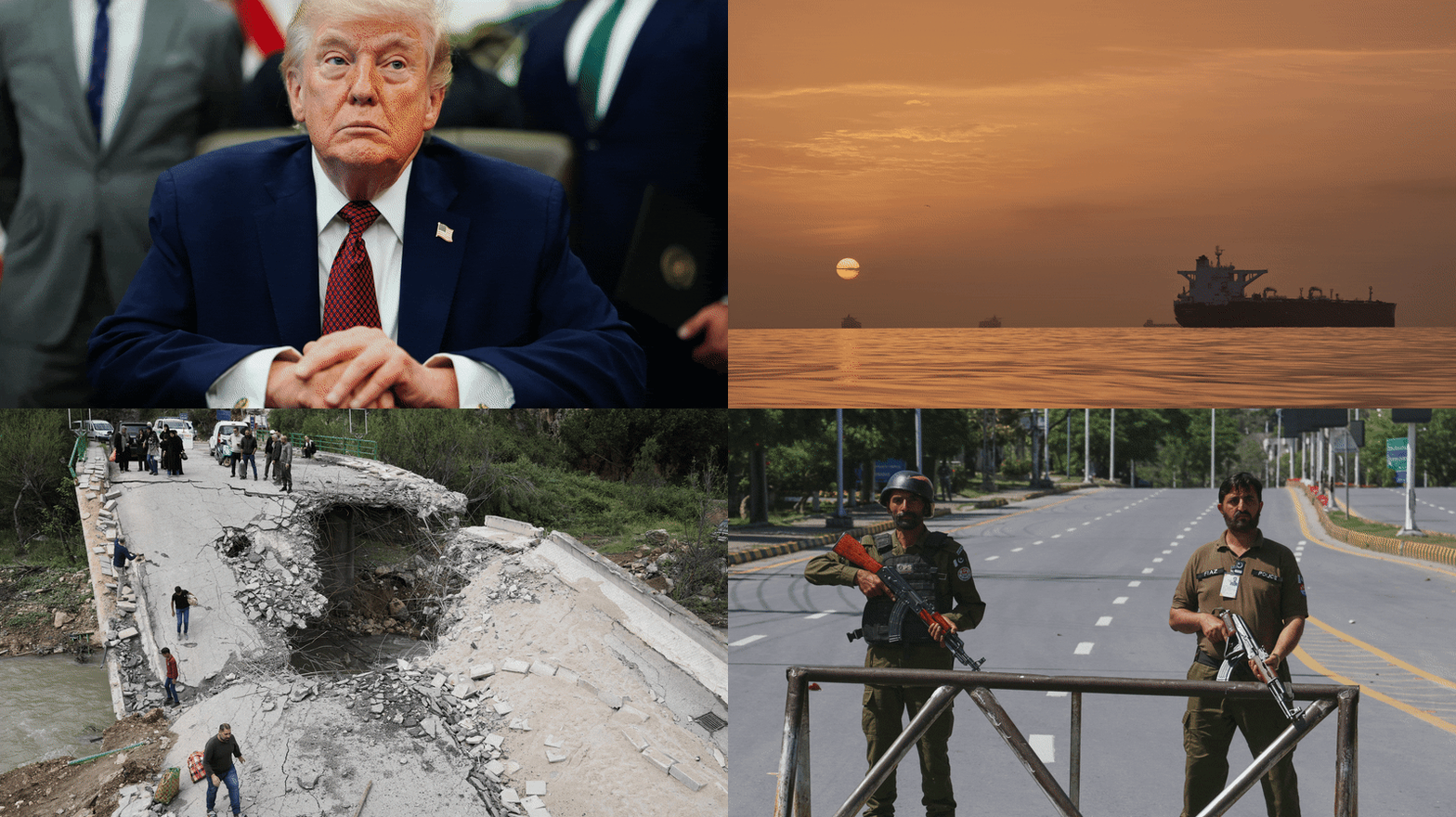
In a dramatic escalation of tensions in the Middle East, the United States has reportedly seized an Iranian container ship in the highly contested Strait of Hormuz. The development, initially confirmed by former President Donald Trump, sends ripples of concern across global geopolitical landscapes and financial markets, underscoring the precarious state of US-Iran relations. This incident unfolds against a backdrop of persistent diplomatic deadlock, with Tehran steadfastly rejecting overtures for peace talks from Washington, further complicating any path towards de-escalation.
The Strait of Hormuz, a narrow chokepoint connecting the Persian Gulf to the open ocean, is arguably the world's most critical oil transit route, through which roughly a fifth of global oil consumption passes daily. Any disruption here has immediate and far-reaching consequences for international trade and energy security. The seizure of an Iranian vessel in these waters is not merely a maritime incident; it is a potent symbol of the enduring and often confrontational standoff between the two nations, each vying for influence and security in a region perpetually on edge.
A History of Hostility: The US-Iran Conundrum
The current state of animosity between the United States and Iran is deeply rooted in decades of mistrust and geopolitical maneuvering. The 1979 Iranian Revolution, which overthrew the US-backed Shah, marked a fundamental shift, transforming a strategic alliance into a bitter rivalry. Subsequent events, including the Iran hostage crisis, the Iran-Iraq War, and Iran's nuclear program, have consistently fueled this antagonism. The Joint Comprehensive Plan of Action (JCPOA), or the Iran nuclear deal, signed in 2015, offered a brief respite, but its unilateral withdrawal by the Trump administration in 2018 reignited sanctions and heightened tensions, leading to a series of tit-for-tat actions, including attacks on oil tankers, drone shoot-downs, and cyber warfare.
Tehran views US actions, particularly sanctions and military presence in the region, as an infringement on its sovereignty and a concerted effort to undermine its government. Conversely, Washington and its allies accuse Iran of destabilizing the Middle East through its support for regional proxies, its ballistic missile program, and its alleged pursuit of nuclear weapons capabilities. This fundamental divergence in perspectives makes any diplomatic breakthrough exceedingly difficult, as evidenced by Iran's consistent rejection of US-initiated peace talks, viewing them as disingenuous or conditional on its capitulation.
The Strait of Hormuz: A Global Chokepoint
The Strait of Hormuz is more than just a waterway; it is a geopolitical pressure point. Its strategic importance cannot be overstated. Approximately 21 million barrels of oil per day (bpd) passed through the Strait in 2018, representing about 21% of global petroleum liquids consumption. This makes it a prime target for disruption during times of conflict. Iran, with its extensive coastline along the Strait, has repeatedly threatened to close it in response to external pressures, particularly sanctions affecting its oil exports. Such a move would send crude oil prices soaring, trigger a global economic crisis, and likely provoke a swift military response from international powers dependent on the free flow of oil.
Past incidents in the Strait include: * Mine attacks on oil tankers. * Seizure of foreign-flagged vessels by Iranian forces. * Naval confrontations between US and Iranian forces.
The recent seizure of an Iranian ship by the US, regardless of the specific circumstances, adds another layer of complexity and risk to an already volatile maritime environment. It raises questions about the legality of the seizure, the potential for retaliatory actions by Iran, and the broader implications for international shipping and regional security.
Diplomatic Deadlock and Regional Realignment
While tensions simmer in the Persian Gulf, diplomatic efforts continue on other fronts. The announcement that a US delegation will head to Pakistan for a second round of negotiations highlights the intricate and often contradictory nature of US foreign policy in the broader region. Pakistan, a nuclear-armed nation bordering Iran and Afghanistan, plays a crucial role in regional stability. These talks likely encompass a range of issues, from counter-terrorism efforts to economic cooperation, and could indirectly influence the US-Iran dynamic by shaping regional alliances and security architectures.
However, the direct path to de-escalation between Washington and Tehran remains obstructed. Iran's rejection of US peace talks is not a new phenomenon. Tehran often demands a lifting of sanctions and a return to the JCPOA as preconditions for meaningful dialogue, conditions Washington has been unwilling to fully meet. This creates a diplomatic stalemate where both sides appear entrenched in their positions, with little room for compromise. The absence of direct, high-level communication channels further exacerbates the risk of miscalculation and unintended escalation, especially in a region teeming with military assets and proxy conflicts.
Implications and the Path Forward
The seizure of the Iranian ship in the Strait of Hormuz serves as a stark reminder of the ever-present danger of a wider conflict in the Middle East. The immediate implications include heightened security alerts for commercial shipping, increased military readiness in the region, and potential for retaliatory actions by Iran, which could target US assets or those of its allies. Economically, oil prices are likely to react to the increased uncertainty, potentially impacting global inflation and economic growth.
For the international community, the challenge is to find a way to de-escalate without legitimizing aggressive actions or undermining international law. Calls for restraint and dialogue are paramount, but the fundamental issues dividing the US and Iran remain unresolved. A sustainable resolution would require a comprehensive approach addressing Iran's nuclear program, its regional activities, and the lifting of sanctions, all within a framework of mutual respect and verifiable commitments. Without such a framework, incidents like the one in the Strait of Hormuz will continue to punctuate a dangerous standoff, keeping the world on edge and the Middle East in a perpetual state of crisis. The path forward is fraught with peril, demanding astute diplomacy and a genuine commitment to peace from all parties involved.
Stay Informed
Get the world's most important stories delivered to your inbox.
No spam, unsubscribe anytime.
Comments
No comments yet. Be the first to share your thoughts!