Sundar Pichai: Augmenting Humanity, Not Replacing It – The Future of AI Unpacked
Google CEO Sundar Pichai's widely circulated statement, "The future of AI is not about replacing humans, it's about augmenting human capabilities," has ignited a global conversation. This article delves into Pichai's vision for artificial intelligence, exploring how responsible innovation can empower individuals and reshape industries. We examine the philosophical underpinnings and practical implications of AI as a tool for human enhancement, moving beyond fears of automation to embrace a collaborative future.
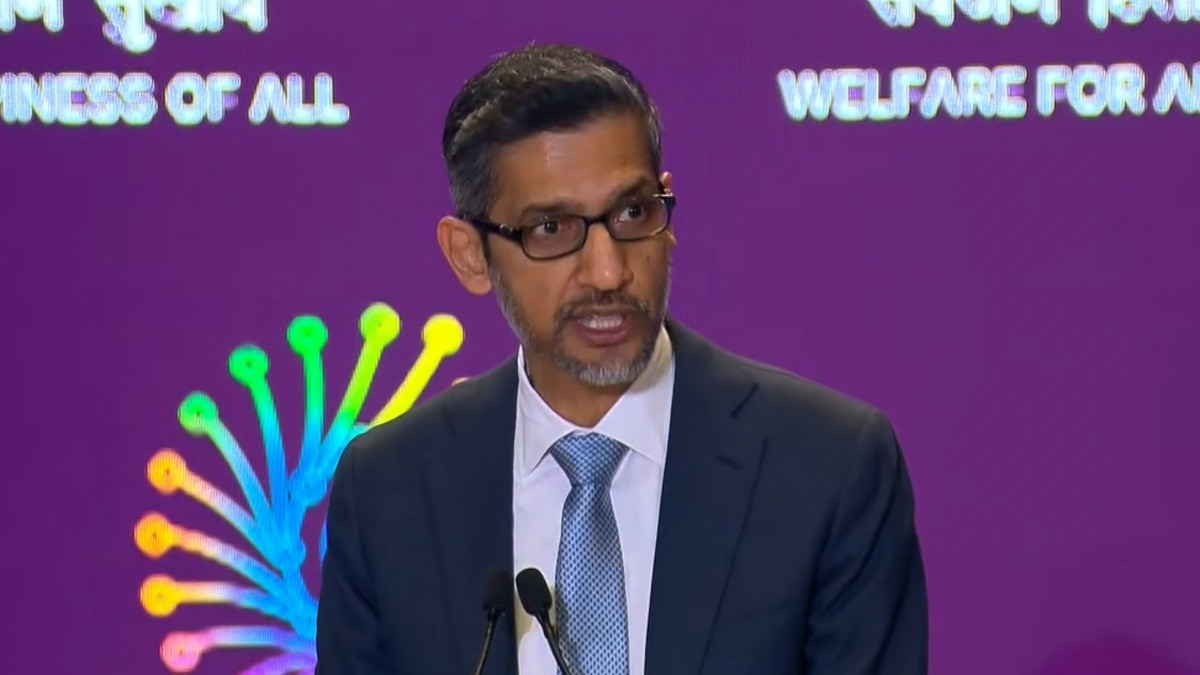
In an era often dominated by anxieties about artificial intelligence, a powerful and widely circulated statement from Google and Alphabet Inc. CEO Sundar Pichai offers a refreshing and profoundly optimistic perspective: "The future of AI is not about replacing humans, it's about augmenting human capabilities." This declaration, reported by India Today and echoed across global media, cuts through the noise, framing AI not as a threat to human existence or employment, but as a transformative tool designed to elevate our potential. As a prominent voice in the technology world, Pichai's consistent emphasis on human-centred and responsible AI development provides a crucial compass for navigating the complex ethical and societal landscapes emerging with this rapidly advancing technology. PulseWorld explores the depths of this vision, its historical context, and its profound implications for our collective future.
The Philosophical Underpinnings: AI as a 'Cognitive Bicycle'
Pichai's vision is not entirely new; it echoes a long-standing aspiration within the tech community to create tools that extend human reach. Steve Jobs famously described the computer as a "bicycle for the mind," a metaphor that perfectly encapsulates the augmentation philosophy. Just as a bicycle amplifies our physical speed and endurance, AI, in Pichai's view, can amplify our cognitive abilities. It’s about offloading tedious, repetitive tasks, processing vast datasets beyond human comprehension, and identifying patterns that would otherwise remain hidden. This frees up human intellect for higher-order thinking, creativity, emotional intelligence, and complex problem-solving – areas where human intuition and nuanced understanding remain irreplaceable.
Historically, every major technological leap, from the printing press to the internet, has sparked fears of displacement while ultimately leading to new forms of human endeavor and societal advancement. The industrial revolution, for instance, automated manual labor but created new industries and roles requiring different skill sets. AI is poised to do the same, but at an unprecedented scale and speed, impacting cognitive rather than purely physical tasks. Pichai's narrative seeks to guide this transition, advocating for a proactive approach to skill development and a societal commitment to leveraging AI for collective good.
Practical Applications: Augmenting Across Industries
The concept of AI augmentation is already manifesting in tangible ways across various sectors, demonstrating its potential to enhance human performance rather than diminish it.
* Healthcare: AI-powered diagnostic tools assist doctors in identifying diseases like cancer with greater accuracy and speed, analyzing medical images and patient data far more efficiently than human eyes alone. This doesn't replace the doctor; it empowers them to make more informed decisions, freeing up time for patient interaction and complex case management. Robotic surgery, guided by human experts, allows for greater precision and less invasive procedures. * Education: Personalized learning platforms, driven by AI, can adapt to individual student needs, identifying learning gaps and tailoring content to optimize comprehension. This augments teachers' abilities to manage diverse classrooms, allowing them to focus on mentorship, critical thinking, and fostering creativity, rather than rote instruction. * Creative Fields: AI tools are assisting artists, musicians, and writers by generating new ideas, refining drafts, or even creating foundational elements that human creators then build upon. From generating musical compositions to suggesting plot twists, AI acts as a creative partner, expanding the possibilities of human expression. * Business and Productivity: From intelligent assistants scheduling meetings to advanced analytics providing strategic insights, AI streamlines operations, optimizes decision-making, and enhances overall productivity. Customer service chatbots handle routine queries, allowing human agents to focus on complex issues requiring empathy and judgment. In software development, AI assists engineers by suggesting code completions, debugging, and even generating boilerplate code, accelerating innovation.
These examples underscore a common theme: AI is most powerful when it acts as a co-pilot, an intelligent assistant that extends human capabilities, making us more efficient, more accurate, and ultimately, more effective in our chosen fields.
The Imperative of Responsible Innovation and Ethical AI
Pichai's advocacy for augmentation is inextricably linked to his call for responsible innovation. The potential for AI to cause harm – through bias, misuse, or unintended consequences – is significant. Therefore, developing AI with a strong ethical framework is paramount. This includes:
* Fairness and Bias Mitigation: Ensuring AI models are trained on diverse, unbiased data to prevent perpetuating or amplifying societal inequalities. * Transparency and Explainability: Designing AI systems whose decisions can be understood and audited by humans, fostering trust and accountability. * Privacy and Security: Protecting user data and ensuring AI systems are secure from malicious attacks. * Human Oversight and Control: Maintaining human agency in critical decision-making processes, ensuring AI remains a tool under human direction.
Google, under Pichai's leadership, has been a vocal proponent of these principles, publishing AI ethics guidelines and investing in research focused on making AI more interpretable and robust. The global conversation around AI governance, regulation, and ethical standards is intensifying, with leaders like Pichai playing a pivotal role in shaping its direction. The goal is not just to build powerful AI, but to build beneficial AI.
Navigating the Future: Skills, Society, and Synergy
The shift towards AI augmentation necessitates a societal re-evaluation of skills and education. Future workforces will require not just digital literacy, but also critical thinking, adaptability, creativity, and strong interpersonal skills – precisely the areas where humans excel and AI complements. Lifelong learning will become more crucial than ever, as individuals adapt to evolving job roles and integrate AI tools into their professional lives.
Governments, educational institutions, and corporations must collaborate to prepare society for this future. Investment in STEM education, reskilling programs, and policies that support workers through transitions will be vital. The narrative must shift from "AI will take our jobs" to "AI will change our jobs," emphasizing the opportunity for humans to ascend to more fulfilling and impactful roles.
Sundar Pichai's articulation of AI as a tool for human augmentation offers a compelling and actionable roadmap for the future. It’s a vision that moves beyond dystopian fears, inviting us instead to imagine a world where technology serves as a powerful ally, amplifying our intelligence, creativity, and capacity for progress. As AI continues its rapid evolution, the challenge and opportunity lie in ensuring that this augmentation is inclusive, ethical, and ultimately, serves to uplift all of humanity. The future, as Pichai suggests, is not about machines replacing us, but about machines making us more human.
Stay Informed
Get the world's most important stories delivered to your inbox.
No spam, unsubscribe anytime.
Comments
No comments yet. Be the first to share your thoughts!