Tesla's FSD Reckoning: Musk Admits Hardware Upgrades Needed, Challenging Years of Promises
Elon Musk's recent admission that millions of Tesla owners require hardware upgrades for true 'Full Self-Driving' marks a significant pivot from years of promises. This revelation could expose Tesla to substantial legal and financial challenges, as customers were led to believe software updates alone would deliver full autonomy. The incident raises critical questions about consumer trust, regulatory oversight, and the future of autonomous vehicle technology.
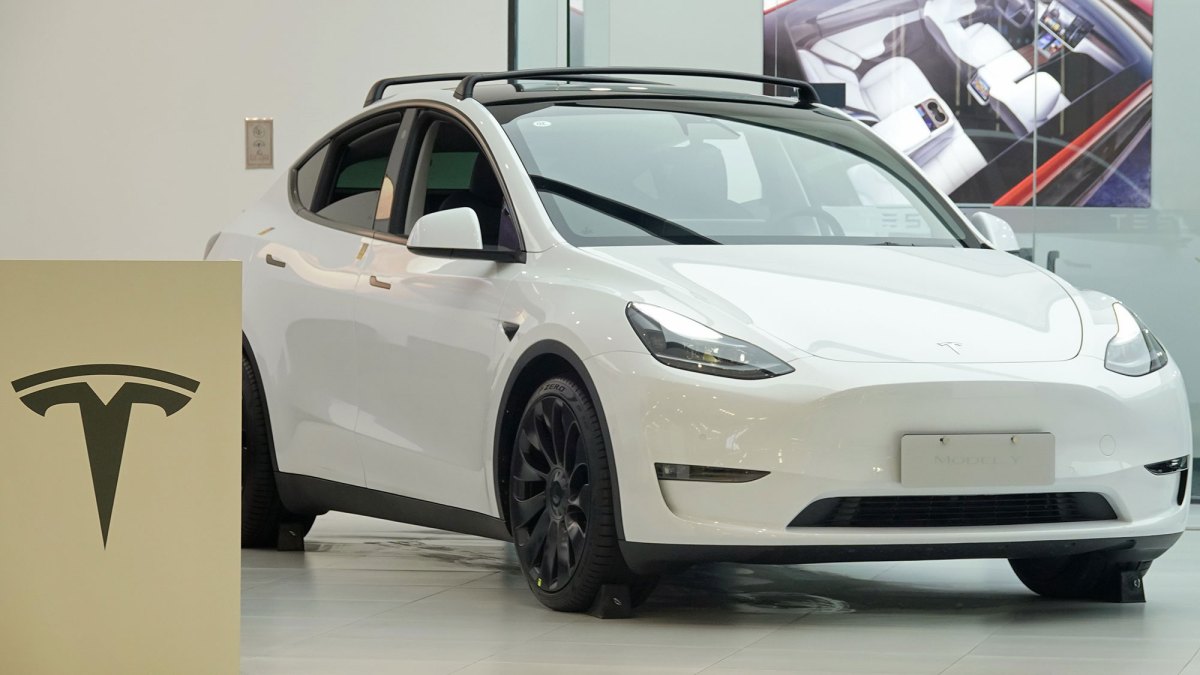
For years, the promise of a truly autonomous vehicle, one that could navigate roads without human intervention, has been a cornerstone of Tesla's allure. Elon Musk, the charismatic and often controversial CEO, has consistently championed the company's 'Full Self-Driving' (FSD) software as the imminent realization of this dream, assuring customers that their vehicles were merely a software update away from achieving full autonomy. This week, however, a seismic shift occurred in this narrative. Musk publicly admitted that millions of Tesla owners will, in fact, require significant hardware upgrades to run a future version of its FSD software that genuinely doesn't necessitate human supervision. This admission is not just a technical detail; it's a profound concession that challenges years of marketing, customer expectations, and potentially, legal standing.
The Unraveling of a Promise
The implications of Musk's statement are far-reaching. For over half a decade, Tesla has sold its FSD package, costing thousands of dollars, on the premise that the existing hardware (HW2.0, HW2.5, and HW3.0) was sufficient for full autonomy, with only software improvements needed. Customers invested in this vision, often paying upfront for a feature that was perpetually 'just around the corner.' The latest revelation, suggesting that even HW3.0 might not be enough and that a future HW4.0 or even HW5.0 will be necessary, fundamentally alters the value proposition for these early adopters.
This isn't merely a technical hiccup; it's a potential breach of trust and a significant financial burden for consumers. Imagine purchasing a cutting-edge smartphone, only to be told years later that its core functionality, promised at the point of sale, requires a complete internal hardware overhaul at your expense. The analogy, while imperfect, captures the sentiment of many Tesla owners who feel misled. The company's marketing has been aggressive, often using terms like 'Full Self-Driving' that imply a level of autonomy far beyond what the system currently delivers, and crucially, beyond what the installed hardware can support.
Legal and Regulatory Storm Clouds
Musk's admission opens a Pandora's box of potential legal challenges. Consumer protection laws in various jurisdictions could come into play, with owners arguing that they were sold a product under false pretenses. Class-action lawsuits, already a recurring theme for Tesla, could surge. The core argument would revolve around whether Tesla knowingly oversold the capabilities of its hardware or made promises it couldn't keep. The financial ramifications for Tesla could be substantial, ranging from forced refunds for the FSD package to covering the cost of hardware upgrades for millions of vehicles.
Regulatory bodies, already scrutinizing the safety and marketing of autonomous driving systems, are likely to intensify their oversight. Agencies like the National Highway Traffic Safety Administration (NHTSA) in the U.S. have consistently warned against the misuse of terms like 'Full Self-Driving,' emphasizing that these systems are still Level 2 driver-assistance features requiring active human supervision. This latest development only strengthens the argument for stricter regulations on how autonomous features are named, marketed, and deployed. The line between aspirational technology and misleading advertising is becoming increasingly blurred, and regulators are keen to draw a clearer boundary.
The Technical Roadblock: Why Hardware Matters
While software is undoubtedly critical for autonomous driving, the underlying hardware—sensors, cameras, radar, ultrasonic sensors, and the central processing unit—forms the foundation. Tesla's approach has historically relied heavily on cameras ('Tesla Vision'), minimizing reliance on radar and eschewing lidar, a technology favored by many competitors for its precise 3D mapping capabilities. Musk's past assertions that lidar was 'a fool's errand' now ring with a certain irony.
The need for hardware upgrades suggests that the current sensor suite and computing power are insufficient to achieve the safety and reliability required for unsupervised autonomy. True Level 5 FSD, where a vehicle can operate under all conditions without human intervention, demands an incredibly robust perception system that can accurately interpret complex, dynamic environments. This often requires redundancy in sensor types (e.g., cameras, radar, lidar) and immense computational power to process vast amounts of data in real-time. If Tesla's existing hardware cannot meet these demands, then software alone, no matter how sophisticated, cannot bridge the gap.
Impact on Consumer Trust and the AV Industry
This episode is a significant blow to consumer trust, not just for Tesla but potentially for the broader autonomous vehicle industry. When a leading innovator like Tesla faces such a public reckoning, it can breed skepticism among the general public about the entire concept of self-driving cars. This could slow down adoption rates and increase public resistance to AV technology, even for companies taking a more cautious and transparent approach.
For the AV industry, it underscores the immense technical challenges and the importance of realistic expectations. Companies like Waymo and Cruise, which have taken a more incremental and geographically limited approach to deployment, often with extensive testing and redundant sensor arrays, might see their methodologies validated. The incident highlights that the path to full autonomy is fraught with complexities that go beyond software updates and require fundamental hardware capabilities.
The Path Forward: A Costly Pivot?
Tesla now faces a difficult choice: offer free or heavily subsidized hardware upgrades to millions of customers, risking a massive financial hit, or face a torrent of legal battles and a further erosion of consumer confidence. The cost of upgrading millions of vehicles with new cameras, sensors, and computing units could run into billions of dollars, significantly impacting the company's profitability.
Furthermore, this pivot could delay Tesla's timeline for achieving true FSD. Developing, validating, and deploying new hardware across a vast fleet is a monumental task. It also raises questions about the future value of the FSD package for new buyers. Will they be guaranteed future hardware compatibility, or will they too face potential upgrade costs down the line?
In conclusion, Elon Musk's admission marks a critical juncture for Tesla and the autonomous driving industry. It's a stark reminder that the journey to full autonomy is more complex and hardware-dependent than previously advertised. While Tesla has undoubtedly pushed the boundaries of automotive technology, this episode underscores the vital importance of transparency, realistic promises, and robust engineering in the pursuit of revolutionary innovation. The coming months will reveal how Tesla navigates this challenging terrain and what long-term consequences this reckoning will have on its brand and the future of self-driving cars.
Stay Informed
Get the world's most important stories delivered to your inbox.
No spam, unsubscribe anytime.
Comments
No comments yet. Be the first to share your thoughts!