The Mutilated Kippa: A Peace Activist's Warning Against Illiberalism in Israel
Alex Sinclair, a UK-born Israeli peace activist, faced detention and the destruction of his 'coexistence kippa' by police, sparking a global debate. His story highlights the growing tensions and challenges to freedom of expression within Israel, particularly concerning symbols of Israeli-Palestinian unity. Sinclair's experience serves as a stark warning against the erosion of liberal values amid escalating conflict, prompting reflection on the future of dissent and dialogue in the region.
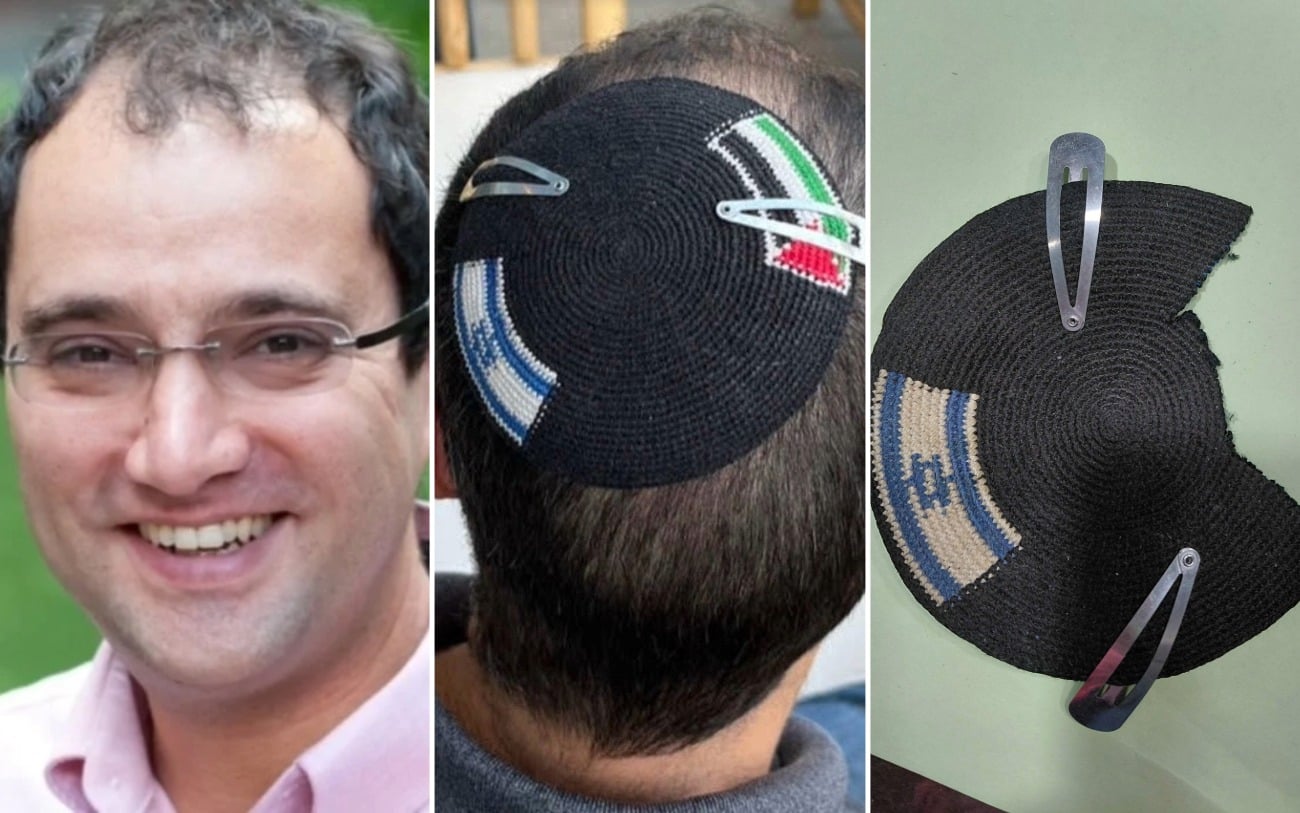
In a world increasingly polarized by conflict, the story of Alex Sinclair, a UK-born Israeli writer and peace activist, serves as a poignant and alarming testament to the fragility of dialogue and the escalating suppression of dissent. What began as a simple act of wearing a head covering—a kippa adorned with both Israeli and Palestinian flags—culminated in his detention by police and the deliberate mutilation of this powerful symbol of coexistence. Sinclair's experience, which he shared on Facebook, has since reverberated globally, igniting discussions about freedom of expression, the limits of state power, and the perilous path towards illiberalism in a nation grappling with profound internal and external pressures.
Sinclair, who resides in central Israel, found himself in police custody after officers deemed his kippa a provocative item. The subsequent destruction of the head covering, which he described as being "carved up," was not merely an act of confiscation but a symbolic assault on the very idea it represented: a shared future, a bridge between two peoples often seen as irreconcilable. His public outcry, encapsulated in the question, "what is in store for us?" resonates deeply, echoing the fears of many who witness the tightening grip of nationalist narratives and the shrinking space for peace advocacy.
The Symbolism of the Coexistence Kippa
The kippa, or yarmulke, is a traditional Jewish head covering, a symbol of reverence and identity. By integrating the flags of Israel and Palestine onto this sacred item, Sinclair transformed it into a potent statement of binational identity and peaceful coexistence. This wasn't merely a fashion choice; it was a political and spiritual declaration. In a region where national symbols are often weaponized and seen as mutually exclusive, Sinclair's kippa dared to suggest a different reality—one where identities could intersect and coexist rather than clash. It challenged the prevailing narrative of absolute separation and offered a visual representation of a shared humanity, however contested. The police's reaction, therefore, wasn't just against a piece of cloth but against the subversive message it carried, a message that potentially undermines a state-sanctioned narrative of conflict and division. This incident highlights the profound power of symbols and the lengths to which authorities might go to control public discourse, especially when those symbols advocate for reconciliation in times of heightened tension.
Historically, symbols of unity have often been met with suspicion or outright repression by authorities who perceive them as threats to national cohesion or security. From the civil rights movement in the United States to anti-apartheid struggles in South Africa, objects and attire bearing messages of peace and equality have frequently been targets of state intervention. In the Israeli-Palestinian context, even seemingly innocuous gestures can carry immense political weight, reflecting the deep-seated anxieties and historical grievances that define the conflict. Sinclair's kippa, therefore, stands in a long tradition of symbolic acts of resistance and hope, acts that often face fierce opposition from those invested in maintaining the status quo.
Escalating Tensions and the Erosion of Liberal Values
Sinclair’s detention and the destruction of his kippa are not isolated incidents but rather symptoms of a broader trend. In recent years, there has been a noticeable erosion of liberal values and an increase in authoritarian tendencies in various democracies worldwide, including Israel. The ongoing conflict, particularly since October 7th, has intensified nationalist sentiments and led to a crackdown on expressions perceived as sympathetic to the 'other side'. This climate makes it increasingly difficult for peace activists and those advocating for a nuanced perspective to operate without fear of reprisal.
* Increased Surveillance and Control: Authorities are often granted expanded powers during times of conflict, leading to greater surveillance and control over public spaces and expressions. Sinclair's experience points to a heightened sensitivity to any display that could be interpreted as challenging the dominant wartime narrative. * Suppression of Dissent: The space for dissent, particularly regarding the Israeli-Palestinian conflict, has been shrinking. Individuals expressing solidarity with Palestinians, or even advocating for peace through symbols like Sinclair's kippa, risk being labeled as traitors or security threats. * Legal Ambiguity: The line between legitimate protest and incitement often becomes blurred, leaving room for arbitrary enforcement. The legal basis for confiscating and damaging Sinclair's kippa, beyond a vague notion of 'provocation', remains questionable and raises concerns about due process.
This trend is particularly concerning in a country that prides itself on its democratic institutions. When symbols of peace are deemed dangerous, and those who wear them are detained, it signals a dangerous shift away from fundamental freedoms. The implications extend beyond individual cases, threatening the very fabric of a society that values open debate and diverse perspectives.
A Warning for the Future of Israeli Society
Sinclair's question, "what is in store for us?" is not merely rhetorical; it is a profound warning. He argues that allowing the country to descend into illiberalism—a political system characterized by a weakening of democratic institutions, restrictions on civil liberties, and the suppression of opposition—will ultimately harm Israeli society itself. This isn't just about the rights of peace activists; it's about the health of the entire democratic system.
An illiberal state, even one that maintains some semblance of democratic elections, often exhibits:
* Reduced Freedom of Speech: Critical voices are silenced, and certain topics become taboo. * Weakened Rule of Law: Laws are selectively applied, and due process is undermined. * Polarized Society: The 'us vs. them' mentality is amplified, making reconciliation nearly impossible. * Erosion of Human Rights: Basic human rights are curtailed in the name of national security or unity.
If Israel continues down this path, it risks alienating a significant portion of its own population, particularly those who believe in a pluralistic, democratic future. It also jeopardizes its standing on the international stage, where adherence to human rights and democratic principles is increasingly scrutinized. The long-term consequences could include increased internal strife, further isolation, and a diminished capacity for genuine peace-building.
The Path Forward: Reaffirming Democratic Principles
Alex Sinclair's experience serves as a critical wake-up call. To counter the slide towards illiberalism, there must be a concerted effort to reaffirm and protect fundamental democratic principles. This includes:
* Protecting Freedom of Expression: Upholding the right to express diverse opinions, even those that are unpopular or challenging to the dominant narrative, is paramount. This requires clear guidelines for law enforcement and judicial oversight to prevent arbitrary actions. * Promoting Dialogue and Education: Creating platforms for open dialogue and fostering education about the complexities of the conflict can help bridge divides and reduce the demonization of 'the other'. * Strengthening Civil Society: Supporting NGOs and activist groups that advocate for human rights, peace, and coexistence is crucial. These organizations often serve as vital checks on state power and provide alternative narratives. * Accountability for Abuses: Ensuring that instances of overreach or abuse of power by authorities are thoroughly investigated and perpetrators held accountable can help restore public trust and deter future transgressions.
Sinclair's mutilated kippa is more than just a damaged piece of cloth; it is a powerful metaphor for the state of dialogue and dissent in a deeply troubled region. His warning against illiberalism is not just for Israel but for any society grappling with conflict and polarization. The future of peace, justice, and democracy hinges on the willingness to protect even the most challenging expressions of unity and to resist the siren call of division and authoritarianism. The question "what is in store for us?" demands an answer rooted in courage, empathy, and an unwavering commitment to liberal values, ensuring that symbols of peace are cherished, not carved up.
Stay Informed
Get the world's most important stories delivered to your inbox.
No spam, unsubscribe anytime.
Comments
No comments yet. Be the first to share your thoughts!