The 'Ocean Dream' Diamond: A $17 Million Masterpiece Reshaping the Market for Rare Gems
The 'Ocean Dream,' a breathtaking 5.5-carat blue-green diamond, recently fetched an astonishing $17 million at a Christie's auction, making it the largest gem of its kind ever recorded. This sale not only highlights the enduring allure of rare colored diamonds but also signals a robust and competitive market for exceptional jewels. Discovered in Central Africa, its journey from mine to auction block underscores a fascinating blend of geological rarity, expert craftsmanship, and strategic marketing, captivating collectors worldwide.
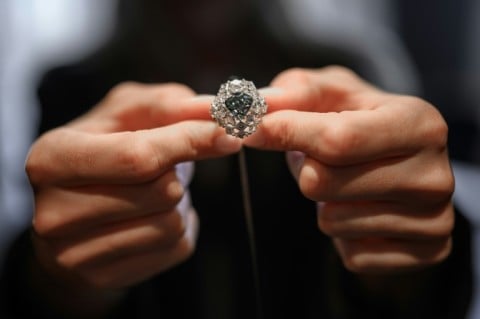
In the rarefied world of high-stakes auctions, where art and artifacts command astronomical sums, a singular gem recently emerged to capture the imagination of collectors and redefine market expectations. The 'Ocean Dream' diamond, a mesmerizing 5.5-carat blue-green marvel, shattered predictions and set a new benchmark, selling for an astonishing $17 million at a recent Christie's auction. This wasn't just another sale; it was a testament to the enduring power and unparalleled allure of nature's most exquisite creations, solidifying its status as the largest blue-green diamond ever recorded.
The 'Ocean Dream' is more than just a stone; it's a geological miracle, a vibrant testament to millions of years of Earth's intricate processes. Its unique hue, a captivating blend of deep blue and verdant green, places it in an exceptionally rare category, making it a coveted prize for connoisseurs and investors alike. The sale underscores a burgeoning trend in the luxury market, where rarity, provenance, and intrinsic beauty continue to drive record-breaking prices, even amidst global economic uncertainties.
The Genesis of a Gem: From African Earth to Global Stage
The journey of the 'Ocean Dream' began decades ago, deep within the mineral-rich earth of Central Africa. Discovered in the 1990s, this raw, untamed crystal held within its rough exterior the promise of something extraordinary. The process of transforming such a find into a polished masterpiece is one of meticulous care, unparalleled skill, and profound patience. Expert cutters and polishers, with years of experience, meticulously studied the stone, planning each facet to maximize its color, clarity, and brilliance. This painstaking craftsmanship is crucial; a single misstep can diminish a stone's value dramatically. The diamond's initial extraction from the earth is merely the first chapter in a long and intricate narrative that culminates in its presentation on the global stage.
Its eventual naming by the prestigious Smithsonian Institution further elevated its profile, bestowing upon it an academic and cultural significance that transcends its monetary value. The Smithsonian's involvement not only authenticates its rarity but also places it within a pantheon of historically significant gems, such as the Hope Diamond, which also resides within its hallowed halls. This institutional recognition adds an invaluable layer of prestige and historical context, making the 'Ocean Dream' a true museum-quality piece.
The Allure of Colored Diamonds: A Market Phenomenon
The market for colored diamonds has witnessed an exponential surge in recent years, outperforming their colorless counterparts in terms of price appreciation and investment potential. While colorless diamonds are graded on the absence of color, fancy colored diamonds are valued precisely for their intense and unique hues. The spectrum of colored diamonds is vast, ranging from vivid yellows and fiery oranges to delicate pinks and intense blues. However, blue and green diamonds are among the rarest, often fetching the highest prices per carat.
What makes blue and green diamonds so exceptionally rare? The presence of specific trace elements during their formation is key. For blue diamonds, the element boron is responsible for their captivating color. Green diamonds, on the other hand, owe their hue to natural radiation exposure over millions of years, which alters their crystal structure. The combination of blue and green, as seen in the 'Ocean Dream,' is even more extraordinary, a testament to a unique geological cocktail and a truly rare occurrence. This scarcity, coupled with their undeniable beauty, fuels intense competition among collectors, driving prices ever higher.
According to industry reports, the value of fancy colored diamonds has consistently appreciated over the past decade, often outpacing traditional investment vehicles. For instance, the Fancy Color Research Foundation (FCRF) regularly publishes indices showing significant gains across various color categories, with blue and pink diamonds often leading the charge. The 'Ocean Dream' sale is a powerful affirmation of this trend, indicating a robust and resilient segment within the luxury goods market.
Christie's: A Legacy of Exceptional Sales
Christie's, one of the world's leading auction houses, has a storied history of bringing the most magnificent and historically significant jewels to market. Their expertise in curating, valuing, and presenting such treasures is unparalleled. The successful sale of the 'Ocean Dream' is another jewel in their crown, showcasing their ability to attract the most discerning buyers and achieve record-breaking results. The auction process itself is a spectacle, a carefully orchestrated event designed to generate excitement and competitive bidding. From initial viewing exhibitions to the dramatic fall of the hammer, every step is meticulously planned.
The global reach of auction houses like Christie's is critical in these high-value sales. They leverage their extensive network of private collectors, institutions, and dealers across continents, ensuring that these rare gems find their way to the most passionate and financially capable bidders. The anonymity often afforded to buyers in such transactions adds another layer of intrigue, fueling speculation about who might be the new custodian of such a magnificent piece of natural history.
Implications for the Future of Gem Collecting and Investment
The sale of the 'Ocean Dream' sends a clear signal to the luxury market: ultra-rare colored diamonds remain a highly sought-after and valuable asset class. For investors, these gems offer a tangible store of wealth, often appreciating independently of traditional financial markets. Their portability, intrinsic value, and historical significance make them attractive alternatives in a diversified portfolio. However, investing in such high-value items requires expert knowledge, due diligence, and an understanding of market nuances.
For collectors, the 'Ocean Dream' represents the pinnacle of gemological acquisition, a piece that combines aesthetic beauty with profound rarity. It also sets a new bar for future discoveries and sales, potentially inspiring further exploration and investment in the mining and cutting of exceptional stones. As resources become scarcer and demand from emerging markets grows, the value of truly unique natural phenomena like the 'Ocean Dream' is only expected to increase.
Looking ahead, the market for colored diamonds will likely continue its upward trajectory, driven by a combination of diminishing supply, increasing global wealth, and the timeless human fascination with beauty and rarity. The 'Ocean Dream' is not just a diamond; it is a symbol of nature's artistry, human ingenuity, and the enduring power of dreams – now valued at a staggering $17 million, forever etched into the annals of auction history.
Stay Informed
Get the world's most important stories delivered to your inbox.
No spam, unsubscribe anytime.
Comments
No comments yet. Be the first to share your thoughts!