The Return of the Driver's Car: BMW M3 CS Handschalter Redefines Performance Purity
BMW ignites enthusiast passions with the limited-edition M3 CS Handschalter, bringing back a manual transmission to its high-performance sedan. This exclusive model, prioritizing driver engagement over raw power, signals a significant shift in automotive philosophy, challenging the dominance of automatics and electric vehicles. We delve into its engineering, market implications, and what this 'manual-only' variant means for the future of driving.
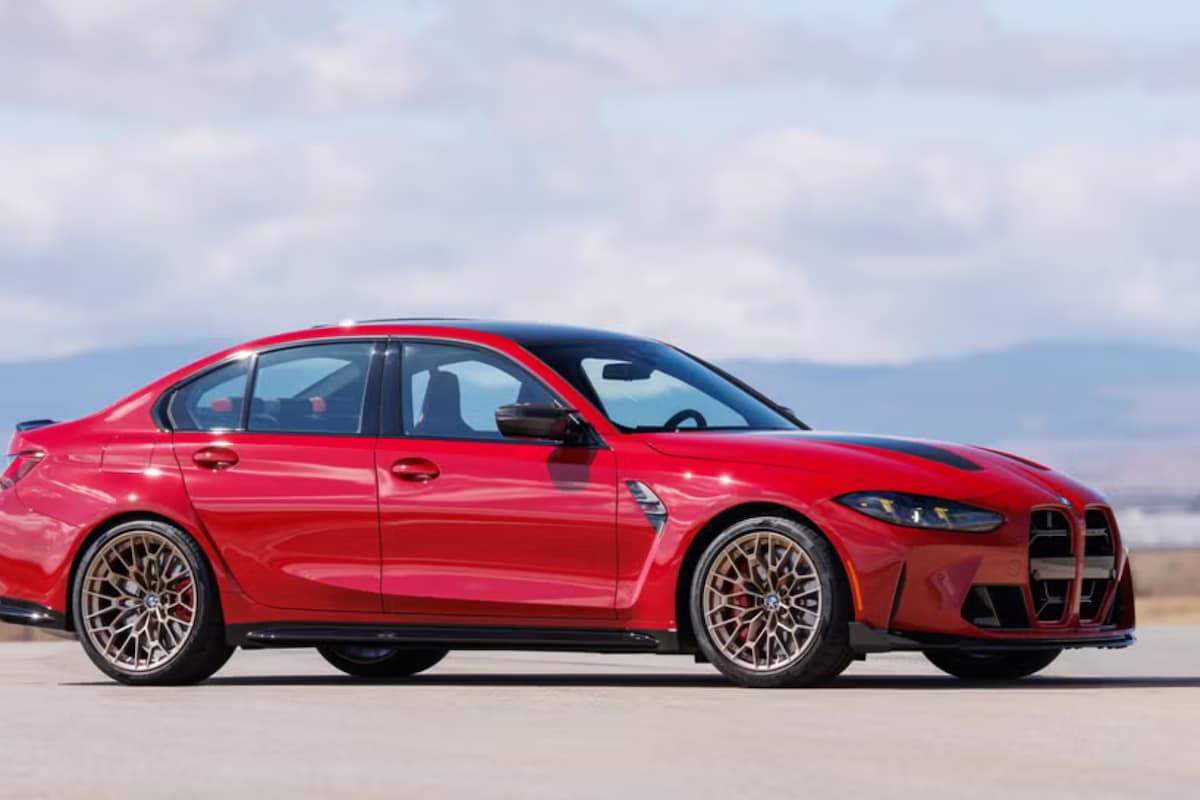
In an automotive landscape increasingly dominated by electric powertrains, autonomous features, and lightning-fast automatic transmissions, a beacon of traditional driving pleasure has emerged from Munich. BMW, a marque synonymous with 'The Ultimate Driving Machine,' has unveiled a vehicle that not only defies current trends but actively celebrates the very essence of driver involvement: the limited-run M3 CS Handschalter. This isn't just another performance variant; it's a statement, a nostalgic nod to purists, and a bold declaration that the joy of shifting gears manually remains an irreplaceable part of the driving experience.
For decades, the BMW M3 has stood as the benchmark for high-performance sports sedans, a perfect blend of track-day prowess and daily usability. Its evolution has seen various engine configurations, technological advancements, and, notably, a gradual shift away from manual transmissions in its most potent forms. The M3 CS, or 'Competition Sport,' badge itself signifies a more focused, track-oriented machine. However, the addition of 'Handschalter' – German for 'manual shifter' – is what truly sets this iteration apart, sending ripples of excitement through the enthusiast community worldwide.
A Manual Manifesto in an Automatic World
The decision by BMW to introduce a manual-only M3 CS is nothing short of revolutionary in today's market. While many performance car manufacturers have either phased out manual options entirely or relegated them to entry-level models, BMW is doubling down on driver engagement at the pinnacle of its M3 lineup. This move is particularly striking given the prevailing industry narrative that dual-clutch and torque-converter automatics offer superior shift times, fuel efficiency, and often, faster lap times. Indeed, the M3 CS Handschalter is reported to offer less power than its automatic counterpart, a deliberate choice that underscores its philosophy: this car is not about outright speed records, but about the visceral connection between human and machine.
This philosophical stance resonates deeply with a segment of the automotive world that feels increasingly marginalized. As cars become more automated and insulated, the tactile feedback, the precise timing required for a perfect rev-match, and the sheer satisfaction of executing a flawless gear change have become cherished commodities. The M3 CS Handschalter is a testament to the belief that true driving pleasure isn't solely about horsepower figures or 0-60 mph times, but about the immersive, interactive experience of controlling a powerful machine with precision and skill. It's about the driver being an integral part of the performance equation, not merely a passenger along for the ride.
Engineering for Engagement: Beyond Raw Power
While the M3 CS Handschalter might have a slightly detuned engine compared to its automatic brethren, make no mistake: this is still a formidable performance machine. The core of its appeal lies not in its peak power output, but in how that power is delivered and managed through its 6-speed manual gearbox. This transmission is likely a heavily revised version of BMW's existing manual units, engineered for robustness, precise throws, and a satisfying mechanical feel. The engagement factor is further amplified by its rear-wheel-drive configuration, a classic BMW M staple that offers a dynamic, purist driving experience, allowing for nuanced throttle steering and a more direct connection to the road.
Expect the M3 CS Handschalter to feature a host of performance enhancements beyond the powertrain. This typically includes: * Lightweight construction: Extensive use of carbon fiber reinforced plastic (CFRP) for components like the roof, hood, front splitter, rear diffuser, and interior trim to reduce curb weight and improve power-to-weight ratio. * Optimized chassis tuning: Bespoke suspension settings, stiffer springs, adaptive dampers, and revised steering calibration tailored for sharper handling and improved feedback. * High-performance braking system: Likely carbon-ceramic brakes as an option or standard, providing exceptional stopping power and fade resistance. * Aerodynamic enhancements: Functional aero elements to increase downforce and stability at high speeds. * Sport-focused interior: Unique M Sport seats, Alcantara accents, and specific badging to differentiate it from other M3 models.
The synergy of these elements, all channeled through a manual gearbox, promises an unparalleled level of driver immersion. It's a car designed to be driven, to be felt, and to challenge its operator to extract every ounce of its performance potential through skill and precision.
Historical Context: The M3's Manual Legacy
To fully appreciate the significance of the M3 CS Handschalter, one must look back at the rich history of the M3. The original E30 M3, launched in the late 1980s, was a homologation special built for touring car racing. It was exclusively manual, lightweight, and offered an unparalleled driving experience. This set the precedent for what an M3 should be: a driver's car, pure and unadulterated. Subsequent generations, from the E36 to the E46 and E92, largely retained manual options, even as automatic and sequential manual gearboxes (SMG) began to appear.
However, with the F80 generation and its S55 twin-turbo engine, the manual option became less prevalent, and the fastest, most potent versions often came exclusively with automatic transmissions. This trend continued with the current G80 generation, where the Competition models, boasting higher power figures, are exclusively automatic. The reintroduction of a manual in a CS variant, a model traditionally representing the zenith of M3 performance, is a powerful callback to its roots. It's BMW acknowledging its heritage and responding directly to the fervent pleas of its most dedicated enthusiasts, who have long yearned for a return to a more analog driving experience.
Market Implications and the Future of Driving
The M3 CS Handschalter is a limited-production vehicle, which immediately elevates its desirability and potential for future collectibility. Its exclusivity ensures that it will be a rare sight, further cementing its status as a special machine. For BMW, this move serves multiple purposes: it reinforces its brand identity as a purveyor of ultimate driving machines, it caters to a highly influential segment of its customer base, and it generates significant positive buzz in an era where automotive news is often dominated by electrification and autonomy.
This release also sparks a broader conversation about the future of performance cars. As electric vehicles (EVs) become more powerful and ubiquitous, they inherently lack the mechanical engagement of an internal combustion engine (ICE) with a manual transmission. The M3 CS Handschalter could be seen as a defiant last hurrah for a dying breed, or perhaps, a strategic move to carve out a niche for visceral, driver-focused ICE cars even as the industry shifts. It suggests that there will always be a market, albeit perhaps a smaller one, for vehicles that prioritize the experience of driving over sheer efficiency or technological novelty.
In conclusion, the BMW M3 CS Handschalter is more than just a new car; it's a cultural artifact. It's a powerful statement from one of the world's leading automotive brands, a testament to the enduring appeal of the manual transmission, and a celebration of the art of driving. In a world rushing towards the future, BMW has taken a moment to honor its past, offering enthusiasts a rare opportunity to connect with a machine in the most intimate way possible. For those who believe that driving is an art form, the M3 CS Handschalter is poised to become a modern legend, a symbol of performance purity in an increasingly complex automotive world. It reminds us that sometimes, less power and more engagement truly deliver the ultimate driving machine.
Stay Informed
Get the world's most important stories delivered to your inbox.
No spam, unsubscribe anytime.
Comments
No comments yet. Be the first to share your thoughts!