Trump Claims Military Action Averted 'Blown to Pieces' Middle East Amid Iran Nuclear Tensions
Former US President Donald Trump recently asserted that military operations against Iran were crucial in preventing a nuclear catastrophe in the Middle East, specifically protecting Israel and Gulf nations. Speaking in Florida, Trump reiterated his stance on Iran's nuclear ambitions, emphasizing the perceived threat and the necessity of his administration's firm approach. This declaration comes amidst ongoing international debates regarding Iran's nuclear program and the future of diplomatic engagement, highlighting the complex and volatile geopolitical landscape of the region. The implications of such claims resonate deeply in discussions about regional stability and global security.
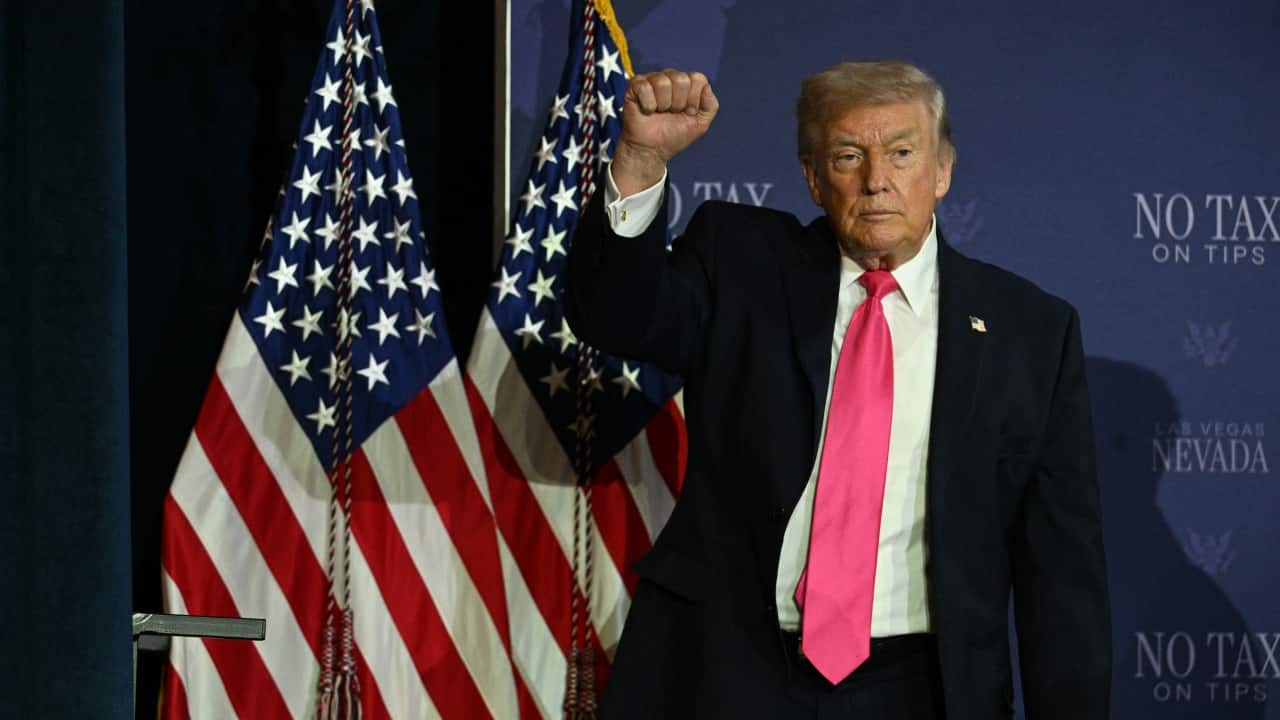
The geopolitical chessboard of the Middle East has long been a theater of intricate power plays, historical grievances, and existential threats. Into this volatile mix, former US President Donald Trump recently injected a stark and provocative claim: that his administration's military actions against Iran were solely responsible for preventing the region, including key allies like Israel and Gulf states, from being "blown to pieces" by a nuclear Iran. Speaking at the Villages Charter School in Florida, Trump’s remarks reignited a contentious debate about the efficacy and ethics of his Iran policy, while underscoring the persistent anxieties surrounding Tehran's nuclear ambitions.
Trump's assertion is not merely a retrospective justification but a continuation of his consistent narrative regarding Iran. Throughout his presidency, he adopted a highly confrontational stance, withdrawing from the Joint Comprehensive Plan of Action (JCPOA) – the 2015 nuclear deal – and implementing a "maximum pressure" campaign of sanctions. This approach, he argued, was designed to cripple Iran's economy and force it to renegotiate a more stringent agreement, one that would address not only its nuclear program but also its ballistic missile development and regional proxy activities. His recent comments suggest a belief that this aggressive posture, including implied or explicit military threats, was the only deterrent against a nuclear-armed Iran.
The Shadow of a Nuclear Iran: A Persistent Threat Narrative
The specter of a nuclear Iran has haunted the Middle East and global powers for decades. Israel, in particular, views Iran's nuclear program as an existential threat, citing Tehran's frequent calls for its destruction and its support for groups like Hezbollah and Hamas. Gulf Arab states, wary of Iran's regional hegemony and revolutionary ideology, share similar concerns. This shared apprehension has often formed the bedrock of strategic alliances and diplomatic efforts aimed at containing Iran's influence. Trump's rhetoric taps directly into these deep-seated fears, portraying his actions as a necessary bulwark against an imminent catastrophe.
Historically, international efforts to curb Iran's nuclear ambitions have oscillated between diplomacy and coercion. The JCPOA, negotiated by the Obama administration alongside other world powers, was designed to prevent Iran from developing nuclear weapons in exchange for sanctions relief. While proponents argued it was the best available mechanism to verifiably block Iran's path to a bomb, critics, including Trump, contended it was too lenient and temporary. Trump's withdrawal from the deal in 2018 marked a significant shift, plunging the region into a new era of heightened tensions and direct confrontation. His administration's actions, such as the killing of Qassem Soleimani, further escalated the situation, bringing the US and Iran to the brink of war on several occasions.
The 'Maximum Pressure' Campaign and its Repercussions
The "maximum pressure" campaign implemented by the Trump administration involved unprecedented economic sanctions targeting Iran's oil exports, financial sector, and key industries. The aim was to starve the Iranian regime of funds, thereby limiting its ability to finance its nuclear program and regional proxies. While the sanctions severely impacted Iran's economy, leading to widespread hardship among its populace, their effectiveness in compelling a change in behavior remains a subject of intense debate.
Critics argue that the maximum pressure campaign, far from bringing Iran to the negotiating table, pushed it closer to the nuclear threshold. Following the US withdrawal from the JCPOA, Iran incrementally scaled back its commitments under the deal, increasing uranium enrichment levels and deploying advanced centrifuges. This escalation, some analysts contend, was a direct response to the US sanctions and a demonstration of Iran's resolve, rather than a sign of capitulation. The argument is that by dismantling the diplomatic framework, Trump inadvertently removed the very constraints that were keeping Iran's nuclear program in check.
Moreover, the absence of a clear diplomatic off-ramp under the maximum pressure strategy created a dangerous vacuum, increasing the risk of miscalculation and accidental conflict. The region witnessed a series of attacks on oil tankers, drone strikes, and missile launches, often attributed to Iran or its proxies, further destabilizing an already fragile environment. Trump's claim of averting disaster, therefore, is viewed by some as a selective interpretation of events, overlooking the increased instability that characterized his tenure.
Expert Perspectives and the Path Forward
Experts on international relations and nuclear proliferation offer varied perspectives on Trump's claims. Some acknowledge that a robust stance against Iran's nuclear ambitions is necessary, but question whether the maximum pressure campaign was the most effective or least risky approach. Dr. Emily Hawthorne, a senior analyst focusing on the Middle East, notes, "While the threat of a nuclear Iran is undeniable, the question isn't if it should be addressed, but how. Unilateral withdrawal from a multinational agreement and subsequent escalation without clear diplomatic channels often lead to greater, not lesser, instability."
Others, particularly those aligned with a more hawkish foreign policy, might argue that Trump's firm hand was indeed the only language Iran understood, and that the JCPOA was fundamentally flawed. They would point to Iran's continued regional aggression even under the deal as evidence that a tougher approach was warranted. However, even within this camp, there's often a recognition that sustained military action carries immense risks and costs.
The current Biden administration has attempted to re-engage with Iran on the nuclear deal, albeit with limited success. The ongoing negotiations in Vienna have been fraught with challenges, reflecting the deep mistrust and divergent interests between the parties. Iran, having endured years of sanctions, demands verifiable economic benefits and guarantees that a future US administration will not unilaterally abandon any renewed agreement. The international community, meanwhile, grapples with Iran's advancements in enrichment capabilities, which have brought it closer to weapons-grade material than ever before.
Conclusion: Navigating a Perilous Future
Donald Trump's assertion that his military actions saved the Middle East from nuclear devastation serves as a powerful, albeit controversial, reminder of the enduring threat posed by Iran's nuclear program. While his supporters may view his approach as decisive and effective, critics point to the increased regional instability and Iran's accelerated nuclear activities as evidence of its counterproductive nature. The truth likely lies somewhere in the complex interplay of these factors.
The future of Iran's nuclear program and regional stability remains precarious. The current diplomatic stalemate, coupled with Iran's continued enrichment, underscores the urgent need for a viable, long-term solution. Whether through renewed multilateral diplomacy, enhanced international pressure, or a combination of both, the challenge of preventing nuclear proliferation in the Middle East will continue to demand concerted global attention. The lessons from past policies, both successful and unsuccessful, will be crucial in navigating this perilous path forward, ensuring that the region does not, indeed, get "blown to pieces" by a nuclear arms race. The stakes could not be higher for global peace and security.
Stay Informed
Get the world's most important stories delivered to your inbox.
No spam, unsubscribe anytime.
Comments
No comments yet. Be the first to share your thoughts!