Trump Signals De-escalation on Taiwan Arms Deal After Xi Talks: A Shift in US-China Dynamics?
Former President Donald Trump has indicated a potential softening of his stance on a proposed $14 billion arms deal with Taiwan, following recent discussions with Chinese President Xi Jinping. Speaking aboard Air Force One, Trump emphasized a desire to avoid escalating tensions, suggesting a more cautious approach to the sensitive cross-strait issue. This development hints at a possible recalibration of US foreign policy, prioritizing diplomatic engagement over immediate military reinforcement in the region. The decision holds significant implications for Taiwan's defense, US-China relations, and regional stability.
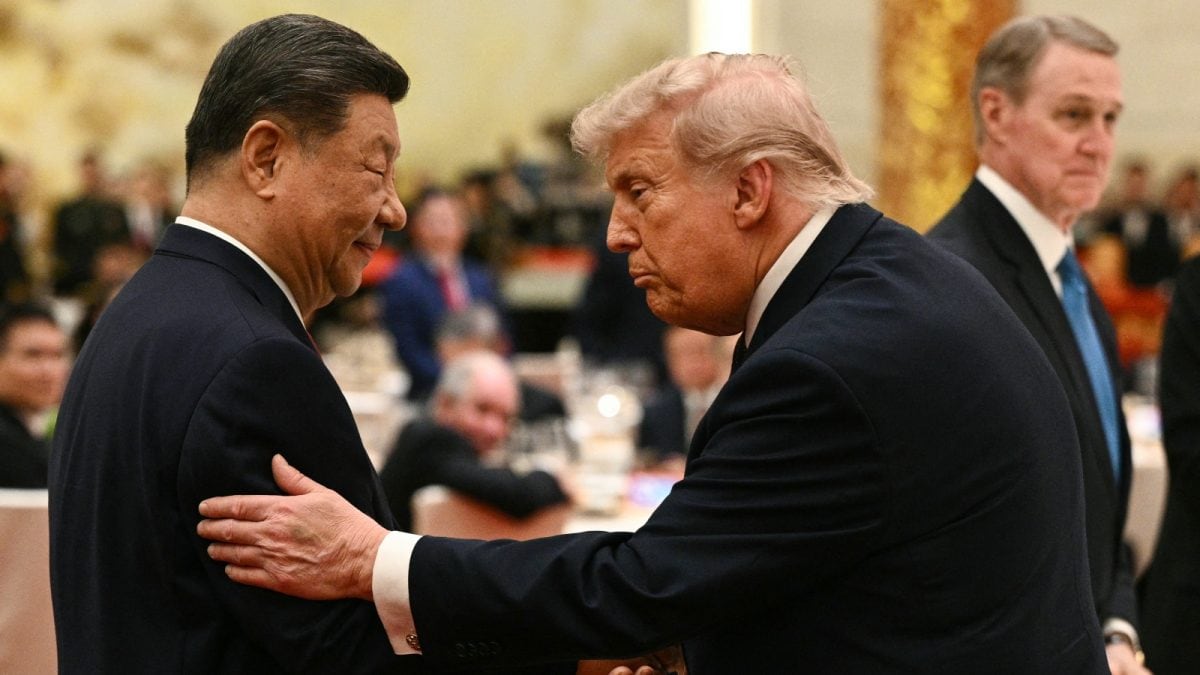
In a surprising turn that could redefine the delicate balance of power in the Indo-Pacific, former U.S. President Donald Trump has signaled a potential pause or re-evaluation of a substantial $14 billion arms package for Taiwan. This unexpected development emerged from his remarks to reporters aboard Air Force One, where he underscored a fervent desire to "avoid war" and de-escalate tensions, particularly in the wake of recent, undisclosed discussions with Chinese President Xi Jinping. The statement, delivered en route back to Washington, casts a new light on the intricate and often volatile relationship between the United States, China, and Taiwan, suggesting a strategic pivot that prioritizes diplomatic restraint over immediate military assertiveness.
For decades, Taiwan has been a critical flashpoint in US-China relations, with Beijing viewing the self-governing island as a renegade province destined for reunification, by force if necessary. The United States, while acknowledging the 'One China' policy, has simultaneously maintained an unofficial relationship with Taiwan, supplying it with defensive weaponry under the Taiwan Relations Act of 1979. This act commits the U.S. to helping Taiwan maintain its self-defense capabilities, a policy that has often been a source of friction with mainland China. Trump's latest comments, however, introduce an element of uncertainty into this long-standing strategic ambiguity, prompting questions about the future of Taiwan's security and the broader geopolitical landscape.
The Context of Cross-Strait Tensions and US Policy
The proposed $14 billion arms deal, which reportedly includes advanced fighter jets, tanks, and anti-missile systems, has been a cornerstone of Taiwan's defense strategy, aimed at deterring potential aggression from Beijing. The island's strategic importance cannot be overstated; it sits at the heart of critical shipping lanes and is a global leader in semiconductor manufacturing, making its stability vital for the world economy. The U.S. policy towards Taiwan has historically walked a tightrope, balancing diplomatic recognition of Beijing with a commitment to Taiwan's defense. This approach, often termed "strategic ambiguity," has allowed for flexibility but also carries inherent risks of miscalculation.
Previous administrations have consistently approved arms sales to Taiwan, viewing them as essential for maintaining the cross-strait status quo and discouraging any unilateral changes by Beijing. The sheer scale of the proposed $14 billion package underscores the perceived urgency of bolstering Taiwan's defenses against an increasingly assertive China, which has significantly modernized its military and frequently conducts exercises near the island. Trump's hesitation, therefore, represents a significant departure from this established pattern, signaling a potential shift in the U.S.'s immediate priorities regarding the region.
Implications of a Softened Stance
A decision to delay or significantly alter the arms deal would send ripples across the globe. For Taiwan, it could be perceived as a weakening of U.S. commitment, potentially emboldening Beijing to increase its pressure. Taiwanese officials have consistently advocated for robust military support from the U.S. to ensure their ability to defend against an invasion. Any reduction in this support could force Taiwan to reconsider its defense strategies and potentially seek alternative alliances or concessions.
For China, a softened U.S. stance would likely be interpreted as a diplomatic victory, validating its persistent calls for the U.S. to cease arms sales to Taiwan. It could also encourage Beijing to intensify its diplomatic and military maneuvers aimed at isolating Taiwan further. The international community, particularly allies in the Indo-Pacific like Japan, South Korea, and Australia, would be closely watching, assessing the reliability of U.S. security guarantees in the face of Chinese expansionism. A perceived wavering could lead these nations to question the efficacy of their own alliances with Washington.
Expert Analysis and Historical Parallels
Security analysts are divided on the implications of Trump's comments. Some argue that a temporary pause could open avenues for renewed diplomatic engagement with China, potentially leading to a more stable resolution of cross-strait issues. This perspective suggests that an overly aggressive posture might inadvertently provoke conflict, and that a more nuanced approach, combining deterrence with dialogue, is necessary. "The U.S. needs to maintain a credible deterrent, but also keep lines of communication open," explains Dr. Evelyn Chang, a geopolitical expert at the Asia-Pacific Institute. "Escalation is in no one's interest, and sometimes a tactical retreat on one front can open doors on another."
Others express deep concern, viewing any delay in arms sales as a dangerous concession that undermines Taiwan's security and U.S. credibility. They point to historical instances where perceived weakness on the part of major powers has emboldened revisionist states. The Munich Agreement of 1938, often cited as a cautionary tale, saw Western powers appease Nazi Germany, only for it to lead to further aggression. While the Taiwan situation is vastly different, the underlying principle of not appeasing potential aggressors remains a core tenet for many foreign policy hawks. They argue that the best way to avoid war is to project strength and make the cost of aggression prohibitively high.
The Path Forward: Diplomacy, Deterrence, and De-escalation
The coming weeks will be crucial in understanding the true implications of Trump's remarks. His administration's final decision on the $14 billion arms package will be a litmus test for its approach to the Indo-Pacific and its commitment to allies. It will also reveal the extent to which recent engagements with President Xi Jinping have influenced U.S. foreign policy calculations.
Moving forward, any strategy must carefully balance the need for deterrence against the imperative of de-escalation. This could involve: * Continued high-level diplomatic engagement with both Beijing and Taipei to manage expectations and reduce misunderstandings. * Exploring alternative forms of security assistance for Taiwan that might be less provocative but still effective. * Reinforcing alliances with regional partners to present a united front against any destabilizing actions. * Publicly reaffirming the U.S. commitment to the Taiwan Relations Act, even if specific arms deals are adjusted.
The ultimate goal remains a peaceful resolution of the cross-strait issue, one that respects the self-determination of the Taiwanese people while acknowledging China's legitimate security concerns. Trump's recent comments, whether a calculated diplomatic maneuver or a genuine shift in perspective, have undeniably injected a new layer of complexity into this already intricate geopolitical puzzle, demanding careful navigation from all parties involved to prevent a regional crisis from spiraling into a global confrontation.
Stay Informed
Get the world's most important stories delivered to your inbox.
No spam, unsubscribe anytime.
Comments
No comments yet. Be the first to share your thoughts!