Trump's 'Calm Before the Storm' Post Ignites Fears of Escalation with Iran
Donald Trump's enigmatic social media post, declaring "It was the calm before the storm," has sent shockwaves through international diplomatic circles, fueling intense speculation about potential US military action against Iran. This cryptic message, accompanied by an AI-generated image, comes amidst a backdrop of persistent tensions and a fragile ceasefire, raising questions about the future of US-Iran relations and regional stability. Experts are dissecting the implications of such a statement, considering historical precedents and the precarious balance of power in the Middle East.
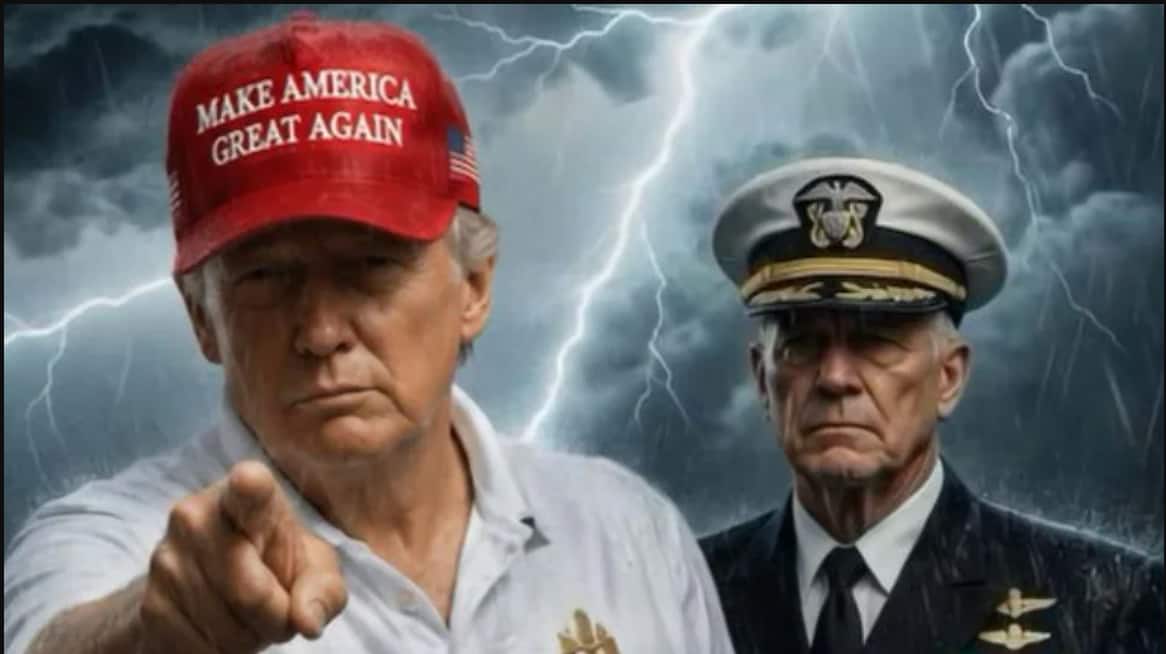
In the volatile arena of international diplomacy, few statements carry the weight and potential for disruption as those emanating from a former US President, especially one as unconventional as Donald Trump. His recent, cryptic social media post – a stark declaration stating, “It was the calm before the storm,” accompanied by an AI-generated image depicting him aboard a military vessel – has not merely sparked discussion; it has ignited a firestorm of speculation, sending shivers down the spines of analysts and policymakers worldwide. The message, delivered without context or elaboration, has been widely interpreted as a veiled threat or a foreboding hint of impending US military action against Iran, a nation with whom tensions have consistently simmered, often threatening to boil over.
This latest pronouncement arrives at a particularly delicate juncture. Despite a series of diplomatic overtures and a precarious, often-violated ceasefire in the broader Middle East, the underlying animosity between Washington and Tehran remains palpable. The specter of a direct confrontation, which many feared during Trump’s presidency, has never truly dissipated. Now, with a single, ambiguous phrase, that specter has been reanimated, forcing a renewed focus on the precarious balance of power and the potential for a catastrophic miscalculation in one of the world’s most geopolitically sensitive regions.
A History of Brinkmanship: US-Iran Relations Under Trump
To fully grasp the gravity of Trump’s recent statement, one must revisit the turbulent history of US-Iran relations during his tenure in the White House. From the outset, Trump adopted an aggressive stance towards Tehran, famously withdrawing the United States from the Joint Comprehensive Plan of Action (JCPOA), commonly known as the Iran nuclear deal, in 2018. This move, a cornerstone of his foreign policy, dismantled years of multilateral diplomacy and reimposed crippling sanctions on Iran, severely impacting its economy and isolating it on the world stage. The rationale, as articulated by the Trump administration, was to force Iran to renegotiate a more comprehensive deal that would address its ballistic missile program and its regional proxy activities.
However, instead of leading to a new agreement, the withdrawal escalated tensions dramatically. Iran responded by gradually scaling back its commitments under the JCPOA, enriching uranium beyond agreed limits, and increasing its support for regional proxies. The period was marked by a series of dangerous provocations and retaliations:
* Attacks on oil tankers in the Persian Gulf: Several incidents in 2019 were attributed to Iran, disrupting global oil supplies. * Drone shoot-downs: Iran shot down a US surveillance drone in June 2019, nearly triggering a military response from the US. * Attack on Saudi oil facilities: A major drone and missile attack on Saudi Aramco facilities in September 2019, widely blamed on Iran, further destabilized the region. * Assassination of Qassem Soleimani: The US drone strike that killed Iranian General Qassem Soleimani in January 2020 was arguably the most significant escalation, bringing the two nations to the brink of all-out war. Iran retaliated with missile strikes on US bases in Iraq, causing traumatic brain injuries to over 100 US service members.
Throughout these crises, Trump often employed strong rhetoric, including warnings of “fire and fury” and “total destruction,” yet he also demonstrated a surprising reluctance to engage in large-scale military conflict. This created a pattern of strategic ambiguity, keeping both allies and adversaries guessing about his true intentions. The “calm before the storm” post fits squarely within this established pattern, leveraging uncertainty as a tool of foreign policy.
Decoding the Cryptic Message: Intentions and Interpretations
The immediate aftermath of Trump’s post saw a flurry of interpretations from political commentators, intelligence analysts, and former government officials. Was it a genuine warning? A calculated bluff? Or merely a rhetorical flourish designed to maintain relevance and exert influence from outside the formal structures of power?
* A Warning of Impending Action: Some interpret the message as a direct signal that the US, potentially under a future Trump administration or even through current back channels, is preparing for a significant move against Iran. This could range from cyberattacks to targeted military strikes, or even a broader campaign aimed at regime change. The AI-generated image of him on a military vessel reinforces this interpretation, suggesting a readiness for martial action. * A Political Maneuver: Others argue that the post is primarily a political statement, aimed at domestic audiences and international rivals alike. For his base, it reinforces his image as a strong leader willing to confront adversaries. Internationally, it serves as a reminder of his past policies and a potential preview of a more confrontational approach should he return to office. It also keeps Iran on edge, forcing them to consider their next moves carefully. * Maintaining Relevance: A more cynical view suggests the post is a deliberate attempt to inject himself into ongoing geopolitical discussions, particularly concerning the Middle East, where he often positions himself as a key player. By creating ambiguity, he ensures continued media attention and discussion about his potential future role. * Leveraging AI for Impact: The use of an AI-generated image is also noteworthy. It adds a layer of modern, almost futuristic, mystique to the message, enhancing its viral potential and its ability to capture public imagination, while also blurring the lines between reality and simulation.
Regardless of the precise intent, the impact is undeniable: it has heightened anxiety and forced a reassessment of the regional security landscape. The lack of clarity is, in itself, a form of power, allowing for multiple interpretations and keeping all parties on high alert.
Regional Repercussions and Global Stability
The implications of any significant US action against Iran extend far beyond the immediate belligerents. The Middle East is a complex tapestry of alliances and rivalries, where even minor tremors can lead to devastating earthquakes. A direct confrontation could:
* Ignite a regional war: Iran has a vast network of proxy groups, including Hezbollah in Lebanon, Houthi rebels in Yemen, and various militias in Iraq and Syria. These groups could be activated, leading to a multi-front conflict that destabilizes the entire region. * Disrupt global oil markets: The Strait of Hormuz, a critical chokepoint for global oil shipments, could be threatened or closed, sending oil prices skyrocketing and plunging the global economy into crisis. * Fuel sectarian violence: A conflict could exacerbate existing sectarian divisions between Sunni and Shia Muslims, leading to widespread internal strife and humanitarian crises. * Impact nuclear non-proliferation efforts: If Iran perceives an existential threat, it might accelerate its nuclear program, further complicating international efforts to prevent proliferation.
Furthermore, the current global geopolitical climate, characterized by the ongoing conflict in Ukraine and heightened tensions between major powers, makes any new flashpoint particularly dangerous. A conflict in the Middle East could draw in other global actors, further straining international relations and diverting resources from other critical issues. The international community, still reeling from multiple crises, is ill-equipped to handle another major regional war.
The Path Forward: Diplomacy or Deterrence?
The “calm before the storm” message underscores the persistent dilemma facing policymakers regarding Iran: how to manage a nation perceived as a regional hegemon and a nuclear proliferator without resorting to military conflict. The options remain largely polarized:
1. Renewed Diplomacy: Advocates for diplomacy argue that sustained engagement, perhaps a return to the JCPOA or a new, more comprehensive agreement, is the only sustainable path to de-escalation. This would involve significant concessions from both sides and robust international verification mechanisms. 2. Maximum Pressure (Deterrence): Proponents of a “maximum pressure” campaign, often associated with the Trump administration, believe that crippling sanctions and a credible military threat are necessary to compel Iran to change its behavior. This approach, however, carries a high risk of escalation.
Ultimately, the future of US-Iran relations, and indeed regional stability, hangs precariously in the balance. Trump’s cryptic post, whether a genuine warning or a political gambit, serves as a stark reminder of the ever-present danger of miscalculation and the urgent need for clear, consistent diplomatic strategies. As the world watches, the question remains: is this truly the calm before a storm, or merely another gust in a perpetually turbulent region? The answer will have profound implications for global peace and security for years to come.
Stay Informed
Get the world's most important stories delivered to your inbox.
No spam, unsubscribe anytime.
Comments
No comments yet. Be the first to share your thoughts!