Trump's 'Great Leader' Praise for Xi Signals Complex US-China Future
During a high-stakes summit in Beijing, then-US President Donald Trump lauded Chinese counterpart Xi Jinping as a 'great leader,' expressing hopes for a 'fantastic future' between the two nations. This effusive praise, delivered amidst burgeoning trade tensions and geopolitical shifts, marked a pivotal moment in US-China relations. The summit underscored a delicate balance between cooperation and competition, setting the stage for an unpredictable era of diplomacy and economic interplay.
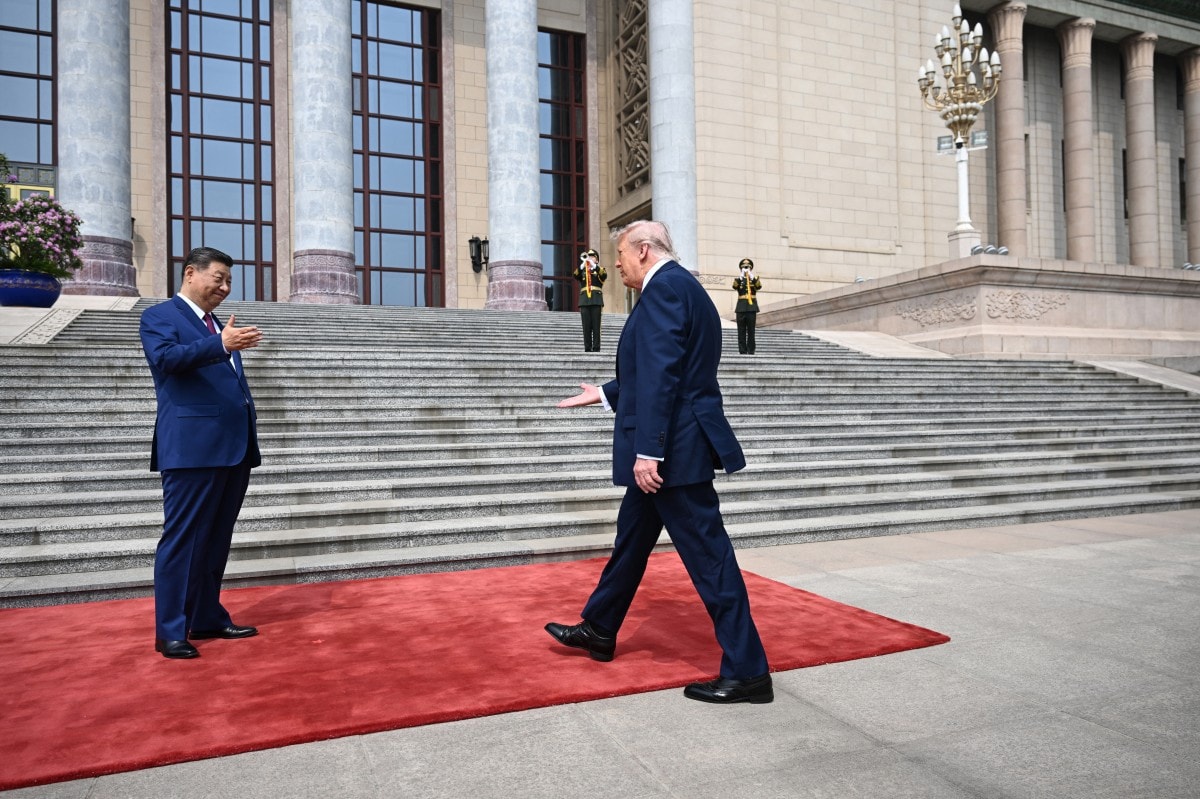
In a diplomatic spectacle that captivated global attention, then-US President Donald Trump, during his November 2017 visit to Beijing, bestowed effusive praise upon his Chinese counterpart, Xi Jinping, hailing him as a 'great leader.' The remarks, delivered at the outset of a high-stakes summit, were accompanied by Trump's optimistic pronouncement that the two nations were "going to have a fantastic future together." This seemingly cordial exchange, however, belied the complex and often contentious undercurrents that defined the relationship between the world's two largest economies, hinting at an era of both unprecedented cooperation and profound rivalry.
The Beijing Summit: A Study in Contrasts
The 2017 Beijing summit was more than just a series of bilateral meetings; it was a carefully choreographed display of power, diplomacy, and personal chemistry. Trump's visit, part of a five-nation Asia tour, was framed by his administration as an opportunity to rebalance trade relations and address North Korea's nuclear ambitions. Yet, the public narrative was dominated by the unusual warmth extended by Trump towards Xi, a stark departure from the often combative rhetoric he employed against other world leaders or even China itself on the campaign trail. Xi, in turn, offered Trump a 'state-plus' welcome, an honorific usually reserved for the closest allies, featuring a private tour of the Forbidden City and an elaborate state dinner. This pageantry aimed to project an image of stability and mutual respect, even as fundamental disagreements simmered beneath the surface.
For many observers, Trump's 'great leader' comment was particularly striking. It mirrored his past admiration for strongmen and authoritarian figures, a recurring theme in his foreign policy approach. Critics argued that such praise legitimized a leader who had consolidated immense power, abolished presidential term limits, and overseen a significant crackdown on dissent and human rights. Supporters, however, contended that it was a strategic move, designed to build rapport and facilitate negotiations with a leader whose personal influence in China was undeniable. This diplomatic gambit, whether genuine or tactical, set a unique tone for the discussions that followed, focusing on personal connection rather than immediate policy breakthroughs.
Geopolitical Stakes and Economic Realities
The backdrop to the summit was a rapidly evolving geopolitical landscape. North Korea's ballistic missile and nuclear programs posed an immediate and severe threat, demanding a unified international response. China, as North Korea's primary economic lifeline and diplomatic protector, held significant leverage. Trump's strategy appeared to be an attempt to enlist China's greater cooperation in pressuring Pyongyang, a goal that had largely eluded previous US administrations. While both leaders reiterated their commitment to denuclearization, concrete steps remained elusive, highlighting the deep-seated complexities of the issue and China's own strategic interests in maintaining a buffer state.
Economically, the summit was overshadowed by the looming specter of a trade war. Trump had long accused China of unfair trade practices, intellectual property theft, and currency manipulation. While the summit yielded some immediate business deals, including agreements worth over $250 billion, these were largely non-binding memorandums of understanding or existing contracts repackaged for the occasion. They did little to address the structural imbalances that fueled US grievances. The 'fantastic future' envisioned by Trump would soon face severe tests as his administration later imposed tariffs on Chinese goods, initiating a trade conflict that would reverberate across global supply chains and significantly impact both economies.
The 'Great Leader' Narrative: Implications and Analysis
Trump's public adulation of Xi, though perhaps intended to foster goodwill, carried significant implications. Domestically, it reinforced Xi's image as a powerful and respected global statesman, a narrative carefully cultivated by the Chinese Communist Party. Internationally, it raised questions about the US commitment to democratic values and human rights, potentially emboldening authoritarian regimes. From a strategic perspective, some analysts viewed it as a transactional approach, prioritizing immediate gains or personal chemistry over long-term ideological consistency.
* Personal Diplomacy: Trump's preference for direct, personal engagement with leaders, often bypassing traditional diplomatic channels, was on full display. This approach, while sometimes yielding unexpected breakthroughs, also introduced unpredictability and could be perceived as undermining established alliances. His comments about Xi fit this pattern, emphasizing a perceived personal connection. * Shifting Power Dynamics: The summit occurred at a time when China's global influence was undeniably on the rise. Xi's 'Belt and Road Initiative' was gaining momentum, and China was increasingly asserting itself on the world stage. Trump's deference, whether calculated or spontaneous, acknowledged this shifting power dynamic, even as the US sought to maintain its preeminent position. * Rhetoric vs. Policy: The stark contrast between Trump's warm rhetoric in Beijing and his administration's subsequent aggressive policies towards China underscored a fundamental tension. Was the praise a genuine reflection of his views, a tactical maneuver, or simply a fleeting sentiment? The ensuing trade war and technological competition suggested that the underlying strategic rivalry was far more potent than any personal rapport could overcome.
A Precursor to a New Era of Competition
Looking back, the 2017 Trump-Xi summit, characterized by its blend of lavish hospitality and surprising rhetoric, served as a crucial precursor to the increasingly complex and often confrontational US-China relationship that would unfold. The initial expressions of a 'fantastic future' quickly gave way to a period of intense competition across multiple domains: trade, technology, geopolitics, and ideology.
While the summit momentarily offered a glimpse of potential cooperation, it ultimately highlighted the deep structural differences and competing national interests that continue to define the relationship. The 'great leader' praise, in retrospect, became a symbol of a transactional approach to foreign policy, one that prioritized perceived personal connections in the short term, but struggled to navigate the long-term strategic challenges posed by a rising China. The legacy of that meeting is not one of enduring bonhomie, but rather a testament to the intricate dance between engagement and confrontation that continues to shape the global order, with the future of US-China ties remaining as unpredictable as ever. The world watches closely, understanding that the trajectory of this bilateral relationship will profoundly impact global stability and prosperity for decades to come.
Stay Informed
Get the world's most important stories delivered to your inbox.
No spam, unsubscribe anytime.
Comments
No comments yet. Be the first to share your thoughts!