Trump's 'Project Freedom' in Hormuz: A New Chapter of Tensions or De-escalation?
Amid escalating tensions in the Middle East, former President Trump announced 'Project Freedom' to guide ships through the Strait of Hormuz, a critical global choke point. This move comes as Iran reportedly submitted a 14-point peace plan, adding complexity to the region's already volatile geopolitical landscape. The international community watches closely, balancing hopes for stability against fears of further confrontation. This article delves into the implications of these developments for global trade, energy security, and regional diplomacy.
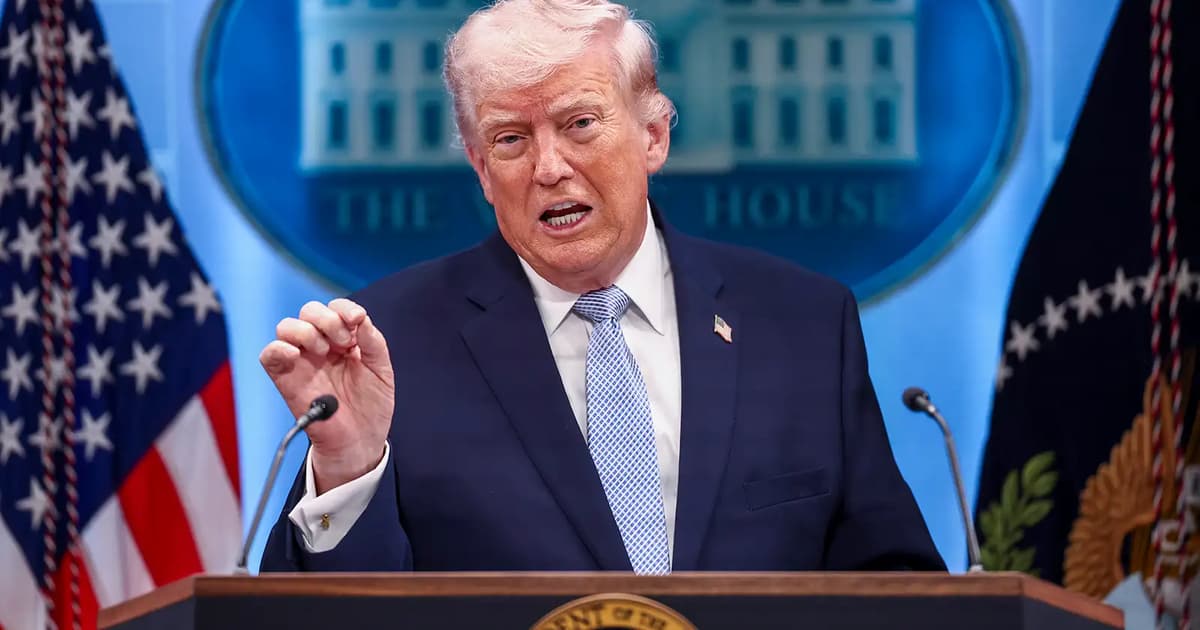
The geopolitical chessboard of the Middle East is once again gripped by a potent mix of high-stakes diplomacy and military posturing. At the heart of this unfolding drama lies the Strait of Hormuz, a narrow maritime artery through which a significant portion of the world's oil supply traverses. Against this backdrop, former President Donald Trump's declaration of 'Project Freedom,' set to commence on a Monday morning Middle East time, has sent ripples of anticipation and apprehension across the globe.
This announcement, framed as an initiative to 'guide' ships through the vital strait, comes at a time when regional tensions, particularly between the United States and Iran, remain acutely elevated. The strategic importance of Hormuz cannot be overstated; it is not merely a shipping lane but a crucible where global energy security, international trade, and regional power dynamics converge. Any significant disruption here has immediate and far-reaching consequences for the world economy.
The Strategic Imperative of Hormuz
The Strait of Hormuz, linking the Persian Gulf with the Arabian Sea, is arguably the world's most important oil transit choke point. Approximately 21 million barrels of oil per day, or about 21% of global petroleum liquids consumption, flowed through the Strait in 2018, according to the U.S. Energy Information Administration (EIA). This includes nearly all the liquefied natural gas (LNG) from Qatar, a major global supplier. The strait is only 21 miles wide at its narrowest point, with the shipping lanes just two miles wide in each direction, making it exceptionally vulnerable to disruption. Iran, bordering the northern side of the strait, has repeatedly threatened to close it in response to international sanctions or military pressure, a move that would undoubtedly trigger a global economic crisis.
Historically, the strait has been a flashpoint for numerous incidents, including the 'Tanker War' during the Iran-Iraq War in the 1980s, and more recently, attacks on tankers and drone incidents attributed to Iran. These events underscore the delicate balance of power and the constant threat of miscalculation in the region. 'Project Freedom' could be interpreted as a direct response to these past provocations, aiming to assert freedom of navigation and deter future aggression.
Iran's Diplomatic Overture: A 14-Point Plan
Adding another layer of complexity to this volatile situation is the revelation from Esmaeil Baqaei, a spokesman for Iran’s foreign ministry. Baqaei informed state television that Tehran had submitted a 14-point plan 'focused on ending the war' and that Washington had responded to it via Pakistani mediators. This diplomatic overture, if genuine and substantive, presents a potential pathway for de-escalation, or at least a channel for communication amidst heightened tensions. The details of this plan remain largely undisclosed, but its existence suggests that even as military rhetoric escalates, back-channel diplomacy is actively at play.
* Key questions arise: What are the specifics of Iran's proposal? Does it address the core concerns of regional stability, nuclear proliferation, and proxy conflicts? And what was the nature of Washington's response? The involvement of Pakistani mediators highlights the intricate web of regional alliances and the role of third parties in facilitating dialogue between adversaries who lack direct diplomatic ties.
This simultaneous pursuit of both assertive military posturing and diplomatic initiatives paints a picture of a region teetering on the brink, yet still seeking avenues for resolution. The success or failure of these diplomatic efforts will largely dictate whether 'Project Freedom' becomes a precursor to stability or an accelerant to conflict.
Implications for Global Energy Markets and Trade
The announcement of 'Project Freedom' and the ongoing tensions have immediate and significant implications for global energy markets. Oil prices are highly sensitive to developments in the Middle East, and any perceived threat to the Strait of Hormuz typically leads to a spike in crude futures. Insurers also raise premiums for shipping in the region, increasing the cost of goods and potentially leading to higher consumer prices globally. The cost of shipping through the Gulf has already seen fluctuations, impacting supply chains and the profitability of international trade.
Beyond oil, the strait's importance extends to other commodities and general maritime trade. Disruptions could force ships to take longer, more expensive routes, increasing transit times and fuel costs. This ripple effect would be felt across various industries, from manufacturing to retail, underscoring the interconnectedness of the global economy and the disproportionate impact of regional instability.
Expert Analysis and Geopolitical Balancing Act
Analysts are divided on the likely outcomes of 'Project Freedom.' Some view it as a necessary show of force to protect international shipping and uphold the principle of freedom of navigation. They argue that a strong deterrent is essential to prevent Iran from leveraging its geographical advantage for political gain. Others express concern that such a direct intervention could be perceived as provocative by Iran, potentially leading to an unintended escalation. The precise nature of 'guiding' ships – whether it involves naval escorts, increased surveillance, or other measures – will be crucial in determining its impact.
"The situation demands extreme caution and clear communication," states Dr. Elena Petrova, a senior fellow at the Institute for Global Security Studies. "While asserting freedom of navigation is a legitimate international right, the manner in which it's done in such a sensitive area can either stabilize or destabilize. The concurrent diplomatic overtures from Iran suggest a window for dialogue, which should be prioritized alongside any military operations." The balancing act between projecting strength and fostering diplomacy is a tightrope walk, with global peace hanging in the balance.
The Path Forward: Diplomacy, Deterrence, and De-escalation
The coming days and weeks will be critical in determining the trajectory of events in the Strait of Hormuz and the broader Middle East. The commencement of 'Project Freedom' will be closely watched for its operational details and Iran's reaction. Simultaneously, the international community will be eager for more information on Iran's 14-point peace plan and Washington's response. The involvement of mediators like Pakistan underscores the need for multilateral engagement and sustained diplomatic efforts.
Ultimately, a lasting resolution will require a combination of credible deterrence, open channels of communication, and a genuine commitment from all parties to de-escalate tensions. The global economy, heavily reliant on the smooth flow of goods through Hormuz, cannot afford a misstep. The challenge for policymakers will be to navigate this complex landscape with strategic foresight, ensuring that the pursuit of security does not inadvertently lead to a wider conflict. The world watches, hoping that 'Project Freedom' ultimately paves the way for greater stability, rather than further strife, in this indispensable maritime corridor.
Stay Informed
Get the world's most important stories delivered to your inbox.
No spam, unsubscribe anytime.
Comments
No comments yet. Be the first to share your thoughts!