Trump's 'Treasonous' Accusation: A Dangerous Escalation in Rhetoric Against the Press and Iran
President Trump's recent outburst aboard Air Force One, where he labeled a New York Times reporter 'treasonous' for questioning his administration's Iran policy, marks a perilous new low in executive-press relations. His claims of swift military destruction for Iran's infrastructure, coupled with the rhetoric, raise serious concerns about press freedom, the state of international diplomacy, and the potential for miscalculation in a volatile region. This incident underscores a pattern of escalating tension and a blurring of lines between dissent and disloyalty.
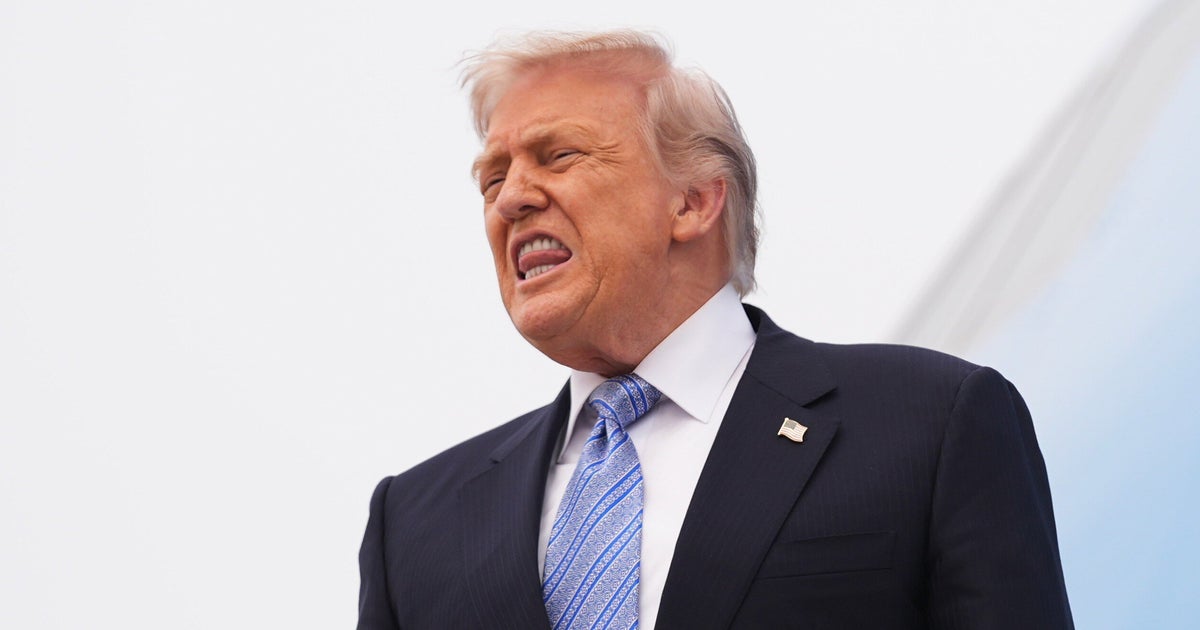
In a chilling moment aboard Air Force One, President Donald Trump unleashed a verbal assault on a New York Times reporter, branding their journalistic inquiry into the efficacy of his administration's Iran policy as 'treasonous'. This incendiary accusation, delivered amidst a two-minute rant, was coupled with a stark boast: the U.S. military, he claimed, could obliterate Iran's infrastructure 'within two days' if it chose. The incident, far from an isolated gaffe, represents a dangerous escalation in the fraught relationship between the executive branch and the free press, while simultaneously ratcheting up tensions in an already volatile Middle East.
The Erosion of Press Freedom: A 'Treasonous' Label
To accuse a journalist of treason for merely asking a critical question is not just an attack on an individual; it is an assault on the foundational principles of a democratic society. Treason, as defined by U.S. law, involves levying war against the United States or adhering to its enemies, giving them aid and comfort. It is a charge reserved for the gravest acts against the nation, punishable by death. To apply such a label to a reporter seeking accountability from power is to fundamentally misunderstand, or deliberately distort, the role of the Fourth Estate. Journalists are not meant to be cheerleaders for any administration; their duty is to inform the public, scrutinize government actions, and hold leaders responsible. This often involves asking uncomfortable questions, even about matters of national security or foreign policy. When a president deems such inquiry as 'treasonous,' it sends a chilling message to all journalists, suggesting that critical reporting could be equated with disloyalty to the state. This rhetoric not only endangers individual reporters by potentially inciting hostility but also undermines public trust in the media, a cornerstone of informed civic discourse.
Historically, presidents have often had contentious relationships with the press. From Nixon's 'enemies list' to FDR's media management during wartime, the tension is not new. However, the direct accusation of 'treason' crosses a significant line. It moves beyond mere criticism or even condemnation of 'fake news' into a realm where legitimate journalistic activity is framed as an existential threat to the nation. This tactic can be seen as an attempt to delegitimize any reporting that challenges the administration's narrative, thereby controlling the flow of information and shaping public perception without critical oversight. The implications are profound, potentially leading to self-censorship among journalists or, worse, encouraging an environment where attacks on the press are normalized.
The Iran Conundrum: Belligerence and Brinkmanship
President Trump's comments about Iran's infrastructure being destroyable 'within two days' are not merely hyperbole; they are a stark reminder of the underlying military tensions that have characterized U.S.-Iran relations for decades, exacerbated under his administration. The context of the reporter's question — concerning the 'success' of an 'ongoing war with Iran' — highlights the ambiguous state of conflict. While no formal war has been declared, the U.S. has engaged in significant military posturing, sanctions, and covert operations against Iran, leading to a de facto state of heightened confrontation. The withdrawal from the Joint Comprehensive Plan of Action (JCPOA), commonly known as the Iran nuclear deal, in 2018, and the subsequent imposition of 'maximum pressure' sanctions, have significantly escalated tensions, bringing the two nations to the brink of direct military conflict on multiple occasions.
Consider the timeline: In June 2019, Iran shot down a U.S. surveillance drone, prompting Trump to approve, then abruptly call off, retaliatory strikes. In January 2020, a U.S. drone strike killed Iranian Quds Force commander Qassem Soleimani, leading to Iranian missile attacks on U.S. bases in Iraq. Each incident demonstrated the precarious balance of power and the constant threat of escalation. Trump's latest remarks, delivered with characteristic bluntness, serve to underscore the administration's willingness to use overwhelming military force, even as it seeks to project an image of strategic restraint. Such statements, while perhaps intended to deter, can also be interpreted as provocative, potentially leading to miscalculation by either side in a region already rife with proxy conflicts and geopolitical rivalries. The economic impact of sanctions on Iran has been severe, leading to internal unrest and further hardening the stance of hardliners within the Iranian regime, creating a dangerous feedback loop of antagonism.
Historical Context: A Legacy of Intervention and Mistrust
The current U.S.-Iran dynamic is deeply rooted in a complex history stretching back to the 1953 U.S.-backed coup that overthrew Iran's democratically elected Prime Minister Mohammad Mosaddegh, restoring the Shah to power. This intervention fostered a deep-seated mistrust of Western powers, culminating in the 1979 Islamic Revolution and the subsequent hostage crisis at the U.S. embassy. For over four decades, the relationship has been defined by hostility, punctuated by periods of proxy conflict, sanctions, and failed diplomatic overtures. The U.S. has consistently viewed Iran as a state sponsor of terrorism and a destabilizing force in the Middle East, citing its nuclear ambitions, support for groups like Hezbollah and Hamas, and ballistic missile program. Iran, in turn, views U.S. military presence in the region and its alliances with Saudi Arabia and Israel as direct threats to its sovereignty and regional influence.
This historical backdrop is crucial for understanding the current rhetoric. When a U.S. president speaks of destroying Iran's infrastructure, it resonates with a history of intervention and perceived aggression. It also ignores the immense human cost and long-term consequences of such actions, which would undoubtedly destabilize the entire region, trigger a refugee crisis of unprecedented scale, and potentially draw in other global powers. The 'two days' claim, while perhaps intended to convey strength, also minimizes the complexity of modern warfare and the resilience of a nation-state, regardless of its military capabilities. The lessons from past interventions in Iraq and Afghanistan, where initial military success did not translate into stable political outcomes, are often overlooked in such pronouncements.
The Perils of Unchecked Rhetoric and Future Implications
President Trump's remarks are not just words; they carry the weight of the presidency and have tangible consequences both domestically and internationally. Domestically, the continued demonization of the press erodes democratic norms and fosters an environment where truth is increasingly subjective and facts are contested. It makes it harder for the public to discern accurate information, which is vital for making informed decisions in a democracy. Internationally, such aggressive rhetoric risks miscalculation. In a highly charged environment, strong words can be misinterpreted as intentions, leading to unintended escalation. The 'two days' claim, for instance, might be dismissed as bluster by some, but for Iranian strategists, it could be perceived as a direct threat requiring a robust response.
Looking forward, the incident underscores the urgent need for a more measured approach to both press relations and foreign policy. For journalists, it reinforces the importance of unwavering commitment to factual reporting and holding power accountable, even in the face of intimidation. For policymakers, it highlights the delicate balance required in international diplomacy, particularly with adversaries. De-escalation, rather than provocation, is often the wiser path, especially when dealing with nations that possess significant regional influence and the capacity to retaliate. The long-term stability of the Middle East, and indeed global security, hinges on responsible statecraft and a respect for the critical role of a free and independent press. The alternative is a descent into an information vacuum and potentially, open conflict, with devastating consequences for all involved. The world watches, hoping for a return to diplomacy and a recognition of the press's indispensable role in navigating these complex times.
Stay Informed
Get the world's most important stories delivered to your inbox.
No spam, unsubscribe anytime.
Comments
No comments yet. Be the first to share your thoughts!