Ukraine Extends Hand to Baltic States in Joint Fight Against Russian Disinformation
Ukraine is stepping up to assist Latvia, Lithuania, and Estonia in their ongoing battle against Russian disinformation campaigns. This initiative, announced by Foreign Minister Andrii Sybiha, focuses on countering false narratives, particularly those concerning Ukrainian drone operations and airspace violations. The collaboration underscores a growing regional solidarity against Moscow's aggressive information warfare tactics, aiming to bolster collective resilience and expose Kremlin propaganda.
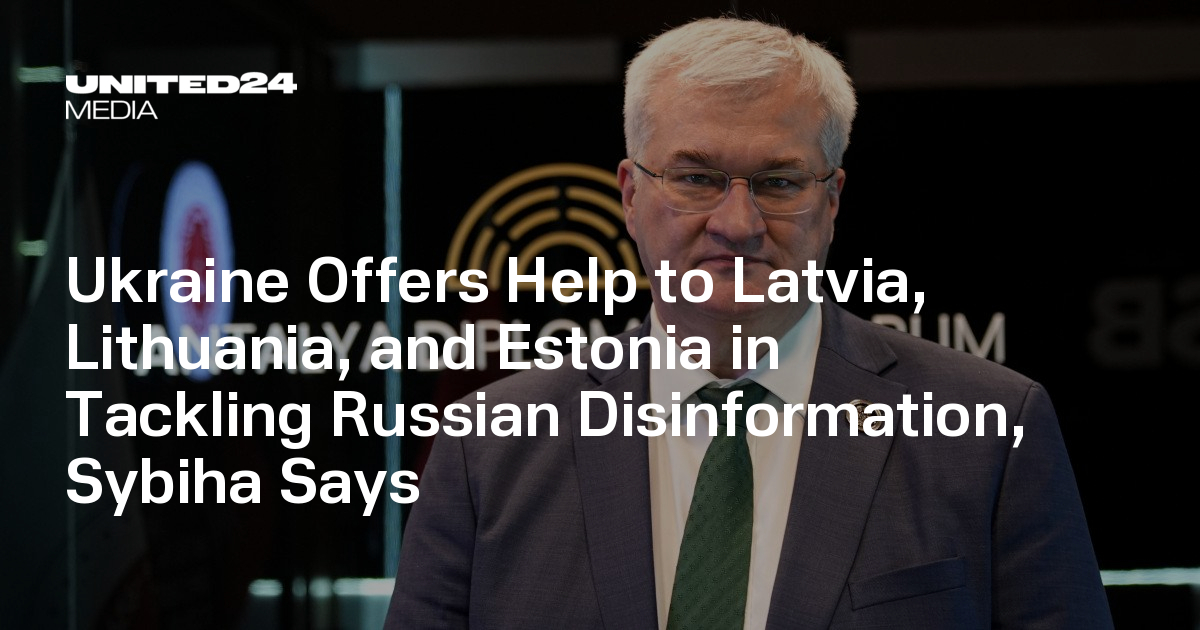
In a significant move highlighting growing regional solidarity against Russian aggression, Ukraine has formally offered its expertise and support to the Baltic states – Latvia, Lithuania, and Estonia – in their persistent struggle against Moscow's pervasive disinformation campaigns. The announcement, made by Ukrainian Foreign Minister Andrii Sybiha, signals a deepening alliance aimed at countering false narratives, particularly those propagated by Russia concerning Ukrainian drone activities and alleged airspace violations. This initiative comes at a critical juncture, as the information war intensifies alongside conventional military conflicts, making the battle for truth as crucial as the fight on the ground.
A United Front Against Information Warfare
The offer of assistance from Kyiv is not merely symbolic; it represents a strategic alignment against a common adversary. For years, the Baltic states, due to their geographical proximity and historical experiences, have been at the forefront of confronting Russian influence operations. From cyberattacks to propaganda disseminated through state-controlled media, these nations have developed robust defense mechanisms. Ukraine, having endured a full-scale invasion and a relentless hybrid war for over a decade, brings invaluable, hard-won experience to this collective effort. Minister Sybiha emphasized that Ukraine's insights into Russian tactics, honed through direct exposure, could significantly bolster the Baltic states' resilience. The focus areas include dissecting Russian narratives around Ukrainian drone usage, which Moscow frequently exploits to sow fear, confusion, and division among Western allies.
This collaboration is particularly pertinent given Russia's consistent attempts to delegitimize Ukraine's defensive actions and to portray itself as a victim of Western aggression. By jointly addressing these narratives, Ukraine and the Baltic states aim to create a more coherent and effective counter-narrative strategy. This includes sharing intelligence on emerging disinformation trends, developing common analytical tools, and coordinating public communication efforts to expose and debunk Kremlin propaganda in real-time. The goal is to not only defend against current attacks but to proactively build a stronger, more informed public sphere resistant to manipulation.
The Anatomy of Russian Disinformation
Russian disinformation is a multifaceted and constantly evolving threat. It often leverages a blend of outright falsehoods, distorted facts, and emotionally charged rhetoric designed to exploit existing societal divisions. In the context of the war in Ukraine, Moscow has consistently pushed narratives that deny Ukrainian sovereignty, justify its invasion, and undermine international support for Kyiv. Regarding drone operations, Russian propaganda frequently fabricates stories of civilian casualties caused by Ukrainian drones, exaggerates their military ineffectiveness, or falsely accuses Ukraine of using them to provoke escalation. These narratives are then amplified through a vast network of state-controlled media, social media bots, and proxy websites, reaching audiences globally.
For the Baltic states, Russian disinformation often targets their NATO membership, their support for Ukraine, and their internal ethnic Russian populations. Narratives might suggest that their governments are puppets of the West, that their support for Ukraine is detrimental to their own economies, or that ethnic Russians face discrimination. The integration of Ukrainian expertise will allow for a more nuanced understanding of these tactics, particularly how they adapt and evolve in wartime. Ukraine's experience has shown that countering such sophisticated campaigns requires not just debunking individual lies, but also understanding the broader strategic goals behind them and building long-term societal resilience through media literacy and critical thinking.
Historical Context and Geopolitical Imperatives
The historical context of this collaboration cannot be overstated. All three Baltic states were once part of the Soviet Union and regained independence after its collapse. Their collective memory is deeply imprinted with decades of Russian domination, making them acutely aware of the dangers of Moscow's imperial ambitions. Their rapid integration into NATO and the European Union was a deliberate strategic choice to safeguard their sovereignty and democratic values against potential Russian resurgence. Ukraine's current struggle is seen by many in the Baltics as a direct continuation of this historical battle for self-determination against Russian expansionism.
This shared historical trauma and ongoing geopolitical threat form the bedrock of their strong solidarity. The assistance from Ukraine is therefore not just a pragmatic security measure but also a powerful symbol of mutual support among nations that understand the existential threat posed by an aggressive Russia. It reinforces the idea that collective security extends beyond military defense to encompass the defense of the information space, which is increasingly recognized as a critical domain of modern warfare. The collaboration is also a tacit acknowledgment that the information war against Russia is a long-term endeavor requiring sustained effort and innovation.
Implications for Regional Security and Beyond
The implications of this enhanced cooperation extend far beyond the immediate goal of countering specific disinformation narratives. By pooling resources and expertise, Ukraine and the Baltic states are setting a precedent for a more integrated and resilient regional security architecture. This model of collaboration could potentially be expanded to include other frontline states or even broader European initiatives, creating a more robust defense against foreign interference. It also sends a clear message to Moscow: attempts to destabilize the region through information warfare will be met with a united and coordinated response.
Furthermore, this initiative highlights the evolving nature of international security. In the 21st century, national security is no longer solely about tanks and missiles; it is equally about the integrity of information, the resilience of democratic institutions, and the ability of citizens to discern truth from falsehood. The lessons learned from this collaboration could provide valuable insights for other democracies grappling with similar challenges from authoritarian regimes worldwide. The success of this joint effort will not only protect the Baltic states and Ukraine but also contribute to the broader global effort to safeguard democratic principles in an increasingly complex information environment.
The Path Forward: Resilience and Adaptation
The path forward for Ukraine and the Baltic states in this information war is one of continuous adaptation and innovation. Russian disinformation tactics are constantly evolving, requiring equally dynamic countermeasures. This collaboration will likely involve regular exchanges of best practices, joint training programs for media professionals and government communicators, and perhaps even the development of shared technological tools for monitoring and analyzing propaganda flows. Building public awareness and media literacy will remain paramount, empowering citizens to critically evaluate information and resist manipulation.
Ultimately, the success of this joint endeavor will depend on sustained political will, adequate resources, and a deep commitment to the principles of truth and transparency. By standing together, Ukraine, Latvia, Lithuania, and Estonia are not only defending their own national interests but also championing the cause of factual integrity and democratic resilience against a determined adversary. Their united front against Russian disinformation serves as a powerful testament to the strength found in solidarity and shared purpose, offering a beacon of hope in the ongoing struggle for truth in a fractured world.
Stay Informed
Get the world's most important stories delivered to your inbox.
No spam, unsubscribe anytime.
Comments
No comments yet. Be the first to share your thoughts!