Viral AI Video Falsely Links Rats to Hantavirus Outbreak Amid Disinformation Surge
A fabricated video, likely generated by AI, showing rats pouring from a truck has gone viral, falsely claiming to be linked to a hantavirus outbreak and intentional disease spread. This incident highlights the growing challenge of deepfake media and health misinformation, especially in the wake of real public health concerns. Experts warn against the rapid spread of such content, emphasizing the need for critical media literacy and robust fact-checking mechanisms to combat the erosion of public trust.
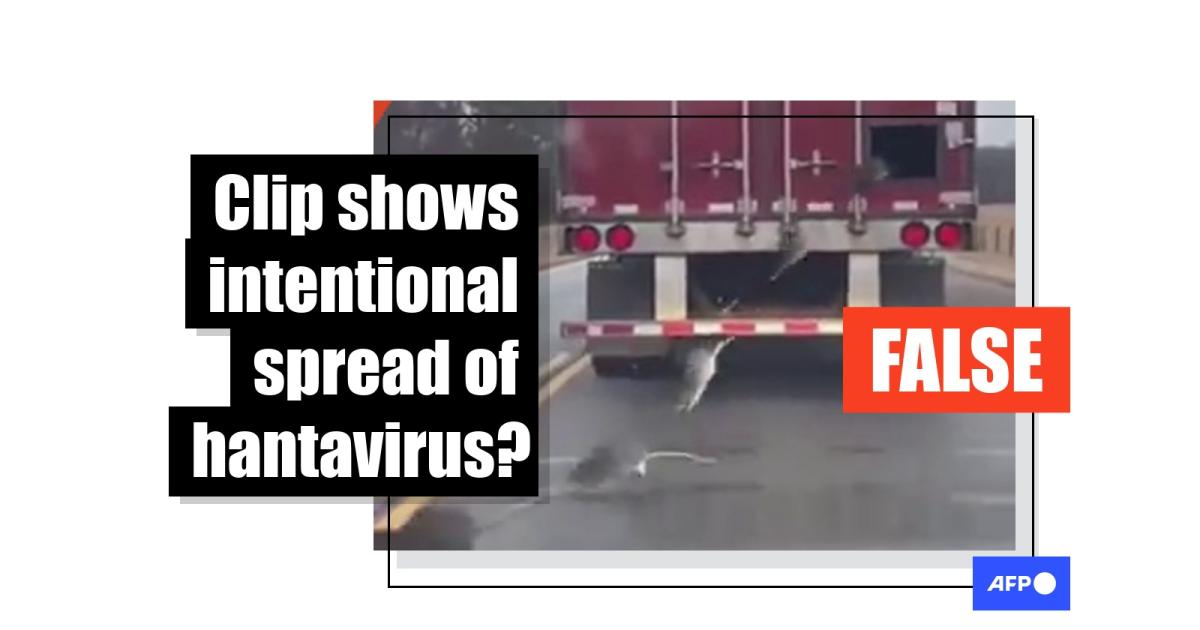
The digital landscape is increasingly fraught with sophisticated deceptions, and a recent viral video serves as a stark reminder of this unsettling reality. A clip depicting dozens of rats erupting from a moving semi-trailer, resembling a scene from a horror film, has captivated and terrified social media users. Shared widely across platforms like X (formerly Twitter), the video quickly became a vector for alarming claims: that it showed the deliberate release of hantavirus-carrying rodents into cities, ostensibly linked to a real, albeit unrelated, hantavirus outbreak reported on a cruise ship in May 2026. However, an analysis by AFP and other fact-checking organizations has unequivocally debunked these assertions, identifying the video as a fabrication, likely generated by advanced AI tools like OpenAI's Sora 2.
This incident is not merely an isolated case of misinformation; it is a potent illustration of how easily synthetic media can exploit public anxieties, particularly around health crises. The combination of a visually compelling, albeit disturbing, video and pre-existing fears about a deadly disease created a fertile ground for rapid and widespread disinformation. As we navigate an era where the lines between reality and simulation blur, understanding the mechanics of such hoaxes and their broader implications becomes paramount.
The Anatomy of a Digital Deception
The video in question, first gaining traction around May 10, 2026, was accompanied by captions that fueled paranoia. Posts on X, for instance, mused about "Deliberate release? Population control? Or something worse... hantavirus carriers being dropped into cities?" These narratives tapped into a deep well of public distrust and conspiracy theories, suggesting malevolent actors were intentionally spreading disease. The visual impact of the rats "exploding" from the truck at highway speed was undeniably shocking, lending an air of authenticity to the fabricated event.
However, closer inspection and digital forensics quickly revealed inconsistencies. Experts noted the unnaturally fluid movements of the rats, the repetitive patterns, and other tell-tale signs characteristic of AI-generated video. Furthermore, similar clips featuring rats in improbable scenarios had circulated online as early as March 2026, suggesting a pattern of AI experimentation or deliberate disinformation campaigns. The ease with which such high-fidelity, yet entirely fictional, content can be produced and disseminated underscores the revolutionary, and sometimes alarming, capabilities of generative AI tools.
Hantavirus: Reality vs. Rumor
The false claims surrounding the video were particularly insidious because they piggybacked on a genuine public health concern: the hantavirus outbreak. While details of the specific May 2026 cruise ship incident are still emerging, hantavirus is a real and serious threat. It is a group of viruses that can cause severe, sometimes fatal, respiratory and kidney diseases in humans. The virus is primarily transmitted to people through contact with infected rodent urine, droppings, or saliva, or by inhaling aerosolized particles from these materials. It is not typically spread from person to person, nor is it spread through direct contact with live rodents in a manner depicted in the viral video.
According to the Centers for Disease Control and Prevention (CDC), hantavirus pulmonary syndrome (HPS), the most common form in the Americas, has a mortality rate of approximately 38%. While rare, outbreaks can cause significant public alarm. The weaponization of this legitimate fear with a fabricated visual narrative demonstrates a dangerous new frontier in health misinformation. It not only spreads panic but can also divert attention and resources from real public health messaging, potentially undermining efforts to contain actual outbreaks through accurate information and preventative measures.
The Rise of Deepfake Disinformation and AI's Role
The rapid advancement of generative AI, particularly in video synthesis, has ushered in an era where distinguishing authentic content from fabricated material is increasingly challenging. Tools like OpenAI's Sora 2, while offering incredible creative potential, also present significant risks. These technologies can produce hyper-realistic videos from simple text prompts, making it possible for anyone with access to create convincing, yet entirely fake, scenarios. This phenomenon, often referred to as deepfake technology, has implications far beyond viral hoaxes, touching upon national security, political stability, and the very fabric of truth.
Historically, misinformation often relied on doctored images or out-of-context videos. The current wave, however, involves content that is entirely synthetic, created from scratch by algorithms. This shift demands a new level of vigilance from media consumers and a more sophisticated approach to fact-checking. As Dr. Anya Sharma, a leading expert in digital forensics at the Global Institute for Media Studies, notes, "We are moving from a world where we question if an image has been altered, to one where we must question if an image ever existed in reality at all. This paradigm shift requires a fundamental re-evaluation of our digital literacy skills."
Combating the Infodemic: Strategies for a Disinformation Age
The proliferation of AI-generated misinformation necessitates a multi-pronged approach involving technology, education, and policy. On the technological front, researchers are developing AI detection tools that can identify synthetic content, though these are often in a perpetual arms race with the ever-improving generative AI models. Social media platforms bear a significant responsibility to implement robust fact-checking partnerships, clear labeling of AI-generated content, and swift removal of harmful disinformation.
Education is perhaps the most crucial long-term strategy. Fostering critical media literacy from a young age, teaching individuals how to evaluate sources, recognize common disinformation tactics, and understand the capabilities of AI, is essential. Public health organizations must also proactively communicate accurate information during crises, building trust and providing authoritative sources that can counteract false narratives. The World Health Organization (WHO) has long warned of the "infodemic" accompanying health crises, where an overabundance of information, both accurate and inaccurate, makes it difficult for people to find trustworthy guidance.
Conclusion: Navigating the Future of Truth
The viral rat video, falsely linked to hantavirus, is a potent microcosm of the challenges facing our information ecosystem. It underscores how easily fear can be weaponized by sophisticated AI tools, eroding public trust and potentially endangering public health. As generative AI continues its relentless march forward, the responsibility falls on individuals, technology companies, governments, and educational institutions to collectively build resilience against disinformation.
Moving forward, a renewed commitment to truth, transparency, and critical thinking will be our most vital defense. We must cultivate a society that is not only technologically advanced but also discerning, capable of separating fact from fiction in an increasingly complex digital world. The future of public discourse, and indeed public health, depends on our ability to adapt and overcome these evolving threats to information integrity. The incident serves as a clarion call: the fight against misinformation is no longer just about identifying lies, but about discerning what is real in the first place.
Stay Informed
Get the world's most important stories delivered to your inbox.
No spam, unsubscribe anytime.
Comments
No comments yet. Be the first to share your thoughts!