White House Dinner Evacuation: Unpacking the Security Scare at the Washington Hilton
A sudden security breach at the White House Correspondents' Dinner led to President Donald Trump's swift evacuation from the Washington Hilton. Gunshots fired outside the prestigious event sent shockwaves through the nation's capital, raising serious questions about presidential security protocols and the vulnerability of high-profile gatherings. This incident highlights the ever-present challenges faced by security agencies in an increasingly complex threat landscape, prompting immediate investigations and a re-evaluation of protective measures.
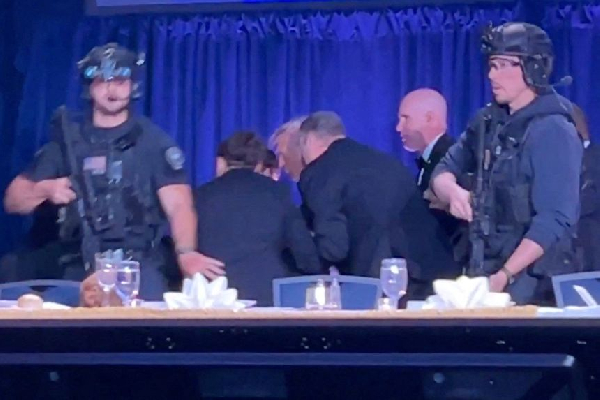
The air was thick with anticipation, the clinking of glasses, and the murmur of Washington's elite. Journalists, politicians, and celebrities were gathered for the annual White House Correspondents' Dinner, a tradition steeped in history and often punctuated by presidential wit. Then, in a terrifying instant, the festive atmosphere shattered. United States President Donald Trump was abruptly evacuated from the Washington Hilton hotel on Saturday evening, whisked away by his security detail after reports of gunshots fired just outside the venue. The incident sent a jolt of fear through the capital, transforming a night of camaraderie into a chaotic scene of uncertainty and heightened security. While initial reports were fraught with confusion, the gravity of the situation was undeniable: the President of the United States had been in immediate danger, forcing a rapid, decisive response from the Secret Service.
The Immediate Aftermath: Chaos and Confirmation
The evacuation unfolded with startling speed. Eyewitnesses inside the ballroom described a sudden shift in the demeanor of Secret Service agents, followed by the rapid escort of President Trump from the main stage. The initial moments were marked by a flurry of speculation, with attendees unsure whether the sounds were fireworks, a car backfiring, or something far more sinister. Social media quickly became a conduit for unverified reports, adding to the confusion. However, official confirmation soon followed: multiple gunshots had indeed been fired near the hotel perimeter. Law enforcement immediately secured the area, initiating a lockdown and a thorough sweep for potential threats. The incident, while thankfully not resulting in any reported injuries among attendees, served as a stark reminder of the constant vigilance required to protect the nation's highest office. The immediate priority shifted from celebration to crisis management, with federal and local agencies coordinating efforts to ascertain the nature of the threat and ensure the safety of all present.
Presidential Security: A Complex and Evolving Challenge
Presidential security is a monumental undertaking, a finely tuned orchestration of intelligence gathering, threat assessment, and rapid response. The United States Secret Service, established in 1865, bears the primary responsibility for protecting the President, Vice President, their families, and other high-ranking officials. This incident at the Washington Hilton underscores the dynamic and ever-present nature of threats. Perimeter security, intelligence analysis, and contingency planning are cornerstones of their operations. The Secret Service employs a multi-layered approach, from advance teams meticulously scouting locations to highly trained agents providing close-quarter protection. The challenges are immense: balancing the President's public duties with absolute security, navigating complex urban environments, and adapting to new forms of threats, from lone-wolf attackers to sophisticated terror plots. This incident will undoubtedly trigger an in-depth review of the security protocols surrounding large public events attended by the President, particularly those held in non-government facilities. The question isn't just about preventing an attack, but also about the speed and efficacy of extraction and containment once a threat materializes.
Historical Context: Precedents and Lessons Learned
While alarming, the evacuation of a sitting President due to a security threat is not without precedent in American history, though direct gunfire incidents involving a President are rare. The most notable assassination attempt on a sitting president in recent memory was the 1981 shooting of President Ronald Reagan by John Hinckley Jr. outside the Washington Hilton, coincidentally the same venue as this recent scare. That event led to significant reforms in Secret Service training and protocols, emphasizing immediate protective actions and medical response. Other incidents, such as the 1994 White House shooting by Francisco Martin Duran, or various threats during presidential motorcades, have continuously shaped and refined security strategies. Each incident, regardless of its outcome, provides invaluable lessons, prompting agencies to analyze vulnerabilities and implement stricter measures. The continuous evolution of threats, from domestic extremism to international terrorism, demands constant adaptation and a proactive stance from security forces. The memory of past events, particularly those that occurred at this very hotel, undoubtedly weighed heavily on the minds of Secret Service agents during the evacuation.
Implications and Expert Analysis: The Broader Picture
Security experts were quick to weigh in on the incident, highlighting both the effectiveness of the Secret Service's rapid response and the inherent vulnerabilities of such events. Dr. Evelyn Stone, a former counter-terrorism analyst, noted, “The speed of the evacuation demonstrates excellent training and protocol execution. However, the fact that shots were fired so close to the presidential detail points to potential gaps in intelligence or perimeter control that will need immediate addressing.” The incident also brings into sharp focus the psychological impact on the nation. Such events, even without casualties, can erode public confidence in security measures and contribute to a sense of unease. For the media, the event underscores the risks inherent in their profession, particularly when covering high-profile figures. Furthermore, the incident could prompt a broader discussion on gun control, given the ease with which firearms can be accessed and used in public spaces. The political ramifications are also noteworthy; an attack, or even a perceived attack, on the President can galvanize public support or, conversely, intensify political divisions. The incident serves as a potent reminder that the office of the President remains a primary target, and the security apparatus must be flawless.
Moving Forward: Enhanced Vigilance and Reassurance
The immediate aftermath of the incident will involve a meticulous investigation by federal and local authorities to determine the origin of the gunshots, the motive, and whether the President was the intended target. This investigation will be critical in understanding the full scope of the threat and preventing future occurrences. For the Secret Service, a comprehensive internal review is inevitable, focusing on every aspect of the event, from intelligence gathering to on-site execution. In the long term, this incident will likely lead to further enhancements in security protocols for presidential appearances, particularly at large, public gatherings. This might include: expanded security perimeters, increased surveillance technology, and more rigorous background checks for attendees and staff at event venues. Beyond the immediate security concerns, there is also the need for public reassurance. In an era of heightened anxiety, transparent communication from authorities about such incidents is crucial to maintaining public trust and demonstrating that the safety of the nation's leaders, and by extension its citizens, remains paramount. The White House Correspondents' Dinner, a symbol of democratic engagement, will undoubtedly continue, but perhaps with an even greater shadow of vigilance cast over its future iterations.
Stay Informed
Get the world's most important stories delivered to your inbox.
No spam, unsubscribe anytime.
Comments
No comments yet. Be the first to share your thoughts!