Zimbabwe's Judiciary Under Scrutiny: Chief Justice Gwaunza Blocks Live Stream of Landmark Constitutional Hearing
Zimbabwe's new Chief Justice, Elizabeth Gwaunza, has sparked controversy by denying a request to live stream a crucial Constitutional Court hearing concerning the Constitutional Amendment (No. 3) Bill. This decision, her first major act since her elevation, raises significant questions about judicial transparency and access to information in the country. Critics argue it undermines public trust and accountability, especially for a case with profound implications for Zimbabwe's democratic future. The ruling sets a precedent that could impact future public interest cases and the media's role in reporting on judicial proceedings.
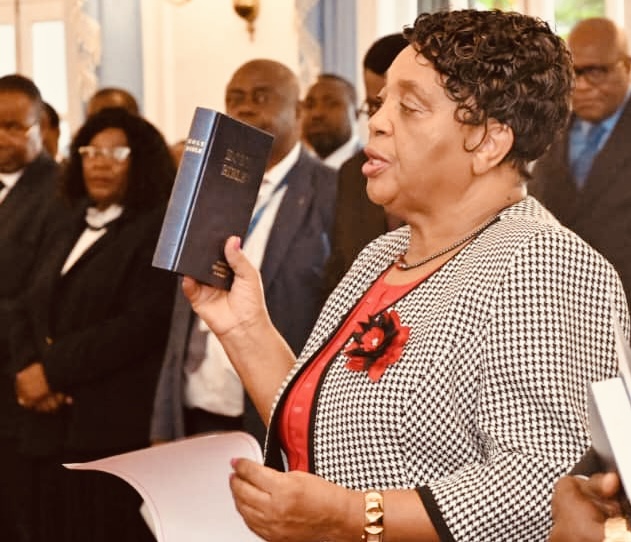
In a move that has sent ripples through Zimbabwe's legal and media landscapes, Chief Justice Elizabeth Gwaunza, barely a week into her new role, has made a decisive and controversial ruling. Her refusal to permit the live streaming of a pivotal Constitutional Court hearing, which challenges the contentious Constitutional Amendment (No. 3) Bill, has ignited a fierce debate about judicial transparency, public access to information, and the very essence of democratic accountability in the nation. This decision, her first major act since her elevation to the highest judicial office on May 15, casts a long shadow over the promise of an open judiciary and raises pertinent questions about the direction Zimbabwe's legal system is heading.
The Constitutional Amendment (No. 3) Bill is not merely a piece of legislation; it is a political lightning rod, poised to reshape the nation's governance structure. Its provisions include controversial changes to the appointment of senior judges, effectively granting the President more power in judicial appointments, and the reintroduction of a women's quota in parliament, among other significant alterations. The challenge to this bill, brought by various civil society organizations and opposition figures, represents a critical juncture for Zimbabwe, testing the independence of its judiciary against the executive's legislative ambitions. The public interest in these proceedings is immense, making the Chief Justice's decision to restrict live coverage particularly perplexing to many observers.
The Precedent and Its Implications for Transparency
The request for live streaming was made by a prominent Zimbabwean news agency, seeking to provide real-time, unfiltered access to the proceedings for a public deeply invested in the outcome. In an era where digital platforms have become indispensable tools for civic engagement and journalistic reporting, the denial of such a request is seen by many as a step backward. Chief Justice Gwaunza's ruling, which cited concerns about maintaining the decorum and sanctity of the court, has been met with significant pushback from media organizations, legal analysts, and human rights advocates.
Historically, Zimbabwean courts have maintained a relatively conservative stance on media access, often restricting photography and live broadcasts. However, there has been a growing global trend towards greater judicial transparency, with many advanced democracies embracing live streaming of high-profile cases to foster public understanding and trust. The argument for live streaming is compelling: it allows citizens to witness justice being administered firsthand, demystifies complex legal processes, and holds judicial officers accountable. In a country like Zimbabwe, grappling with a history of political instability and questions surrounding institutional independence, such transparency is not just desirable but arguably essential for democratic consolidation.
Critics argue that the Chief Justice's decision risks alienating the public and fueling suspicions about the court's impartiality. "At a time when public trust in institutions is fragile, denying citizens the opportunity to observe such a critical hearing directly undermines efforts to build a transparent and accountable government," remarked a legal expert speaking anonymously due to the sensitivity of the matter. The ruling sets a worrying precedent, potentially signaling a more restrictive approach to media access in future cases of national significance, thereby limiting the public's right to know and the media's ability to inform.
Judicial Independence and Public Perception
The timing of this decision, coming immediately after Chief Justice Gwaunza's appointment, adds another layer of complexity. Her predecessor, Luke Malaba, retired under a cloud of controversy surrounding attempts to extend his tenure, further highlighting the delicate balance between judicial independence and executive influence. Gwaunza's first major act, therefore, is being scrutinized not just for its immediate impact but for what it signals about her leadership and the judiciary's future direction.
The Constitutional Amendment (No. 3) Bill itself has been widely criticized for potentially eroding the separation of powers. By granting the President more direct control over judicial appointments, it could be perceived as weakening the judiciary's autonomy. In this context, the court's handling of the challenge, and its transparency in doing so, becomes paramount. If the public cannot observe how such critical legal arguments are presented and deliberated, it becomes harder to dispel perceptions of political interference or undue influence. The integrity of the judicial process is not just about the letter of the law but also about public confidence in its application.
Furthermore, the decision impacts the media's role as a public watchdog. Journalists are often the primary conduit through which the public understands complex legal battles. Restricting their ability to provide comprehensive, real-time coverage diminishes their capacity to fulfill this vital function. This is particularly concerning in a country where access to information can be challenging and where independent media often plays a crucial role in holding power to account.
Comparative Perspectives and the Path Forward
Looking beyond Zimbabwe, many nations have embraced live streaming as a tool for judicial transparency. The Supreme Court of the United States, while not live streaming arguments, provides audio recordings almost immediately. Canada's Supreme Court live streams all its hearings. Even in Africa, countries like South Africa have allowed live broadcasts of significant constitutional cases, recognizing the public's right to access information on matters of national importance. These examples demonstrate that maintaining court decorum and ensuring transparency are not mutually exclusive goals; they can, and often do, coexist.
For Zimbabwe, the path forward requires a careful re-evaluation of its approach to judicial transparency. While security and order within the courtroom are legitimate concerns, these can often be addressed through technological solutions and clear guidelines rather than outright bans. Engaging with media organizations and civil society to develop protocols for live streaming could foster a more collaborative environment and enhance public trust.
Conclusion: A Defining Moment for Zimbabwe's Judiciary
Chief Justice Gwaunza's decision to block the live streaming of the Constitutional Amendment (No. 3) Bill hearing is more than just an administrative ruling; it is a defining moment that will shape perceptions of her tenure and the broader judiciary. In an era demanding greater accountability and openness from public institutions, this move risks reinforcing a narrative of opacity rather than progress. For Zimbabwe to truly consolidate its democratic gains and build a robust rule of law, its judicial system must not only be independent and fair but also demonstrably transparent.
The public's right to witness justice in action, especially in cases that directly impact their constitutional rights and the future of their governance, is fundamental. The ongoing debate surrounding this decision underscores the critical importance of balancing judicial sanctity with the imperative of public access and media freedom. As the Constitutional Court deliberates on the Amendment Bill, the eyes of the nation, and indeed the international community, will remain fixed on Harare, not just on the outcome of the case, but on the principles of transparency and justice that underpin it.
Stay Informed
Get the world's most important stories delivered to your inbox.
No spam, unsubscribe anytime.
Comments
No comments yet. Be the first to share your thoughts!