African Enigma in America: The Marabou Stork's Unprecedented Journey to Wisconsin
A Marabou stork, a species typically found in the savannas of Africa, has captivated communities and experts alike with its unexpected appearance in northeast Wisconsin. This extraordinary avian visitor has sparked a global conversation about wildlife migration, climate change, and the mysteries of the natural world. Its presence raises questions about how such a creature traveled thousands of miles and what its future holds in an alien environment.
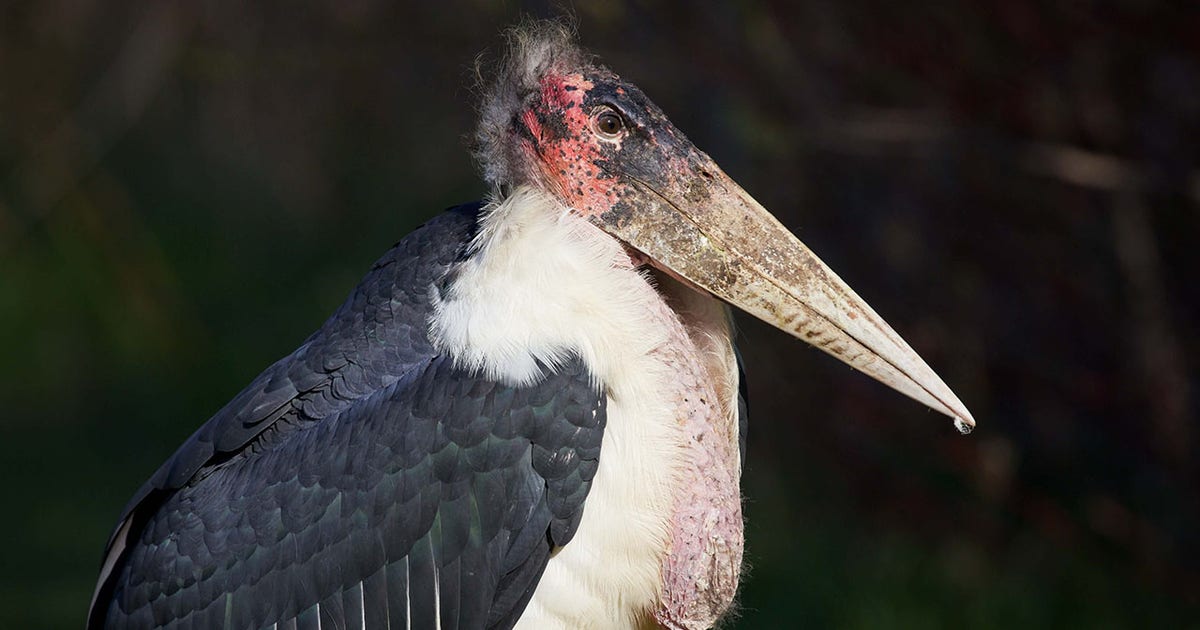
The tranquil landscapes of northeast Wisconsin have recently become the unlikely stage for one of the most perplexing and captivating wildlife stories of the year. An African Marabou stork, a bird synonymous with the vast savannas and wetlands of sub-Saharan Africa, has made an unprecedented appearance, turning heads, sparking local fascination, and igniting a global discussion among ornithologists and environmentalists. This isn't just a bird out of place; it's a living enigma, a feathered ambassador from another continent, whose journey to the American Midwest remains shrouded in mystery.
For weeks, reports have trickled in, then surged, confirming the presence of this majestic, albeit somewhat macabre-looking, avian wanderer. Its distinctive bald head, massive bill, and towering stature—often reaching up to five feet tall with a wingspan of over nine feet—make it an unmistakable sight against the backdrop of Wisconsin's deciduous forests and farmlands. The Marabou stork, known scientifically as Leptoptilos crumenifer, is a scavenger, often seen alongside vultures at carrion or wading in shallow waters for fish and amphibians. Its presence thousands of miles from its natural habitat is not merely unusual; it is, by all accounts, extraordinary.
The Unprecedented Journey: How Did It Get Here?
The central question dominating conversations among birdwatchers, scientists, and curious locals is simple yet profound: How did an African Marabou stork end up in Wisconsin? The most immediate and widely accepted theory points to an escape from captivity. Marabou storks, with their striking appearance and relatively docile nature when habituated, are sometimes found in zoos, private collections, or wildlife parks. An escape from such a facility, perhaps during transit or due to an enclosure breach, could explain its sudden appearance.
However, pinpointing the exact origin is a formidable challenge. There are no immediate reports of missing Marabou storks from accredited zoos in North America. This absence of a clear escape record opens the door to more speculative, yet equally fascinating, possibilities. Could it have been a stowaway on a transcontinental cargo ship, enduring weeks at sea before disembarking in an unfamiliar port? While less probable for a bird of this size, such tales are not unheard of in the annals of accidental animal migrations. Another, even more remote, theory considers the possibility of an extreme vagrancy event, where a bird, perhaps caught in unusual weather patterns or disoriented, undertook an epic, unassisted flight across oceans. While Marabou storks are powerful fliers, a transatlantic journey is almost unimaginable for a species not known for such migratory feats.
Experts are meticulously analyzing its behavior, health, and any subtle clues it might offer. The bird appears to be in good condition, foraging successfully, which suggests it has been fending for itself for some time, or was recently released/escaped and is adapting remarkably well. The lack of banding or other identification marks further complicates the puzzle, leaving its past a tantalizing mystery.
Ecological Implications and Local Impact
The arrival of the Marabou stork has created a significant stir, not just among bird enthusiasts but across the entire community. For local residents, it's a source of wonder and excitement, a chance to witness a piece of exotic wildlife right in their backyard. Birdwatchers have flocked to the area, binoculars in hand, hoping to catch a glimpse of this rare visitor. Social media platforms are abuzz with sightings, photos, and theories, transforming the stork into a local celebrity.
From an ecological perspective, the immediate impact is likely minimal. A single Marabou stork, while a large predator/scavenger, is unlikely to significantly disrupt the local ecosystem. Its diet of carrion, fish, and small animals would overlap with native species like vultures, eagles, and herons, but its solitary presence poses no immediate threat to population dynamics. However, its long-term survival in Wisconsin's climate, particularly as winter approaches, is a major concern. Marabou storks are adapted to tropical and subtropical environments; the harsh Midwestern winter, with its freezing temperatures and scarcity of open water, would be a formidable challenge.
Wildlife officials are monitoring the situation closely. The dilemma lies in whether to intervene. Capturing such a large, powerful bird is a complex operation, potentially stressful for the animal and risky for handlers. Furthermore, there's the ethical question of whether to remove a healthy, wild animal from its chosen, albeit unusual, habitat. The current consensus seems to be observation, intervening only if the bird shows signs of distress or if its presence poses a risk to itself or the public, which is currently not the case.
Global Context: Avian Vagrancy and Climate Change
The Wisconsin Marabou stork, while unique in its species and location, fits into a broader pattern of avian vagrancy—the phenomenon of birds appearing far outside their normal geographic range. While many vagrants are smaller, more common species blown off course by storms, the appearance of a large, non-migratory African bird in North America is a particularly striking example.
This incident also subtly touches upon the larger narrative of climate change and its potential influence on wildlife distribution. While direct causation is difficult to prove in a single event, altered weather patterns, more frequent extreme storms, and shifting habitats are increasingly pushing species into new territories. Could a series of unusual atmospheric conditions have played a role in guiding this bird, or its ancestors, far afield? It's a question that resonates with the growing concerns about how global environmental shifts are reshaping the natural world.
Moreover, the story highlights the interconnectedness of global ecosystems. A bird from Africa, appearing in America, underscores how human activities, intentional or accidental, can bridge vast distances and introduce species to new environments, sometimes with unforeseen consequences. It serves as a reminder of the constant flux in nature and the surprising ways life adapts and travels.
The Future of Wisconsin's African Visitor
As the days shorten and temperatures begin to drop in Wisconsin, the fate of the Marabou stork hangs in the balance. Its ability to survive the impending winter is highly doubtful without human intervention. Wildlife experts and local communities face a difficult decision: allow nature to take its course, or attempt a rescue operation that could relocate the bird to a more suitable environment, perhaps a zoo or a wildlife sanctuary.
For now, the Marabou stork continues to captivate. It has become a symbol of the unexpected, a testament to the enduring mysteries of the natural world, and a poignant reminder of our planet's vast and interconnected biodiversity. Its journey to Wisconsin is a compelling chapter in the ongoing story of wildlife in an ever-changing world, prompting us to look closer, ask more questions, and appreciate the extraordinary moments that unfold right before our eyes. Whether it's a tale of escape, an incredible feat of endurance, or a subtle harbinger of broader environmental shifts, the African stork in Wisconsin has firmly etched itself into the annals of remarkable avian encounters, leaving a lasting impression on all who follow its improbable saga.
Stay Informed
Get the world's most important stories delivered to your inbox.
No spam, unsubscribe anytime.
Comments
No comments yet. Be the first to share your thoughts!