Africa's Digital Divide: Job Creator or Risk Multiplier in a Shifting Labor Market?
Sub-Saharan Africa is experiencing rapid digitalization, driving a significant shift from agriculture to services and intensifying demand for new skills. New research explores whether this digital transformation is creating much-needed employment opportunities or exacerbating existing labor market vulnerabilities. The continent faces the critical challenge of leveraging technology to foster inclusive growth and prepare its vast youth population for the jobs of tomorrow.
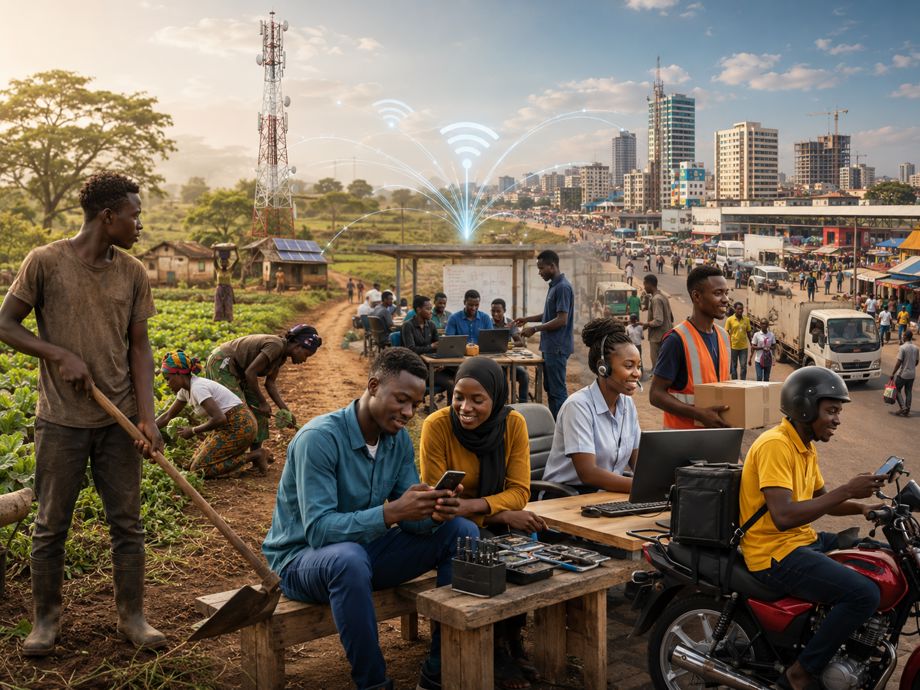
The winds of change are sweeping across Sub-Saharan Africa (SSA), powered by the relentless march of digitalization. Once primarily agrarian economies are now grappling with a profound structural transformation, as workers migrate from fields to burgeoning urban centers and the service sector expands. This seismic shift, while promising immense potential for economic growth and innovation, also raises a critical question: Is Africa’s digital future a harbinger of widespread job creation, or does it risk deepening existing labor market vulnerabilities and inequalities? New research by Evans T. and his colleagues sheds light on this complex dichotomy, revealing a continent at a crossroads.
The Digital Tsunami and Structural Transformation
For decades, agriculture has been the bedrock of most Sub-Saharan African economies, employing the vast majority of the workforce. However, the advent of mobile technology, internet penetration, and digital platforms is rapidly altering this landscape. We are witnessing an accelerated structural transformation, a process where economies move from primary sectors (like agriculture) to secondary (manufacturing) and tertiary (services) sectors. In SSA, this transition is particularly pronounced in the shift towards services. From mobile banking and e-commerce to ride-sharing and digital education, technology is not just facilitating but actively driving new economic activities and reshaping traditional ones. This transformation is not merely about job displacement; it's about the emergence of entirely new industries and skill requirements.
Historically, industrialization served as the primary engine for such structural shifts in developed nations. Africa, however, appears to be experiencing a unique, digitally-driven leapfrogging, potentially bypassing some traditional industrial stages. This rapid evolution presents both opportunities and challenges. On one hand, it allows for faster integration into the global digital economy and the creation of innovative, localized solutions. On the other, it demands an equally rapid adaptation from labor markets, educational institutions, and policy frameworks to ensure that the benefits are widely distributed and that no segment of the population is left behind.
The Promise of Digital Jobs: A Double-Edged Sword
The narrative surrounding digitalization often highlights its potential to create millions of jobs, particularly for Africa's youthful population. Indeed, the gig economy, digital entrepreneurship, and tech-enabled services offer avenues for employment that were unimaginable just a decade ago. For instance, the rise of mobile money agents has created countless micro-entrepreneurial opportunities, while online platforms connect skilled individuals with global clients. The tech startup scene is booming in hubs like Nairobi, Lagos, and Cape Town, attracting significant investment and fostering innovation.
However, the nature of these jobs is often precarious. Many are informal, lack social protection, and offer inconsistent income. The skills required for these digital roles are also highly specialized, creating a skills mismatch where a large portion of the workforce, particularly those transitioning from agriculture, lack the necessary digital literacy, coding expertise, or critical thinking skills. This disparity risks creating a two-tiered labor market: a small, highly skilled digital elite and a large, vulnerable population struggling to adapt. The demand for work-linked training and reskilling programs is therefore intensifying, as governments and organizations recognize the urgency of equipping workers with relevant competencies.
Deepening Labor Market Risks: Inequality and Exclusion
While digitalization offers a pathway to prosperity, it also carries the risk of exacerbating existing labor market vulnerabilities. Without deliberate policy interventions, the digital revolution could deepen inequalities along several axes:
* Geographic Divide: Urban centers typically have better internet access and digital infrastructure, attracting more digital jobs and opportunities. Rural areas, often reliant on traditional livelihoods, risk being left behind, widening the urban-rural gap. * Gender Gap: Women, particularly in rural settings, often face greater barriers to accessing technology, education, and financial resources. Without targeted interventions, digitalization could further marginalize them from emerging economic opportunities. * Skills Gap: As mentioned, the mismatch between available skills and required digital competencies is a major concern. Those without access to quality education and training will find it increasingly difficult to compete in the evolving labor market. * Informality: A significant portion of Africa's labor force operates in the informal sector. While some digital platforms can absorb informal workers, many digital jobs themselves are informal, lacking the benefits and protections of formal employment. This perpetuates a cycle of vulnerability rather than uplifting workers into stable, decent work.
The research underscores that the benefits of digitalization are not automatically inclusive. Proactive measures are essential to mitigate these risks and ensure that the digital transformation serves as a force for broad-based development, rather than a catalyst for greater disparity.
Policy Imperatives: Bridging the Gap
Addressing these challenges requires a multi-pronged policy approach focused on inclusive growth and human capital development. Key areas of intervention include:
* Investing in Digital Infrastructure: Expanding affordable and reliable internet access, especially in rural and underserved areas, is foundational. This includes investing in broadband networks and promoting digital literacy programs. * Reforming Education and Training: Curricula must be updated to include digital skills, critical thinking, and problem-solving from early education through vocational training. Partnerships between educational institutions and industry are crucial to ensure relevance. * Supporting Digital Entrepreneurship: Creating an enabling environment for tech startups and small businesses, including access to finance, mentorship, and regulatory support, can foster job creation and innovation. * Strengthening Social Protection: As the nature of work evolves, social safety nets must adapt to cover informal and gig workers, providing health insurance, unemployment benefits, and retirement savings. * Promoting Gender Inclusion: Specific policies are needed to encourage women's participation in STEM fields and digital entrepreneurship, addressing cultural and structural barriers.
According to experts like Dr. Aisha Khan, an economist specializing in African development, "The digital future of Africa is not predetermined. It is being shaped by the choices made today. Investing in human capital and equitable access to technology will determine whether this transformation leads to widespread prosperity or increased marginalization." The public demand for job creation and work-linked training is a clear signal that citizens are ready for this transition, but they require the tools and opportunities to participate meaningfully.
A Forward-Looking Perspective
Africa stands on the precipice of a digital revolution with the potential to redefine its economic trajectory. The continent's youthful population, coupled with increasing digital penetration, offers a unique demographic dividend. However, realizing this potential hinges on strategic foresight and robust policy implementation. The structural shift from agriculture to services, amplified by digitalization, is irreversible. The challenge lies in managing this transition effectively, ensuring that the benefits of technological advancement are shared equitably across all segments of society.
By proactively addressing the skills gap, investing in inclusive digital infrastructure, and fostering an environment conducive to innovation and decent work, African nations can harness the power of digitalization to create a future where technology serves as a powerful engine for sustainable development, job creation, and improved livelihoods for all. The research by Evans T. serves as a vital call to action, urging policymakers to navigate this complex landscape with wisdom and urgency, transforming potential risks into unparalleled opportunities for growth and human flourishing.
Stay Informed
Get the world's most important stories delivered to your inbox.
No spam, unsubscribe anytime.
Comments
No comments yet. Be the first to share your thoughts!