Apple's Visionary Leap: AirPods with Cameras and the Future of AI
Apple is reportedly testing AirPods equipped with built-in cameras, a move signaling a significant push into advanced AI and spatial computing. This development could transform how users interact with their environment, offering real-time data capture and augmented reality experiences directly from their ears. Experts anticipate a new era of discreet, context-aware AI devices, potentially reshaping daily life and personal technology.
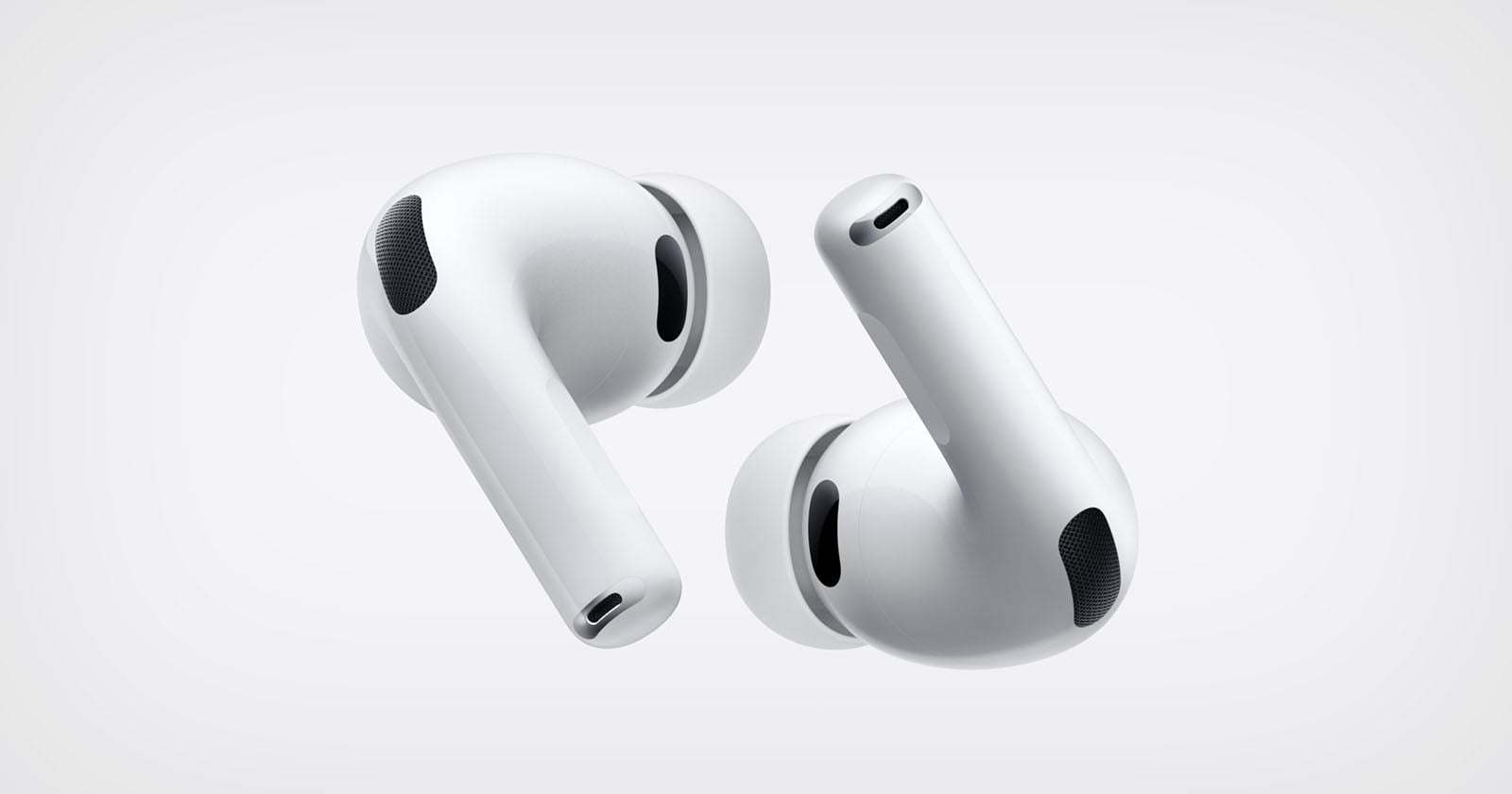
The world of personal technology is on the cusp of another seismic shift, and once again, Apple appears to be at the epicenter. Whispers from Cupertino suggest that the tech giant is currently testing prototypes of AirPods equipped with built-in cameras, a development that, if brought to fruition, could redefine our interaction with the digital and physical worlds. This isn't merely an incremental upgrade; it represents a bold leap into the future of artificial intelligence (AI) and spatial computing, embedding advanced sensory capabilities directly into one of Apple's most ubiquitous accessories.
For years, AirPods have been synonymous with seamless audio and convenience. Their evolution from simple wireless earbuds to sophisticated health trackers with features like noise cancellation and spatial audio has been remarkable. Now, the addition of a camera hints at a far more ambitious vision: turning a personal audio device into a discreet, always-on sensor for the environment, capable of capturing visual data, understanding context, and powering a new generation of AI applications. This move aligns perfectly with Apple's broader strategy, as articulated by CEO Tim Cook, to weave AI into the fabric of all its products, pushing the boundaries of what personal devices can achieve.
The Strategic Imperative: Apple's AI Ambitions
Apple's foray into camera-equipped AirPods is not an isolated experiment but a critical component of a much larger, overarching strategy to dominate the next wave of AI-driven innovation. While competitors like Google and Meta have heavily invested in augmented reality (AR) glasses and smart devices, Apple has meticulously laid the groundwork with its Vision Pro headset, which introduced the concept of spatial computing to the masses. The AirPods, with their discreet form factor and widespread adoption, offer a complementary avenue for delivering AI experiences that are less intrusive and more integrated into daily life.
Mark Gurman of Bloomberg, a reliable source for Apple insights, first reported on these prototypes, indicating that testers are actively evaluating their capabilities. This suggests that the technology is beyond the conceptual stage and is undergoing rigorous real-world assessment. The potential applications are vast: imagine AirPods that can identify objects in your field of view, translate foreign text instantly, provide navigation cues based on visual landmarks, or even monitor your surroundings for safety. This kind of context-aware AI could revolutionize everything from accessibility for the visually impaired to enhancing productivity and personal safety.
Historically, Apple has a track record of entering established markets and then redefining them. From the iPod revolutionizing music consumption to the iPhone transforming mobile communication, and the Apple Watch making wearables mainstream, the company often waits, observes, and then innovates with a polished, user-centric product. The current push into AI, particularly with devices like the Vision Pro and potentially camera-equipped AirPods, signals a similar pattern: a calculated, long-term play to establish a dominant position in the burgeoning field of ambient intelligence.
Technical Challenges and Ethical Considerations
The integration of cameras into such a small form factor presents significant engineering hurdles. Miniaturization, battery life, heat dissipation, and data processing capabilities within the AirPods themselves are all complex challenges. Apple's expertise in custom silicon, exemplified by its H-series chips in current AirPods, will be crucial in overcoming these obstacles. The camera technology would likely need to be highly efficient, perhaps relying on edge AI processing to minimize latency and data transmission, ensuring privacy and responsiveness.
Beyond the technical, the introduction of discreet, camera-equipped devices raises profound ethical and privacy concerns. The idea of someone potentially recording or analyzing their surroundings without explicit consent could lead to public apprehension. Apple, known for its strong stance on user privacy, will need to navigate these waters carefully. This will likely involve: * Clear indicators: Visual cues (e.g., an LED light) when the camera is active. * Strict data policies: Ensuring captured data is processed on-device where possible and not uploaded without explicit user permission. * User control: Granular settings for camera access and functionality. * Transparency: Open communication about how the technology works and its limitations.
The company's success with features like Face ID and App Tracking Transparency demonstrates its ability to balance innovation with user privacy, but the stakes are even higher with always-on, wearable cameras. Public trust will be paramount, and Apple's communication strategy will be as critical as its engineering prowess.
The Competitive Landscape and Future Implications
The tech industry is a battleground for AI supremacy, and Apple's move with AirPods signals a direct challenge to competitors. Meta, with its Ray-Ban smart glasses, already offers a camera-equipped wearable, albeit with a different form factor and primary focus. Google has also explored similar concepts. However, Apple's ecosystem integration, brand loyalty, and design philosophy could give it a significant edge. The potential for these AirPods to seamlessly integrate with the iPhone, Apple Watch, and Vision Pro creates a powerful, interconnected network of AI-powered devices.
The implications for various sectors are immense:
* Healthcare: Discreet monitoring of physical environments for elderly or visually impaired individuals, offering real-time assistance. * Education: Enhanced learning experiences through visual context and information retrieval. * Retail: Personalized shopping experiences based on visual recognition of products or displays. * Productivity: Hands-free information access and task management in dynamic environments.
This technology could also pave the way for a more seamless augmented reality (AR) experience, where digital information is overlaid onto the real world without the need for a bulky headset. Imagine walking through a museum and having your AirPods provide information about artifacts as you look at them, or navigating a new city with directions subtly projected into your visual field through a future, more advanced iteration of this technology. The camera-equipped AirPods could serve as a crucial bridge between our current mobile computing paradigm and a truly pervasive AR future.
A Glimpse into the Ambient Computing Era
The reported development of camera-equipped AirPods is more than just a product rumor; it's a window into Apple's long-term vision for ambient computing. This paradigm envisions a world where technology is seamlessly integrated into our environment, anticipating our needs and providing assistance without explicit commands. Discreet sensors, like those potentially in AirPods, would gather data about our surroundings and activities, allowing AI to offer truly personalized and proactive support.
As Apple continues to invest heavily in its own large language models (LLMs) and on-device AI capabilities, these camera-equipped AirPods could become a primary interface for interacting with a highly intelligent, context-aware personal assistant. The ability to see, hear, and understand the user's environment in real-time would unlock unprecedented levels of utility and personalization.
While the commercial launch of such AirPods might still be years away, the fact that Apple is actively testing them underscores the company's commitment to pushing the boundaries of personal technology. This bold step could very well usher in an era where our earbuds are not just for listening, but for seeing, understanding, and intelligently augmenting our reality, making AI a truly invisible yet indispensable part of our daily lives. The future, it seems, will be seen through the lens of our AirPods.
Stay Informed
Get the world's most important stories delivered to your inbox.
No spam, unsubscribe anytime.
Comments
No comments yet. Be the first to share your thoughts!