Aung San Suu Kyi's Disappearance: Myanmar's Lingering Questions and the Junta's Grip
More than two weeks after Myanmar's junta claimed to have placed Aung San Suu Kyi under house arrest, her exact whereabouts and condition remain shrouded in mystery. This lack of transparency fuels international concern and highlights the military's tight control over information. As Myanmar grapples with a deepening humanitarian crisis, the fate of its most prominent political prisoner underscores the regime's continued defiance of global calls for democracy.
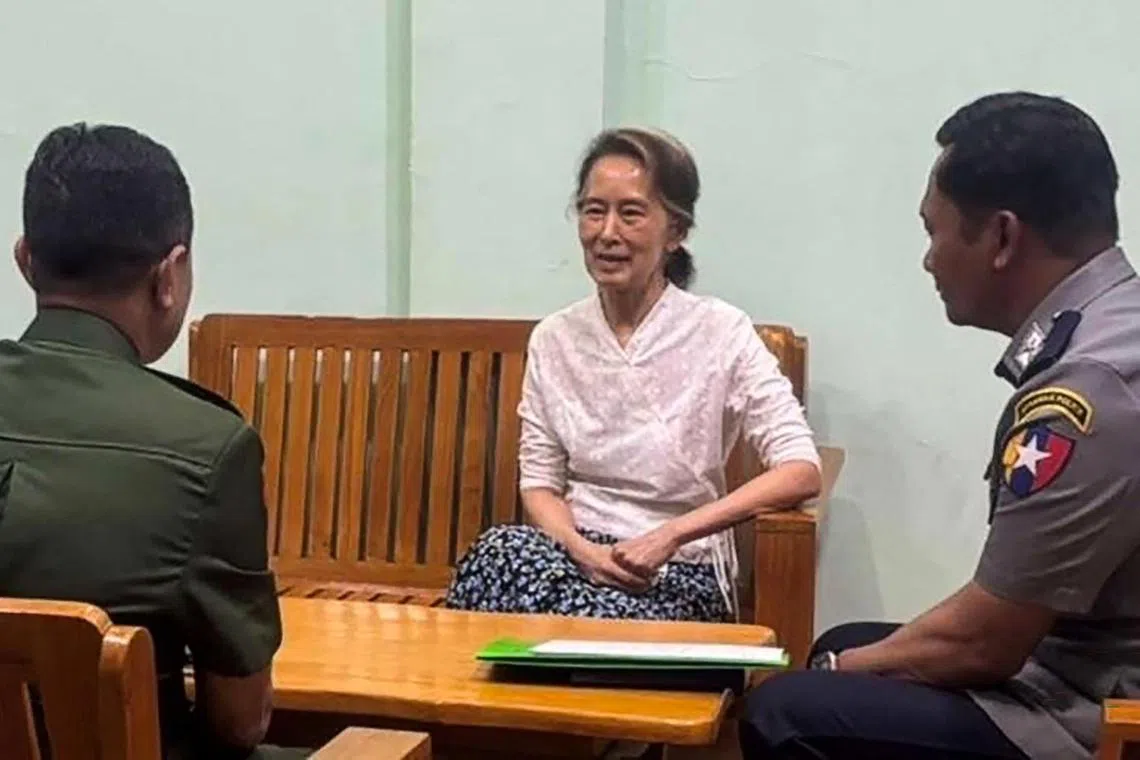
In the murky depths of Myanmar's political landscape, where truth is often a casualty of military rule, the fate of Aung San Suu Kyi remains a poignant symbol of the nation's ongoing struggle. More than two weeks after the junta, which seized power in a 2021 coup, announced it had placed its most celebrated political prisoner under house arrest, questions about her exact whereabouts and well-being continue to multiply, casting a long shadow over the future of the Southeast Asian nation. The announcement, made on April 30, stated that Ms. Suu Kyi, now 80, had been transferred from prison to house arrest due to the country's scorching heatwave. However, the lack of verifiable information or independent confirmation has only intensified global anxieties, leaving observers to wonder if this is a genuine humanitarian gesture or merely another calculated maneuver in the junta's sophisticated campaign of control and obfuscation.
The Enigma of Her Whereabouts
The ambiguity surrounding Aung San Suu Kyi's current situation is not new. Since the military coup on February 1, 2021, which abruptly ended a decade of nascent democratic reforms and plunged Myanmar into chaos, Ms. Suu Kyi has been largely held incommunicado. Initially detained, she was later subjected to a series of politically motivated trials, convicted on numerous charges ranging from corruption to incitement, and sentenced to a staggering 27 years in prison. Her confinement, whether in a custom-built prison facility or an undisclosed location, has always been characterized by a severe lack of transparency. The junta's latest claim of house arrest, ostensibly for health reasons related to extreme temperatures, has been met with widespread skepticism. Human rights organizations and international bodies are demanding concrete proof of her condition and location, emphasizing that a mere announcement is insufficient given the regime's track record of disinformation. Without independent access, the world is left to speculate, fueling concerns that her transfer might be a tactic to deflect international pressure or to further isolate her from any potential influence.
Historically, Ms. Suu Kyi has spent nearly 15 years under house arrest between 1989 and 2010, becoming a global icon of peaceful resistance and earning the Nobel Peace Prize in 1991. During those periods, her confinement was often verifiable, and her presence in her lakeside Yangon home was, at times, confirmed by limited external observations. Today, the situation is starkly different. Myanmar is a nation under siege, with the military junta, officially known as the State Administration Council (SAC), exercising brutal control over information, communication, and movement. This makes any independent verification of Ms. Suu Kyi's status virtually impossible, deepening the mystery and exacerbating fears for her safety and health. The junta's announcement came amidst reports of escalating conflict across the country, with resistance forces gaining ground in several regions, suggesting a possible attempt to divert attention from military setbacks or to project an image of benevolence to a skeptical international audience.
A Nation in Crisis: Beyond Suu Kyi's Confinement
While Aung San Suu Kyi's personal plight captures international headlines, it is crucial to remember that her situation is emblematic of a much broader, devastating crisis engulfing Myanmar. The 2021 coup unleashed a wave of violence and repression, leading to the deaths of over 4,800 civilians and the arbitrary arrest of more than 26,000 people, according to the Assistance Association for Political Prisoners (AAPP). The military's scorched-earth tactics, including air strikes on civilian areas, burning of villages, and widespread human rights abuses, have displaced over 2.8 million people and pushed the country into a severe humanitarian catastrophe. The economy has collapsed, and access to essential services like healthcare and education has been severely disrupted. The junta's grip extends beyond political prisoners; it encompasses the entire civilian population, which lives under constant threat of violence and arbitrary detention.
The international community, including the United Nations and various regional blocs like ASEAN, has largely condemned the coup and called for a return to democracy and the release of all political prisoners. However, concrete actions have been limited, and the junta has largely ignored these calls, bolstered by support from certain international allies. The lack of a unified, decisive international response has allowed the military to consolidate its power, albeit in the face of growing armed resistance. The ongoing civil war pits the military against a diverse array of ethnic armed organizations and the People's Defense Forces (PDFs), formed by pro-democracy activists. The conflict has intensified, with the junta losing significant territory and facing unprecedented challenges to its authority, particularly in border regions.
Implications for Myanmar's Future
The lingering questions surrounding Aung San Suu Kyi's condition have profound implications for Myanmar's future. Her symbolic power, even in detention, remains immense. For many, she represents the hope for a democratic future and a return to civilian rule. Her continued isolation and the uncertainty of her well-being serve as a constant reminder of the junta's authoritarian nature and its unwillingness to compromise. Should anything untoward happen to her, it could further destabilize an already volatile nation, potentially igniting even greater resistance and international outrage. Conversely, any credible sign of her improved condition or, more optimistically, her eventual release, could offer a glimmer of hope, though it is unlikely to fundamentally alter the military's entrenched position.
Experts suggest that the junta's strategy is multifaceted: to neutralize Ms. Suu Kyi's political influence, to project an image of control, and to test the international community's resolve. The timing of the house arrest announcement, amid intense fighting and military setbacks, could also be an attempt to manage public perception both domestically and abroad. However, the international community's response has been consistent: calls for her unconditional release and a return to democratic governance. The United States, the European Union, and other democratic nations have imposed sanctions on the junta and its affiliates, but these measures have yet to significantly alter the military's calculus.
The Path Forward: A Long and Arduous Struggle
The situation in Myanmar remains dire, with no immediate end in sight to the political instability and humanitarian crisis. The fate of Aung San Suu Kyi is inextricably linked to the broader struggle for democracy and human rights in the country. Her continued detention, whether in prison or under house arrest, underscores the military's determination to crush dissent and maintain its grip on power. For the people of Myanmar, the struggle is not just about one leader, but about the fundamental right to self-determination and freedom from oppression. The international community faces a critical challenge: how to effectively pressure the junta without further exacerbating the suffering of the civilian population.
Moving forward, sustained international pressure, targeted sanctions, and robust humanitarian aid will be crucial. Furthermore, supporting the pro-democracy movement and ethnic armed organizations, while navigating the complexities of a civil war, will be vital. The lack of transparency surrounding Aung San Suu Kyi's status is a stark reminder that the junta operates with impunity, and only a concerted, unified global effort can hope to shift the balance of power. Until then, the questions surrounding her whereabouts will continue to echo as a testament to Myanmar's enduring tragedy and the unwavering resilience of its people in the face of tyranny.
Stay Informed
Get the world's most important stories delivered to your inbox.
No spam, unsubscribe anytime.
Comments
No comments yet. Be the first to share your thoughts!