Beijing's Yuan Ambition: Why Free Fluctuation is Key to Global Currency Status
China's long-held ambition to elevate the yuan to a true international reserve currency faces a critical hurdle: its tightly controlled exchange rate. Former European economic adviser Daniel Gros argues that Beijing must allow the yuan to fluctuate freely, even if it introduces short-term volatility, to gain global trust and adoption. This shift would mark a significant departure from current policy, impacting global finance and trade dynamics profoundly. The article explores the historical context, economic implications, and the delicate balancing act China faces in this strategic endeavor.
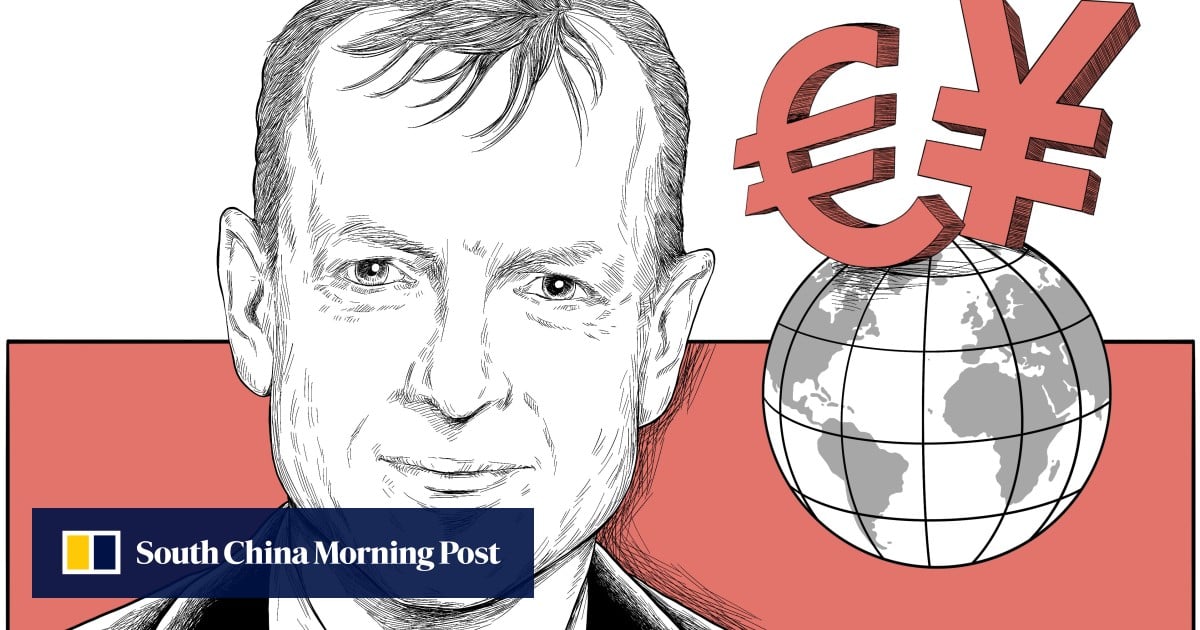
In the intricate dance of global finance, few aspirations are as potent or as strategically significant as a nation's bid to establish its currency as a dominant international force. For decades, China has harbored such an ambition for its yuan, seeking to challenge the dollar's hegemony and reshape the global monetary order. Yet, despite its economic might and growing trade influence, the yuan remains a peripheral player on the world stage. According to Daniel Gros, a distinguished former European economic adviser and director of the Institute for European Policymaking at Bocconi University, the key to unlocking the yuan's international potential lies in a single, fundamental reform: allowing it to fluctuate freely.
Gros's assertion, echoing sentiments from numerous economists and policymakers, cuts to the heart of the dilemma facing Beijing. The yuan's tightly managed exchange rate, a tool long used to maintain economic stability and support export competitiveness, is simultaneously the biggest impediment to its global acceptance. For a currency to be truly international – widely used in trade, investment, and as a reserve asset – it must be perceived as reliable, liquid, and market-driven. The current system, characterized by state intervention and a narrow trading band, fundamentally undermines these perceptions, creating a trust deficit that even China's vast economic power cannot easily overcome.
The Dollar's Shadow: A Historical Perspective
The dominance of the U.S. dollar is not merely a matter of economic size; it is a legacy built on decades of trust, liquidity, and the absence of viable alternatives. Since the Bretton Woods agreement, and particularly after the dollar's convertibility to gold ended in 1971, its role as the world's primary reserve currency has been solidified. This status grants the U.S. immense geopolitical and economic leverage, allowing it to finance deficits more easily and exert significant influence over global financial markets. Any challenger to this order faces an uphill battle, not just against economic fundamentals but against ingrained habits and institutional frameworks.
China's journey towards internationalizing the yuan began in earnest in the early 2000s, gaining momentum with initiatives like the Belt and Road Initiative (BRI) and the establishment of yuan-clearing centers globally. The inclusion of the yuan in the International Monetary Fund's (IMF) Special Drawing Rights (SDR) basket in 2016 was hailed as a significant milestone, symbolizing its growing stature. However, despite these efforts, the yuan's share in global payments, trade finance, and central bank reserves remains relatively small, dwarfed by the dollar, euro, and even the yen and sterling in some metrics. This disparity highlights the gap between aspiration and reality, a gap Gros attributes directly to the lack of exchange rate flexibility.
The Economic Imperative of Flexibility
For a currency to be attractive to international investors and central banks, it must offer both stability and liquidity. While a fixed or managed exchange rate might appear to offer stability, it does so at the cost of market efficiency and transparency. Investors are wary of assets whose value is subject to arbitrary political decisions rather than market forces. If the yuan's value is perceived as being manipulated to suit Beijing's economic agenda, its appeal as a safe haven or a reliable store of value diminishes significantly.
Furthermore, a freely fluctuating currency acts as an economic shock absorber. When a country faces external shocks, such as a sudden drop in export demand or a surge in capital outflows, its currency can depreciate, making exports cheaper and imports more expensive, thus helping to rebalance the economy. Conversely, in times of strong economic performance, appreciation can help curb inflation. By suppressing this natural mechanism, China often resorts to other, more disruptive measures, such as imposing capital controls, which further deter international participation. Gros argues that allowing the yuan to move freely would signal Beijing's commitment to market principles, fostering greater confidence among global financial players. This would not only enhance the yuan's attractiveness for trade settlement but also encourage its use in capital markets, a crucial step for reserve currency status.
The Balancing Act: Stability vs. Internationalization
The reluctance to fully liberalize the yuan's exchange rate stems from deep-seated concerns within Beijing. A sudden and significant appreciation could harm China's export-oriented industries, potentially leading to job losses and social instability. Conversely, a sharp depreciation could trigger capital flight and undermine financial stability. The Chinese leadership has historically prioritized stability above all else, viewing tight control over the currency as a vital tool for managing its complex economy and maintaining social cohesion.
However, this cautious approach comes with a strategic cost. The more China seeks to internationalize its currency, the more it will need to embrace the very market mechanisms it currently seeks to control. The transition would undoubtedly be challenging, requiring robust domestic financial markets, strong regulatory frameworks, and a willingness to tolerate short-term volatility. It would also necessitate a greater degree of transparency and predictability in monetary policy, moving away from the opaque decision-making processes that have sometimes characterized China's financial governance.
Implications for Global Finance and China's Future
Should China heed advice like Gros's and move towards a freely floating yuan, the implications for global finance would be profound. It would introduce a genuinely powerful alternative to the dollar, potentially leading to a more multipolar monetary system. This could reduce global reliance on the U.S. dollar, offering countries more options for trade invoicing, investment, and reserve management. For China, it would cement its position as a global financial superpower, commensurate with its economic weight.
However, the path is fraught with challenges. The global financial system is deeply entrenched in dollar-based infrastructure, from SWIFT to international debt markets. Overcoming this inertia requires not just policy changes but a fundamental shift in perception and trust. Moreover, a truly internationalized yuan would expose China's economy to greater external pressures, requiring sophisticated macroeconomic management and a mature financial system capable of handling increased capital flows and market volatility.
In conclusion, Daniel Gros's analysis serves as a stark reminder that while economic power is a prerequisite for currency internationalization, it is not sufficient. Trust, transparency, and market-driven flexibility are equally, if not more, important. Beijing's ambition to elevate the yuan beyond its current regional role will ultimately hinge on its willingness to loosen the reins, allowing its currency to dance freely on the global stage. This strategic choice will not only define the yuan's future but also significantly shape the trajectory of the 21st-century global monetary order. The world watches to see if China is ready to take this bold, yet necessary, step.
Stay Informed
Get the world's most important stories delivered to your inbox.
No spam, unsubscribe anytime.
Comments
No comments yet. Be the first to share your thoughts!