Beyond the Basics: Unveiling HDMI's Hidden Powers and Unexpected Gadgets
HDMI, often perceived as a simple cable for connecting devices, is evolving far beyond its basic function. This article delves into the surprising world of advanced HDMI gadgets, from securing sensitive data to revolutionizing smart home integration. Discover how these innovations are transforming connectivity, enhancing user experience, and addressing complex challenges in both consumer and professional spheres.
In an era defined by ubiquitous digital connectivity, the High-Definition Multimedia Interface (HDMI) has become an unassuming yet indispensable backbone of our entertainment and professional lives. For most, HDMI conjures images of a straightforward cable linking a game console to a TV, or a soundbar to an eARC-enabled port. Yet, beneath this veneer of simplicity lies a rapidly expanding universe of innovative HDMI gadgets, pushing the boundaries of what this familiar technology can achieve. Far from being a mere conduit for video and audio, HDMI is now at the heart of solutions tackling everything from sophisticated smart lighting systems to the stringent requirements of government data protection. This exploration will unveil the hidden powers of HDMI, revealing how seemingly niche devices are reshaping our interaction with technology and addressing complex challenges we never knew HDMI could solve.
The Evolution of HDMI: More Than Just a Cable
Since its inception in 2002, HDMI has undergone several significant revisions, each bringing greater bandwidth, new features, and enhanced capabilities. From HDMI 1.0's initial promise of uncompressed digital audio and video to HDMI 2.1's support for 8K resolution, high refresh rates, and dynamic HDR, the standard has consistently adapted to the demands of an increasingly data-hungry world. However, the true innovation often lies not just in the core specification, but in the ingenious ways third-party manufacturers leverage its underlying protocols. These aren't just adapters; they are sophisticated devices that extend, enhance, and even secure HDMI signals in ways that defy conventional expectations. This evolution underscores a critical point: HDMI is no longer just a passive connector but an active ecosystem capable of supporting intricate functionalities.
Historically, HDMI's primary role was to simplify home theater setups, replacing a tangle of analog cables with a single digital one. Its adoption was swift and widespread, cementing its place as the de facto standard for consumer electronics. But as devices became smarter and data security became paramount, the limitations of a purely point-to-point connection became apparent. This spurred the development of specialized HDMI gadgets that could bridge these gaps, offering solutions for scenarios ranging from professional AV installations to highly secure government applications. The sheer versatility of these devices highlights a paradigm shift: HDMI is now a platform for innovation, not just a port.
Unexpected Applications: Smart Lighting and Data Security
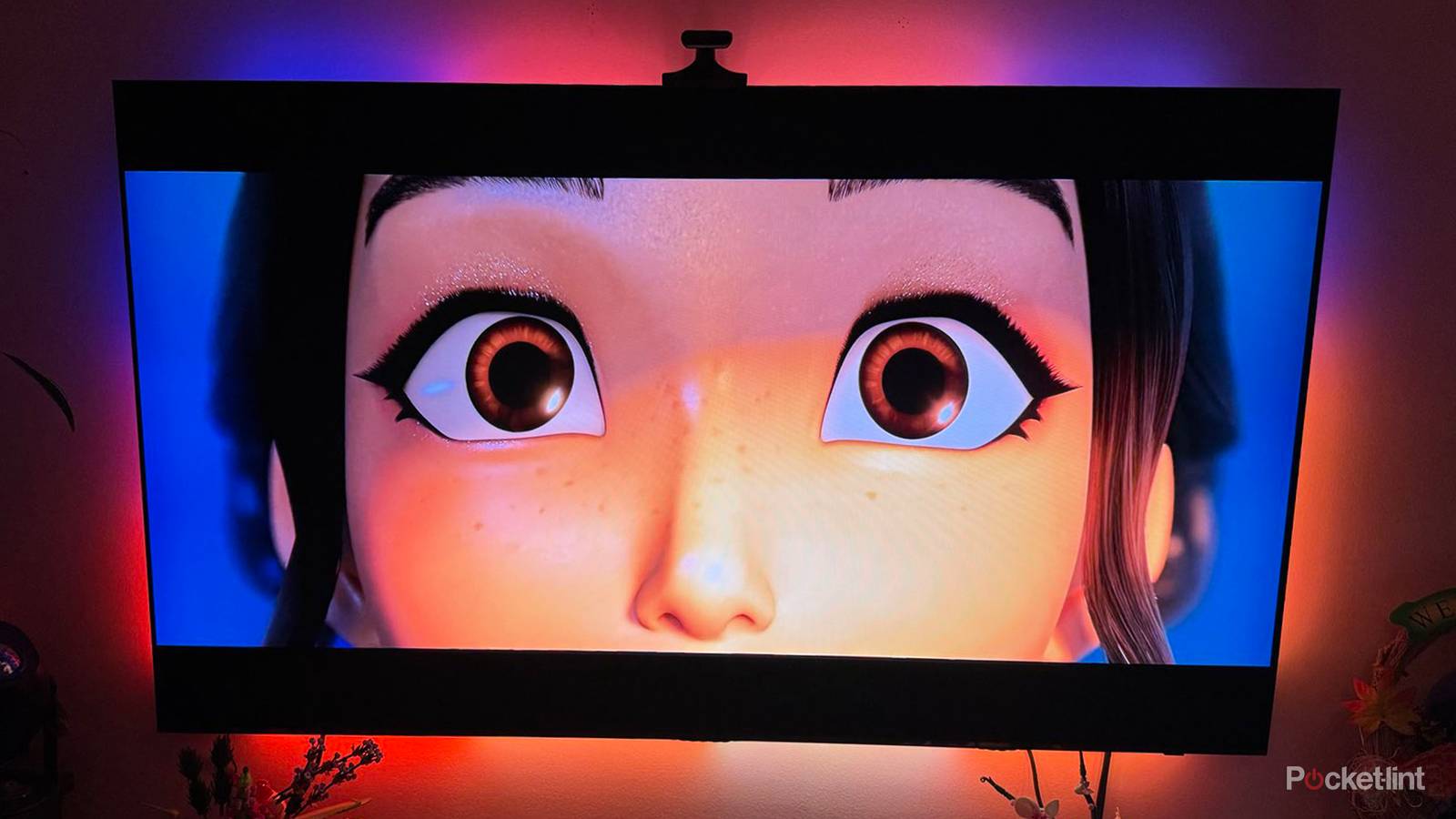
One of the most surprising applications of HDMI technology can be found in the realm of smart lighting. While traditional smart lights rely on Wi-Fi, Bluetooth, or Zigbee, some cutting-edge systems are now integrating with HDMI to create immersive experiences. Imagine a television that doesn't just display an image, but extends its colors and effects onto the surrounding walls, dynamically changing the room's ambiance to match the on-screen content. This isn't just a gimmick; it's a sophisticated use of HDMI's data stream. Devices like HDMI sync boxes analyze the incoming video signal in real-time, extracting color information and translating it into commands for smart light strips or bulbs. This creates a truly enveloping media experience, blurring the lines between the screen and the physical environment. For instance, Philips Hue Play HDMI Sync Box is a prime example, demonstrating how HDMI can elevate home entertainment beyond passive viewing.
On the opposite end of the spectrum, HDMI is playing a crucial role in data security, particularly in environments where sensitive information is handled. Governments, financial institutions, and research facilities often require robust measures to prevent data leakage, including through seemingly innocuous display connections. This is where HDMI KVM (Keyboard, Video, Mouse) switches with advanced security features come into play. These devices are designed to isolate connected computers, preventing data transfer between them and mitigating risks like USB-borne malware or data exfiltration. They often incorporate features like unidirectional data flow, anti-tampering mechanisms, and secure boot processes to ensure that video signals are transmitted securely without compromising the integrity of the source device. Such specialized KVMs are a far cry from the simple consumer-grade switches, representing a critical layer of defense in cybersecurity strategies.
Enhancing Connectivity: Wireless HDMI and Signal Extenders
The limitations of physical cables – their length, susceptibility to interference, and aesthetic impact – have long been a challenge in AV setups. This has spurred the development of wireless HDMI solutions. These gadgets transmit high-definition video and audio signals over the air, eliminating the need for long, unsightly cables. Utilizing technologies like WiGig (Wireless Gigabit Alliance) or proprietary 60GHz frequencies, these systems can deliver uncompressed 4K video with near-zero latency, making them ideal for home theaters, conference rooms, and even gaming setups where cable management is a nightmare. While not a new concept, the reliability and performance of wireless HDMI have significantly improved, offering a viable alternative for complex installations or temporary setups where running cables is impractical or impossible.
Beyond wireless, HDMI extenders tackle the issue of distance. Standard HDMI cables have practical length limits before signal degradation occurs. For installations requiring signals to travel hundreds of feet – think large auditoriums, digital signage networks, or multi-room AV systems – extenders are essential. These devices often utilize Ethernet cables (Cat5e/6/7) to transmit HDMI signals over much longer distances, converting the HDMI signal into an IP-based format and then back again at the receiving end. Some advanced extenders also incorporate fiber optic technology for even greater distances and immunity to electromagnetic interference, proving indispensable in professional AV contexts where signal integrity over long hauls is paramount. The market for these extenders is robust, driven by the increasing demand for distributed video systems in commercial and residential settings.
The Future of HDMI: Integration and Intelligence
As technology continues its relentless march forward, HDMI is poised for even deeper integration and intelligence. The trend towards smart homes and Internet of Things (IoT) devices suggests a future where HDMI might not just carry media but also act as a conduit for control signals, sensor data, and more sophisticated inter-device communication. We're already seeing glimpses of this with HDMI CEC (Consumer Electronics Control), which allows devices to communicate and control each other. However, future iterations could expand this capability significantly, enabling more seamless and intuitive control over an entire ecosystem of connected devices.
Furthermore, the increasing demand for augmented reality (AR) and virtual reality (VR) experiences could see HDMI playing a critical role in high-bandwidth, low-latency display solutions. As these technologies mature, the need for robust, reliable, and fast data transfer to headsets and other immersive displays will only grow. HDMI's continuous evolution in bandwidth and feature sets positions it well to meet these future demands. The integration of AI for real-time content analysis, adaptive display settings, and even predictive maintenance could also become commonplace, transforming HDMI from a simple interface into an intelligent hub. The journey of HDMI from a basic connector to a sophisticated enabler of advanced technologies is a testament to its adaptability and the ingenuity of engineers who continue to push its boundaries. It serves as a powerful reminder that even the most fundamental technologies harbor untapped potential, waiting to be unlocked by creative solutions and evolving needs. The next generation of HDMI gadgets promises to be even more surprising, seamlessly weaving itself into the fabric of our increasingly connected and intelligent world, making our digital lives richer, safer, and more integrated than ever before.
Stay Informed
Get the world's most important stories delivered to your inbox.
No spam, unsubscribe anytime.
Comments
No comments yet. Be the first to share your thoughts!