Burkina Faso's Traoré Rejects Western Human Rights Narrative, Demands African Agency
Burkina Faso's interim leader, Captain Ibrahim Traoré, has forcefully rejected allegations of human rights abuses, accusing Western nations of hypocrisy and double standards. His stance challenges the prevailing global narrative on accountability in conflict zones, particularly in the Sahel region. Traoré argues that African nations must define their own standards of human rights, prioritizing collective security and stability in the face of existential threats like terrorism, rather than adhering to external frameworks. This defiant position underscores a growing pushback against perceived neocolonial oversight and highlights the complex interplay between security, sovereignty, and human rights in a geopolitically charged environment.
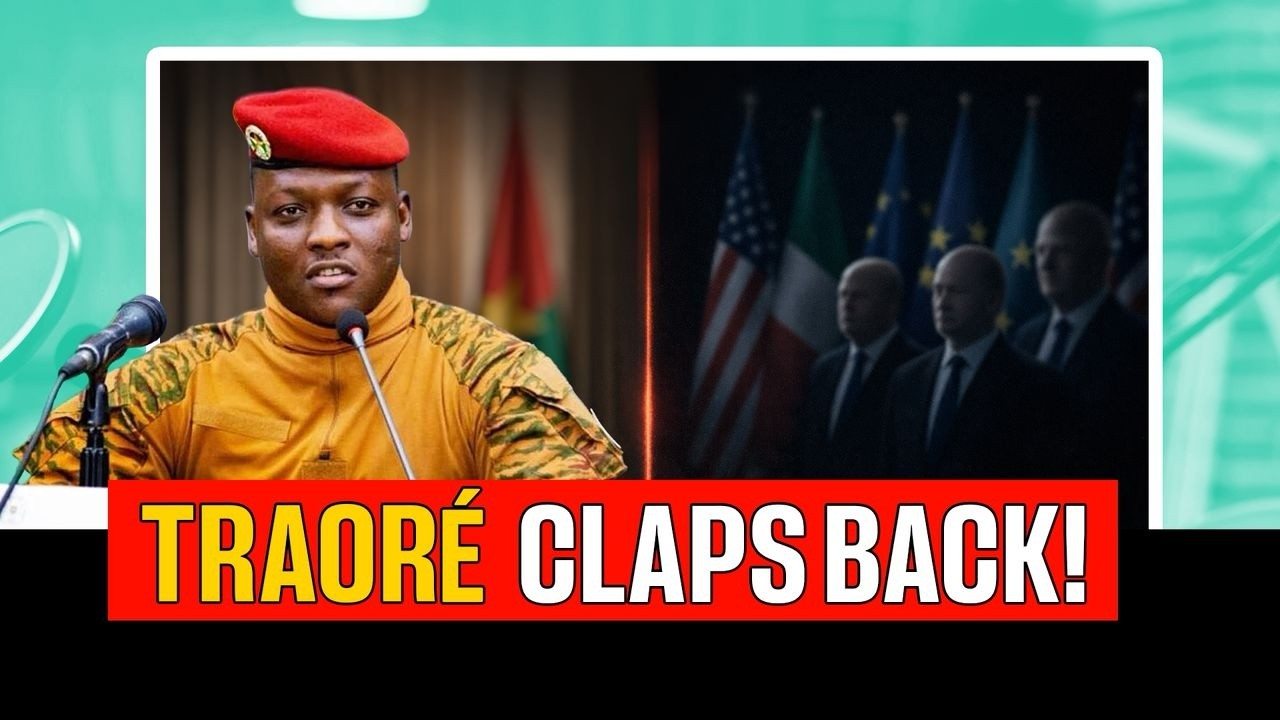
In a bold and unyielding declaration, Captain Ibrahim Traoré, Burkina Faso's interim leader, has ignited a fierce debate on international human rights standards, vehemently rejecting accusations of abuses and challenging the very foundation of Western-centric narratives. His recent statements, delivered with a directness that has become his hallmark, position Burkina Faso at the forefront of a growing chorus of African nations demanding greater agency in defining their own paths, free from what they perceive as hypocritical external oversight. This isn't merely a denial of wrongdoing; it's a fundamental questioning of who gets to define morality and accountability on the global stage, especially when facing an existential threat like rampant terrorism.
Traoré's administration, which came to power through a coup in September 2022, has been under scrutiny amid reports of extrajudicial killings and forced disappearances in its fight against jihadist groups. However, the young leader has turned the tables, accusing Western critics of applying double standards and ignoring the complex realities on the ground. He argues that the immediate priority for his nation is survival and the protection of its citizens from terror, a struggle that, in his view, necessitates different approaches than those prescribed by distant observers. This perspective resonates deeply within a continent often subjected to external judgment while grappling with internal crises exacerbated by historical injustices and geopolitical maneuvering.
The Sahel's Security Dilemma and Human Rights
The Sahel region, where Burkina Faso is centrally located, is a crucible of interconnected crises: extreme poverty, climate change, weak governance, and a surging tide of Islamist insurgency. Groups linked to Al-Qaeda and ISIS have wreaked havoc, displacing millions, destroying infrastructure, and destabilizing entire communities. For leaders like Traoré, the fight against these groups is not just a military campaign but a desperate bid to preserve the very fabric of the state. In this context, the concept of human rights, while universally accepted in principle, becomes entangled with the immediate and brutal realities of survival.
Traoré's argument is that Western nations, often quick to condemn, fail to acknowledge the immense pressure under which African governments operate. He points to the perceived selective outrage, where human rights violations in some regions are highlighted while similar or worse transgressions by allies or in resource-rich areas are downplayed. This perceived hypocrisy fuels resentment and undermines the legitimacy of international human rights bodies in the eyes of many African leaders and citizens. The question then becomes: can a nation truly uphold all aspects of human rights when its very existence is threatened by an enemy that respects none?
Challenging the 'Universal' Standard
At the heart of Traoré's challenge is the notion of a 'universal' human rights standard. While the Universal Declaration of Human Rights (UDHR) is indeed a foundational document, its interpretation and application have often been shaped by Western liberal democratic traditions. Traoré, like many post-colonial leaders, suggests that these standards, while noble, do not always align with the immediate priorities and cultural contexts of African societies. He implies that African nations should have the prerogative to define their own human rights frameworks, ones that might prioritize collective security and stability over individual liberties in times of acute crisis, or that are more attuned to local judicial and social norms.
This isn't an argument for abandoning human rights altogether, but rather for a more nuanced and context-sensitive approach. It's a call for self-determination in the realm of ethical governance, pushing back against what is often seen as a continuation of colonial-era paternalism. The debate is not new; it has simmered for decades, but Traoré's directness has brought it to a boiling point, forcing a re-evaluation of how international relations and accountability are framed. The historical context of Western intervention, from colonialism to structural adjustment programs, looms large in this discourse, making any critique from these quarters immediately suspect to many African leaders.
The Geopolitical Chessboard and Accountability
Burkina Faso's stance also needs to be understood within the broader geopolitical shifts occurring in Africa. The country, like its neighbors Mali and Niger, has recently distanced itself from traditional Western partners, particularly France, and has sought new alliances, notably with Russia. This pivot is often driven by a perceived lack of effective support from former colonial powers in combating terrorism, coupled with a desire for greater sovereignty. In this new geopolitical landscape, accusations of human rights abuses can be seen as a tool for political pressure, further complicating the narrative.
For Traoré, accountability must be reciprocal. He questions the accountability of those who, in his view, have historically exploited African resources, destabilized African nations, or failed to provide genuine support in times of need. He demands that the international community also examine its own conscience and track record. This perspective introduces a crucial dimension to the human rights debate: can true accountability exist if it is only applied unilaterally? The implication is clear: if Western nations wish to be credible arbiters of human rights, they must first address their own historical and contemporary roles in the challenges faced by African nations.
Implications for International Relations and African Sovereignty
Traoré's challenge is more than just a local dispute; it represents a significant moment in the evolving dynamics of international relations. It signals a growing assertiveness from African leaders who are no longer content to passively accept external directives. This push for African agency and self-determination has profound implications for multilateral institutions, human rights organizations, and Western foreign policy.
* Redefining Engagement: Western powers may need to fundamentally rethink their engagement strategies, moving away from prescriptive approaches towards more collaborative and respectful partnerships. * Legitimacy of Institutions: International human rights bodies face pressure to demonstrate their impartiality and adapt their frameworks to better reflect diverse global realities. * Regional Solutions: The emphasis on African solutions to African problems will likely intensify, potentially leading to stronger regional security and governance mechanisms. * Shifting Alliances: The geopolitical landscape will continue to shift as African nations explore alternatives to traditional partnerships, seeking those that offer unconditional support for their security priorities.
Ultimately, Traoré's defiant stance forces a critical examination of the power dynamics inherent in the global human rights discourse. It is a stark reminder that for many nations, particularly those grappling with immediate threats to their existence, the pursuit of security and stability is inextricably linked with the very definition and implementation of human rights. The debate he has ignited is not about abandoning human rights, but about ensuring that their application is equitable, context-sensitive, and truly universal in its understanding of human dignity and survival, rather than a tool for political leverage. The world watches to see if this challenge will lead to a more inclusive dialogue or further entrench existing divides.
Stay Informed
Get the world's most important stories delivered to your inbox.
No spam, unsubscribe anytime.
Comments
No comments yet. Be the first to share your thoughts!