Canada's Air Defense Revival: Learning from Ukraine and the Middle East to Meet NATO's 2% Target
After finally meeting NATO's 2% defense spending target, Canada is embarking on a critical mission to rebuild its long-neglected air defense capabilities. Drawing urgent lessons from the conflicts in Ukraine and the Middle East, Ottawa is accelerating investments in advanced systems and infrastructure. This strategic shift aims to counter evolving aerial threats and solidify Canada's commitment to collective security, marking a significant reorientation of its defense posture.
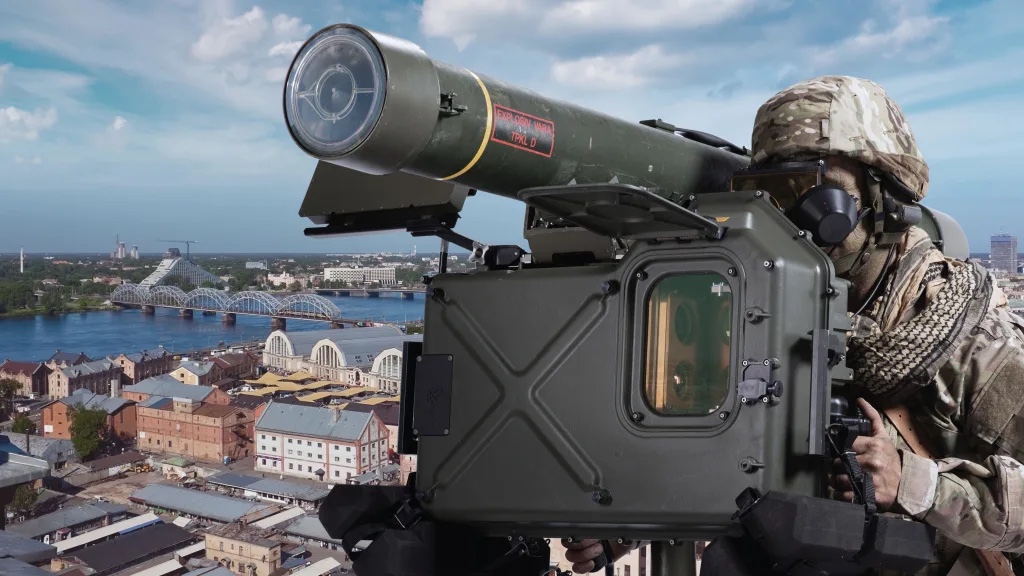
The echoes of distant conflicts are reverberating through Canada’s defense strategy, prompting a profound re-evaluation of its aerial protection. After years of international pressure and recent geopolitical shifts, Canada has not only met NATO’s long-standing 2% GDP defense spending target but has also pledged further increases. This financial commitment is now translating into a tangible and urgent effort to rebuild its air defense capabilities, drawing critical lessons from the brutal realities of modern warfare in Ukraine and the volatile Middle East.
For decades, Canadian defense policy often prioritized peacekeeping and expeditionary forces, allowing its continental air defense systems to gradually atrophy. The assumption of North American air superiority, largely guaranteed by its southern neighbor, led to a significant divestment in ground-based air defense (GBAD) and advanced missile systems. However, the proliferation of sophisticated drones, cruise missiles, and hypersonic weapons, vividly demonstrated in recent conflicts, has shattered this complacency, forcing Ottawa to confront a new era of aerial threats.
A Strategic Pivot: From Neglect to Urgency
Canada’s journey to its current defense posture has been a long and winding one. For years, successive governments struggled to justify increased military spending to a public often more focused on social programs and economic development. The 2% NATO target, a benchmark for alliance members, remained elusive. However, the full-scale invasion of Ukraine by Russia in February 2022 served as a stark awakening. The conflict underscored the critical importance of robust air defense, not just for front-line nations but for the collective security of the entire alliance. The relentless barrages of missiles and drones against Ukrainian cities and infrastructure highlighted vulnerabilities that Canada could no longer afford to ignore.
Simultaneously, the ongoing instability in the Middle East, characterized by the use of advanced drone technology by non-state actors and the complex interplay of air assets, further reinforced the need for comprehensive air and missile defense. These global events provided the political impetus and public justification for a significant shift in Canadian defense priorities. The recent budget announcements, which not only confirmed hitting the 2% target but also outlined plans for sustained growth, signal a definitive pivot towards a more capable and modern military, with air defense at its core.
Modernizing the Shield: Key Investments and Initiatives
Canada's renewed focus on air defense is manifesting in several key areas. A significant portion of the new funding is being directed towards acquiring state-of-the-art systems to replace outdated equipment and fill critical capability gaps. One of the most prominent initiatives involves the upgrading of air defense capabilities at 5th Canadian Division Support Base Gagetown in New Brunswick. This base is set to become a hub for training and deployment of new air defense assets, reflecting a broader strategy to enhance force readiness across the country.
Key acquisitions are expected to include advanced short-range air defense (SHORAD) systems, capable of intercepting drones and low-flying aircraft, as well as medium-range air defense (MRAD) systems designed to counter cruise missiles and more sophisticated aerial threats. The Canadian Armed Forces (CAF) are also exploring options for integrated air and missile defense (IAMD) systems, which would provide a layered defense against a spectrum of airborne attacks. This integrated approach is vital, as modern aerial threats often involve swarms of drones or coordinated missile strikes, requiring a multi-faceted response.
Furthermore, investments are being made in radar technology, command and control systems, and electronic warfare capabilities to enhance situational awareness and disrupt enemy air assets. The lessons from Ukraine, where electronic warfare has played a crucial role in countering Russian drones, are particularly relevant here. Canada is also expected to increase its participation in joint air defense exercises with NATO allies, fostering interoperability and sharing best practices.
Learning from the Front Lines: Ukraine and the Middle East
The conflicts in Ukraine and the Middle East offer invaluable, albeit grim, case studies for Canada's air defense planners. From Ukraine, Canada is learning about the efficacy of layered air defense, combining high-end systems like Patriot and NASAMS with more numerous, mobile SHORAD units and even man-portable air-defense systems (MANPADS). The resilience of Ukrainian air defenses against sustained Russian aerial assaults, despite initial disadvantages, provides a blueprint for adapting to diverse threat environments.
Crucially, the sheer volume and variety of aerial threats faced by Ukraine – from Iranian-made Shahed drones to Kalibr cruise missiles and Kinzhal hypersonics – underscore the need for a multi-spectrum defensive capability. This includes not just kinetic interceptors but also robust electronic warfare, cyber defense, and passive measures like camouflage and deception.
The Middle East, meanwhile, highlights the growing threat posed by unmanned aerial systems (UAS) and loitering munitions, often employed by non-state actors with devastating effect. The attacks on Saudi oil facilities in 2019, and more recently, the persistent drone and missile threats faced by various actors in the region, demonstrate that sophisticated air defenses are no longer solely the domain of great power competition. They are essential for protecting critical infrastructure and civilian populations from asymmetric threats. Canada’s Arctic region, with its vast, sparsely populated areas and increasing strategic importance, presents unique challenges for air defense against such threats, making these lessons particularly pertinent.
Implications for Canada and NATO
Canada's renewed commitment to air defense has significant implications, both domestically and internationally. Domestically, it signals a recapitalization of the Canadian Armed Forces that has been long overdue. It will create jobs in the defense industry, foster technological innovation, and provide enhanced security for Canadian airspace and critical infrastructure. The focus on Gagetown also suggests a strategic regional development in defense capabilities.
Internationally, a stronger Canadian air defense capability reinforces NATO's collective deterrence and defense posture. By meeting the 2% target and investing in crucial capabilities, Canada is demonstrating its commitment to burden-sharing within the alliance. This will enhance its credibility as a reliable partner and contribute to the overall security of the Euro-Atlantic area. In an increasingly unstable world, where aerial threats are becoming more sophisticated and pervasive, Canada's efforts to rebuild its air defenses are not merely a response to external pressure but a vital step towards safeguarding its sovereignty and contributing to global stability.
The path ahead will require sustained investment, strategic planning, and continuous adaptation to emerging threats. However, the current trajectory suggests that Canada is finally taking its air defense seriously, transforming from a perceived laggard into a proactive contributor to collective security. The lessons from Ukraine and the Middle East are not just abstract geopolitical observations; they are the guiding principles for a vital and long-overdue transformation of Canada's aerial shield.
Stay Informed
Get the world's most important stories delivered to your inbox.
No spam, unsubscribe anytime.
Comments
No comments yet. Be the first to share your thoughts!