US Navy Confirms Loss of $240 Million Triton Drone in Persian Gulf: A Strategic Blow Amidst Iran Tensions
The United States Navy has officially confirmed the loss of an MQ-4C Triton surveillance drone, valued at up to $240 million, in the volatile Persian Gulf. This incident, initially shrouded in speculation of an Iranian shootdown, is now attributed to a crash near the Strait of Hormuz. The disappearance of such a high-value asset raises critical questions about regional stability, technological vulnerabilities, and the escalating costs of modern warfare.
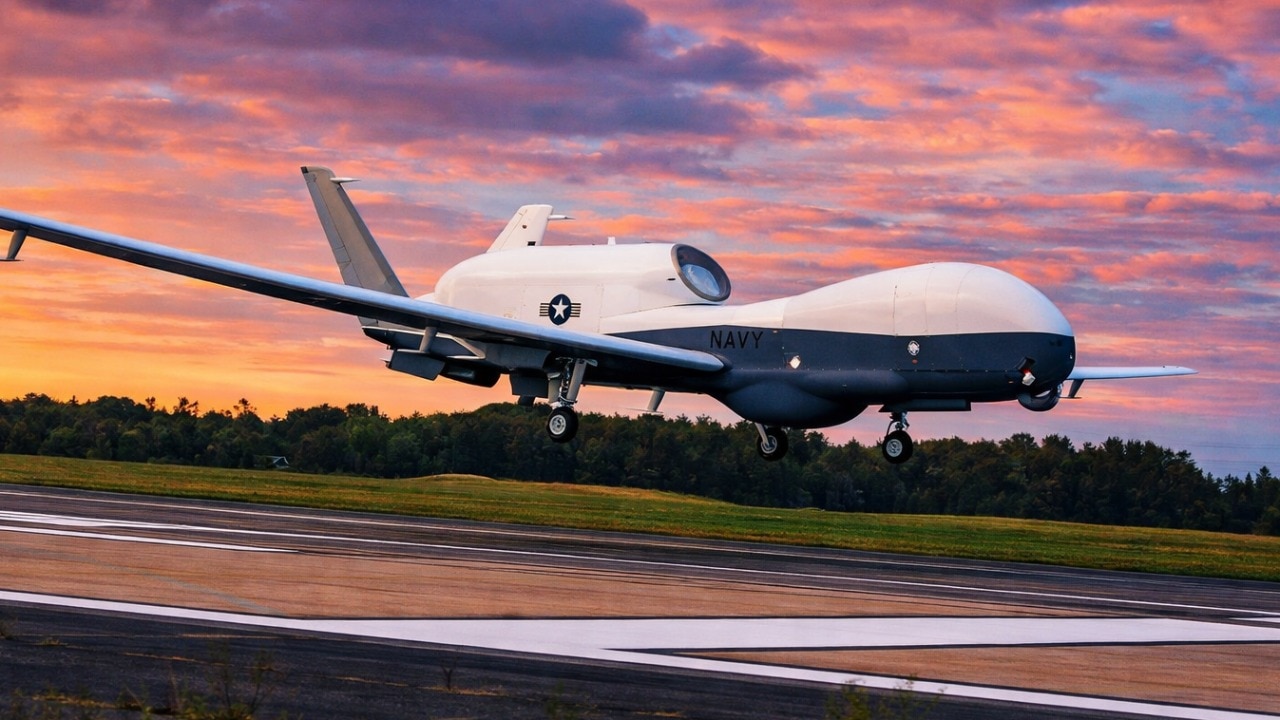
In a significant development that underscores the precarious geopolitical landscape of the Middle East, the United States Navy has officially confirmed the loss of one of its most advanced and expensive surveillance drones, the MQ-4C Triton, in the Persian Gulf. This incident, initially met with speculation and unconfirmed reports of a possible shootdown by Iranian forces, has now been clarified as a crash near the strategically vital Strait of Hormuz. The drone, a marvel of modern aerospace engineering, carries an estimated price tag of between $200 million and $240 million, making its loss an exceptionally costly blow to U.S. intelligence and reconnaissance capabilities in the region.
The sheer cost of the MQ-4C Triton is staggering, reportedly twice the price of two Lockheed Martin F-35 fighter jets combined. This comparison highlights not only the immense investment in unmanned aerial vehicles (UAVs) but also the strategic value placed on persistent, high-altitude surveillance in contested territories. The incident comes amidst heightened tensions in the Persian Gulf, a region historically prone to friction and now a focal point of geopolitical rivalry, particularly concerning Iran's nuclear ambitions and its role in regional conflicts.
The MQ-4C Triton: A Glimpse into Advanced Surveillance
The MQ-4C Triton, developed by Northrop Grumman, is a sophisticated High-Altitude, Long-Endurance (HALE) unmanned aircraft system designed for persistent maritime intelligence, surveillance, and reconnaissance (ISR) missions. Based on the RQ-4 Global Hawk, the Triton is specifically engineered for naval operations, capable of flying at altitudes exceeding 50,000 feet for over 24 hours. Its suite of advanced sensors includes: * Multi-Function Active Sensor (MFAS) radar: Provides 360-degree coverage for maritime surface search. * Electro-Optical/Infrared (EO/IR) camera: Offers high-resolution imagery and video. * Automatic Identification System (AIS): Tracks maritime vessel movements. * Electronic Support Measures (ESM): Detects and identifies radar emissions.
These capabilities allow the Triton to monitor vast expanses of ocean and coastal areas, providing critical data for naval operations, anti-submarine warfare, and border security. Its deployment in the Persian Gulf was crucial for monitoring Iranian naval activities, tracking commercial shipping, and ensuring the safety of international waterways. The loss of such an asset creates a significant gap in the U.S. Navy's ISR coverage, at least temporarily, and necessitates a reassessment of operational strategies in the region.
Geopolitical Context: A Region on Edge
The Persian Gulf, and particularly the Strait of Hormuz, is one of the world's most critical maritime chokepoints, through which a substantial portion of global oil supplies passes. The region has been a hotbed of geopolitical tension for decades, with the U.S. and its allies frequently clashing with Iran over various issues, including: * Iran's nuclear program: Ongoing international efforts to curb its development. * Freedom of navigation: Incidents involving Iranian forces harassing commercial vessels. * Proxy conflicts: Iran's support for non-state actors in Iraq, Syria, Yemen, and Lebanon.
Previous incidents, such as the 2019 shootdown of a U.S. RQ-4A Global Hawk drone by Iran's Revolutionary Guard Corps (IRGC) over the Strait of Hormuz, underscore the volatility. While the U.S. Navy has now attributed the Triton's loss to a crash, the initial speculation of an Iranian involvement highlights the deep-seated mistrust and the potential for miscalculation in the region. Any incident involving high-value military assets in such a sensitive area inevitably fuels narratives of confrontation and brinkmanship.
The Economic and Strategic Fallout
The financial implications of losing a $240 million drone are substantial. This sum represents a significant expenditure of taxpayer money and a tangible setback for the U.S. defense budget. Beyond the monetary cost, there are strategic ramifications:
* Intelligence Gap: The immediate loss of a Triton's surveillance capabilities leaves a temporary void in intelligence gathering over a critical area. While other assets can be deployed, none offer the same persistent, wide-area coverage as the Triton. * Technological Vulnerability: Even if the loss was due to mechanical failure or pilot error (in the case of remote operation), it raises questions about the reliability and resilience of advanced drone technology in challenging operational environments. If it were a shootdown, it would expose vulnerabilities to sophisticated air defense systems. * Deterrence and Perception: The loss, regardless of cause, can be perceived by adversaries as a sign of weakness or an opportunity to test boundaries. It might embolden regional actors or encourage more aggressive posturing. * Future Procurement: Such incidents can influence future defense spending, research and development priorities, and the design of next-generation UAVs, potentially leading to even more robust and costly systems.
Investigating the Cause: Crash or Cover-Up?
The U.S. Navy's confirmation of a crash near the Strait of Hormuz is the official stance, but the absence of detailed information regarding the cause leaves room for interpretation and continued scrutiny. Investigations into such incidents are typically exhaustive, seeking to determine whether the loss was due to: * Mechanical failure: A malfunction in the drone's complex systems. * Software glitch: An error in the autonomous flight control or navigation systems. * Environmental factors: Adverse weather conditions or unexpected atmospheric phenomena. * Human error: Mistakes by ground control operators. * Electronic warfare (EW): Jamming or spoofing by an adversary, which could lead to a loss of control and subsequent crash.
Given the geopolitical context, the possibility of electronic warfare remains a persistent concern for military analysts. Even without a kinetic attack, sophisticated EW capabilities could disrupt communications, GPS signals, or flight controls, effectively neutralizing the drone. The U.S. military will undoubtedly conduct a thorough recovery and forensic analysis of any retrieved components to ascertain the precise cause, a process that could take months or even years.
Looking Ahead: The Future of Drone Warfare and Regional Stability
The loss of the MQ-4C Triton serves as a stark reminder of the inherent risks associated with deploying advanced military technology in contested regions. It underscores the ongoing arms race in drone technology and counter-drone measures, where nations are constantly developing new ways to project power and deny adversaries access. For the Persian Gulf, this incident is another data point in a long history of tensions, suggesting that the region will remain a flashpoint for international security concerns.
The U.S. will likely reinforce its surveillance capabilities, possibly with alternative assets or accelerated deployment of new Tritons. However, the incident also prompts a broader discussion about the cost-effectiveness and survivability of these incredibly expensive platforms in an era of increasingly sophisticated anti-access/area denial (A2/AD) strategies. As the world watches, the full implications of this loss will continue to unfold, shaping defense policies and regional dynamics for years to come. The incident highlights the delicate balance between technological superiority and the ever-present dangers of a volatile world, where even the most advanced machines are not immune to the unforgiving realities of conflict and operational challenges.
Stay Informed
Get the world's most important stories delivered to your inbox.
No spam, unsubscribe anytime.
Comments
No comments yet. Be the first to share your thoughts!