Chaos Erupts in Philippine Senate: Gunshots Fired Amidst Political Tensions
A shocking incident unfolded at the Philippine Senate on Wednesday, with reports of over a dozen gunshots and calls for people to seek cover. This dramatic event occurred amidst heightened political tensions surrounding the proposed arrest of Senator Ronald 'Bato' Dela Rosa, a key ally of former President Duterte. The deployment of military personnel earlier in the day underscored the volatile atmosphere, raising serious concerns about the stability of democratic institutions in the Philippines.
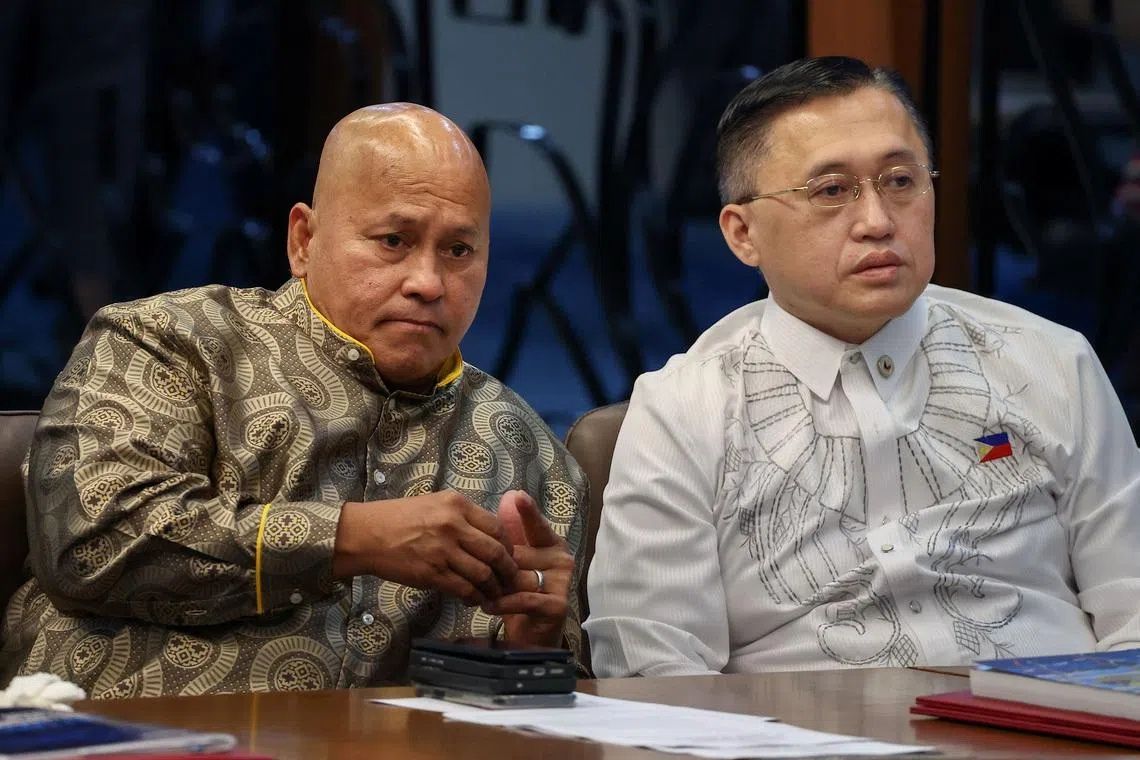
MANILA – A wave of alarm and uncertainty swept through the heart of Philippine democracy on Wednesday as more than a dozen gunshots shattered the usual decorum of the Senate building. Eyewitnesses reported a chaotic scene, with staff and officials urged to run for cover, casting a chilling shadow over the nation's political landscape. This unprecedented incident unfolded against a backdrop of escalating tensions surrounding the controversial proposed arrest of Senator Ronald 'Bato' Dela Rosa, a prominent figure and staunch ally of former President Rodrigo Duterte.
The day began with an ominous tone, as Reuters witnesses observed a significant deployment of Philippine military personnel around the Senate premises. This visible show of force immediately signaled a departure from routine, hinting at the gravity of the unfolding political drama. The atmosphere was already thick with apprehension, fueled by the ongoing legal battles and power struggles that have come to define contemporary Philippine politics. The sound of gunfire, however, elevated the situation from mere political maneuvering to a potential crisis, prompting urgent questions about security, governance, and the future of democratic processes in the archipelago.
The Spark: Senator Dela Rosa and the ICC Warrant
The immediate catalyst for the day's events appears to be the looming threat of an arrest warrant for Senator Ronald 'Bato' Dela Rosa. Dela Rosa, a former national police chief under President Duterte, is a central figure in the International Criminal Court (ICC) investigation into Duterte's brutal 'war on drugs'. The ICC's Pre-Trial Chamber I authorized the resumption of the investigation in January 2023, citing the Philippines' failure to demonstrate genuine efforts to investigate and prosecute those responsible for alleged extrajudicial killings. Dela Rosa, who spearheaded the drug war's implementation, faces potential charges of crimes against humanity.
The Philippine government, under President Ferdinand 'Bongbong' Marcos Jr., has maintained that it will not cooperate with the ICC, arguing that the country has a functioning justice system. However, the ICC's jurisdiction remains a contentious issue, with human rights groups and international bodies pressuring Manila to comply. The possibility of an ICC-issued warrant being served on a sitting senator within the country's legislative halls represents an unprecedented challenge to Philippine sovereignty and judicial independence, creating a high-stakes standoff that has now seemingly boiled over into public disorder.
A History of Political Volatility and Strongman Rule
The Philippines has a complex and often turbulent political history, marked by periods of democratic rule interspersed with authoritarianism and political violence. From the Martial Law era under Ferdinand Marcos Sr. to the People Power Revolution that restored democracy, the nation has grappled with the delicate balance between strong leadership and institutional checks and balances. The Duterte presidency (2016-2022) saw a resurgence of strongman politics, with a focus on law and order that often bypassed traditional legal processes. His 'war on drugs' resulted in thousands of deaths, drawing widespread international condemnation but also significant domestic support.
This historical context is crucial for understanding the current climate. The loyalty commanded by figures like Duterte and Dela Rosa, particularly among segments of the police and military, underscores the deep divisions within Philippine society. The incident at the Senate is not merely an isolated security breach; it is a symptom of deeper structural issues and the ongoing struggle to consolidate democratic norms in a country where political power has often been wielded with a heavy hand. The specter of extra-legal actions and the erosion of due process continue to haunt the nation, making any confrontation involving high-profile political figures inherently volatile.
Implications for Philippine Democracy and International Relations
The gunshots heard in the Senate chamber send a chilling message about the fragility of democratic institutions in the Philippines. This event could have several far-reaching implications:
* Erosion of Public Trust: Such a brazen act of violence within the legislative body will undoubtedly further erode public trust in government and its ability to maintain order and uphold the rule of law. It suggests a breakdown in security protocols and an alarming level of desperation or defiance among certain factions. * Political Instability: The incident could exacerbate existing political fault lines, potentially leading to further unrest or even a constitutional crisis. The direct challenge to the authority of the Senate, a co-equal branch of government, is a serious blow to the separation of powers. * International Scrutiny: The international community, particularly human rights organizations and democratic allies, will be watching closely. This event could intensify pressure on the Marcos administration to address human rights concerns and cooperate with international bodies like the ICC, potentially impacting foreign aid, trade relations, and diplomatic standing. * Security Concerns: The breach of security at such a critical government facility raises serious questions about the preparedness of state forces and the potential for future, more severe incidents. It highlights the need for a comprehensive review of security protocols for all government institutions.
Furthermore, the incident underscores the persistent challenge of impunity. If high-ranking officials can seemingly operate outside the bounds of international law, it sets a dangerous precedent, both domestically and internationally. The Philippines' commitment to justice and accountability is now under intense scrutiny, not just from the ICC but from its own citizens and global partners.
A Nation at a Crossroads: The Path Forward
The events of Wednesday at the Philippine Senate serve as a stark reminder of the Philippines' ongoing struggle with its democratic identity. The nation stands at a critical juncture, facing a choice between upholding the rule of law and succumbing to the pressures of political expediency and historical grievances. For President Marcos Jr., this incident presents a significant test of leadership. His administration must navigate the complex domestic political landscape while simultaneously managing international expectations and upholding the country's commitments under international law.
The path forward requires a multi-pronged approach:
* Strengthening Institutions: A renewed commitment to strengthening democratic institutions, ensuring judicial independence, and upholding human rights is paramount. * Accountability: All those responsible for the violence and any associated political machinations must be held accountable, regardless of their position or influence. * Dialogue and Reconciliation: Fostering genuine dialogue among political factions and working towards national reconciliation can help de-escalate tensions and prevent future confrontations. * Transparency: The government must operate with utmost transparency, providing clear and consistent information to the public and the international community regarding investigations and policy decisions.
The gunshots in the Senate are a wake-up call, signaling that the unresolved issues of the past continue to reverberate loudly in the present. The Philippines' journey towards a stable, just, and truly democratic future hinges on how its leaders and citizens respond to this alarming moment. The world watches, hopeful that the rule of law will ultimately prevail over the echoes of violence and political discord.
Stay Informed
Get the world's most important stories delivered to your inbox.
No spam, unsubscribe anytime.
Comments
No comments yet. Be the first to share your thoughts!